
Longevity
The time a fragrance remains detectably present under stated conditions.
- Use: Match wear to a schedule
- Variable: formula, dose, surface, and threshold
- Tradeoff: Long persistence can outlast the occasion
Fragrance longevity matters because it determines whether a scent remains pleasantly detectable for the part of the day it is meant to cover. A commuter, wedding guest, shift worker, and evening diner do not need the same endpoint, and maximum persistence is not automatically the best outcome.
Longevity is often confused with projection. A fragrance may last near skin after its wider cloud fades, while the wearer may stop noticing because of olfactory adaptation. Formula, dose, surface, temperature, airflow, clothing, and reapplication affect measurement. Useful performance means the desired character survives at an appropriate radius without discomfort, staining, unwanted fabric odor, or pressure to overspray. Test a defined dose at intervals and include another observer when practical.
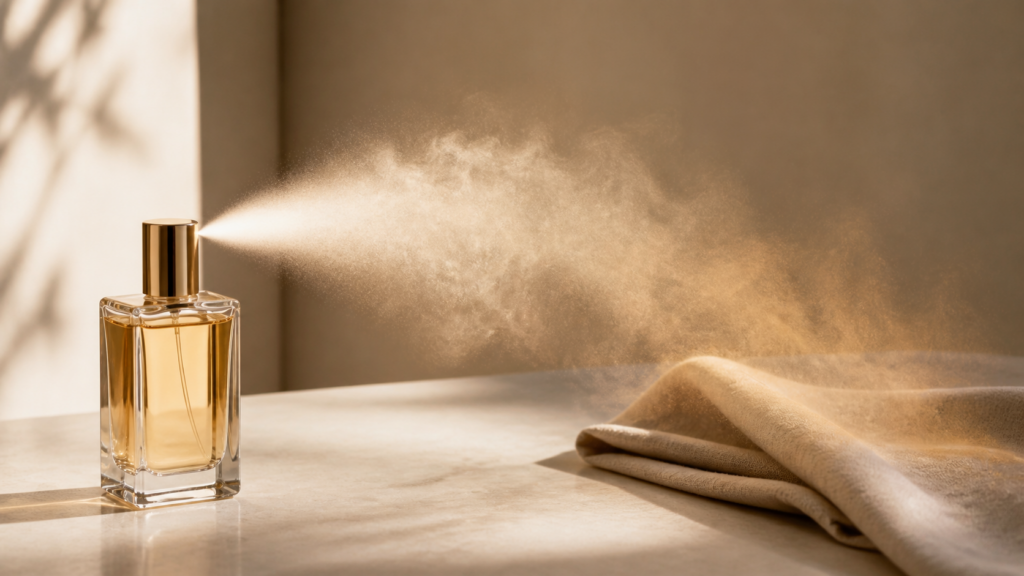
A meaningful longevity test defines the endpoint, dose, surface, setting, and detection distance instead of chasing the largest hour claim.
Tip: Record 'pleasant and detectable at four hours' rather than simply 'strong' or 'gone.'
These concepts separate elapsed time, scent radius, perception, surface persistence, the full wear curve, and refresh cost.
The time a fragrance remains detectably present under stated conditions.
The extent to which scent radiates into nearby air at a given time.
The minimum airborne amount a person can perceive.
A material's tendency to remain on a surface and contribute over time.
A record of character and strength from application through drydown.
The product, time, and social impact of refreshing the scent.
Tip: Define both the hour and the detection distance before calling a perfume long-lasting.
Decide whether fragrance needs to cover a commute, meeting block, dinner, shift, or event. Then define acceptable late presence: detectable only on skin, noticeable at conversational distance, or still apparent on clothing.
Performance is successful when it meets the job, not when it wins an endurance contest.
Projection often peaks earlier and contracts over time. Testing only by pressing the nose to skin can find residue that has no social presence; testing only the opening mistakes diffusion for total duration.
A scent can be long-lasting and quiet, or brief and expansive.
Continuous exposure reduces awareness, especially when perfume is near the neck or chest. Avoid repeated close sniffing, step into fresh air, and ask a trusted person before concluding that the scent vanished and adding more.
The wearer is an important observer, not an infallible instrument.
Skin can reveal development and tolerance; fabric may retain scent differently and risks staining or unwanted carryover. Warmth and airflow can increase early release, while dry or cold conditions change the wear curve.
A longevity claim without test conditions is difficult to transfer to real life.
A moderate scent with one planned refresh may be more versatile than an extremely persistent formula. Count travel format, atomizer quality, bottle size, product used, and the temporary projection created by a new application.
The most economical fragrance is one worn often at an appropriate dose.
Useful longevity is the right scent character at the right distance for the necessary time—not the last trace detectable under laboratory-like wrist sniffing.
The fragrance remains pleasant through the chosen endpoint without disruptive early overspray.
Late wear is detectable at the intended radius and can be refreshed safely when needed.
Persistent sweetness, smoke, musk, or fabric residue can interfere with sleep, uniforms, other scents, or shared spaces.
Chasing duration through extra sprays can increase exposure and projection without improving the drydown.
Projection, adaptation, spray count, concentration labels, and fabric are often mistaken for reliable duration guarantees.
Longevity measures duration; projection describes reach at a given time. A fragrance can persist as a close skin scent after its larger cloud disappears, or project brightly for a short opening.
Olfactory adaptation can reduce awareness during continuous exposure. Step away, wait, and ask another observer at a stated distance before reapplying; the wearer's detection is only one part of the measurement.
A larger initial dose can increase early projection and exposure without changing the formula's underlying wear curve. It may overwhelm shared spaces while adding little to the pleasant late-stage character.
EDP commonly signals higher concentration, but typical ranges overlap and material volatility varies. Atomizer output, formula balance, skin, fabric, environment, and adaptation can allow an EDT to last longer in practice.
Fabric can retain some fragrance, but delicate materials may stain and persistent odor can survive beyond the occasion. Test an inconspicuous area, follow garment care, and avoid spraying pieces that cannot be washed easily.
Tip: Do not increase dose until you know whether only your nose has adapted.
A controlled protocol makes performance claims more comparable and purchase decisions more realistic.
Apply a recorded dose to a consistent surface, note the environment, and assess at planned intervals from normal distance. Record character, projection, skin-level presence, comfort, and the point when wear stops being useful.
Set it from the schedule: perhaps a meeting block, dinner, work shift, or event. The goal should include desired distance and late scent character, not an arbitrary all-day claim borrowed from another wearer.
An unscented compatible moisturizer may alter fragrance behavior on dry skin, but results vary. Let it settle, hold the perfume dose constant, and compare separate days rather than assuming a guaranteed extension.
Use only appropriate skin or fabric areas, follow product directions, avoid irritated skin and eyes, and spot-test textiles. Placement should also control scent radius; longevity does not justify saturating clothing or hair.
Choose a refresh when the opening is enjoyable, a suitable time and place exists, and continuous heavy wear is unnecessary. Reapply conservatively because the renewed opening may project more than the remaining base.
Look for dose, surface, climate, setting, concentration version, and detection method. Reviews without those conditions remain personal impressions; compare patterns across similar use cases and verify them with a sample.
Fragrance longevity matters when it keeps the desired scent pleasantly detectable through a defined part of the day. It should be measured separately from projection and with adaptation, dose, surface, and environment documented.
Choose a performance target rather than maximum hours. A controlled refresh, quieter drydown, or shorter clean finish may offer better comfort and value than a persistent formula that outlasts its welcome.
These guides compare long-lasting performance with everyday and shared-space use.
Compare complete wear, late detection, projection, dose, fabric, climate, and reapplication.
Balance duration with comfort, versatility, bottle size, and routine fit.
Test low-dose presence and shared-space comfort through a workday.
Choose a retailer
Prices checked regularly. We may earn a commission at no cost to you.