Why Full Size SUVs Fitment Matters

Fitment matters on a full-size SUV because having a large vehicle does not establish that an accessory, passenger arrangement, or parking space is compatible with it. Model year, body length, trim, powertrain, seating, and factory equipment can all change the answer. Physical attachment is only one part of a successful fit.

A useful fitment check covers three areas: the exact vehicle application, the space and function that must remain available, and the limits of the complete arrangement. Apply those checks before buying accessories or assuming that a vehicle which looks spacious will fit your household’s daily setting.

By: Review Streets Research Lab
Updated: September 30, 2026
Explainer · 8-12 min read
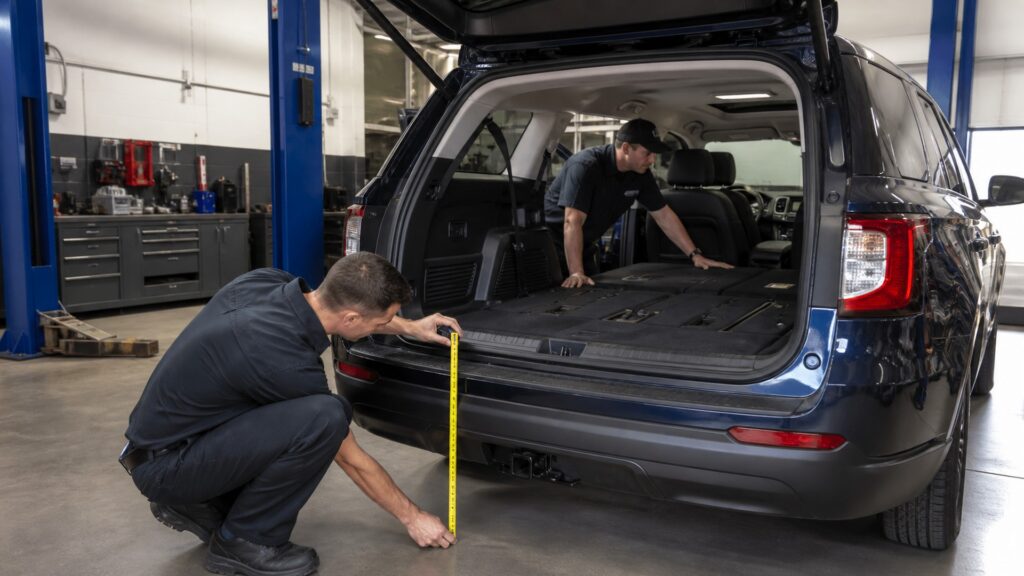
full size suvs explainer hero image for Review Streets
What You'll Learn

Check Compatibility Before Committing to the Arrangement

A good fit allows the vehicle and its equipment to work as intended.

  • Identify the exact body and equipment configuration.
  • Try passengers and restraints in their real positions.
  • Measure the garage, approach, and opening clearances.
  • Match accessory mounts and specifications to the application.
  • Check the combined load and required functional access.

Tip: An item that bolts on, slides in, or clears a doorway can still be unsuitable for the intended use.

Definitions

Six Fitment Checks for a Large SUV

Each check answers a different compatibility question.

Exact application

The vehicle version for which a part or accessory is specified.

  • Example: A cargo liner is listed for one body length and seating layout.
  • Check: Match model year, variant, and equipment exclusions.
  • Limit: A shared model-family name may cover different applications.

Passenger arrangement

The actual combination of occupants, restraints, and seat positions.

  • Example: Two child seats must leave permitted access to another occupied row.
  • Check: Test the complete arrangement using both manuals.
  • Limit: A nominal seating count does not prove the arrangement works.

Static clearance

Space around an item or vehicle when it is in a fixed position.

  • Example: The parked SUV clears the garage opening with mirrors considered.
  • Check: Measure the relevant dimensions directly.
  • Limit: A stationary fit does not establish room for movement.

Operating clearance

Space needed for normal movement and access.

  • Example: The liftgate needs room to open without striking a ceiling or stored item.
  • Check: Check the full intended movement under controlled conditions.
  • Limit: Exterior dimensions alone may omit opening space.

Mounting compatibility

Agreement between attachment points, hardware, and the specified installation.

  • Example: Crossbars match the particular factory rail system.
  • Check: Confirm the approved application and fitting instructions.
  • Limit: Similar-looking attachment points need not be interchangeable.

Rated-use compatibility

Suitability of the complete arrangement within all applicable limits.

  • Example: A carrier and its contents meet vehicle and accessory requirements.
  • Check: Count the equipment’s weight and verify relevant ratings.
  • Limit: A stronger accessory cannot raise a lower vehicle limit.

Tip: The final arrangement must satisfy application, clearance, mounting, and rated-use requirements together.

Identify the vehicle

Start with More Than the Model Name

Full-size SUV families can include different body lengths, seating arrangements, powertrains, and factory packages. Those differences may affect cargo accessories, roof equipment, towing components, or replacement parts. Use application information for the actual configuration rather than assuming a photograph or familiar badge is enough.

  • Record the model year, body version, and relevant equipment.
  • Read fitment exclusions alongside the main compatibility listing.
  • Resolve uncertain applications with the manufacturer or supplier.

A liner shaped for the space behind one third-row arrangement may not suit another. Verifying the floor and seat layout before ordering avoids a purchase that looks close but interferes with normal use.

Cabin arrangements

Fit the People Before Filling the Remaining Space

Seat width alone does not establish a usable passenger arrangement. Child restraints need approved installation positions, belt access, and the required clearances. Other passengers need a workable entry route. Evaluate luggage after preserving those conditions, rather than using it to block access that will be needed at the next stop.

  • Set front seats for the adults who normally use them.
  • Install restraints according to both instruction sets.
  • Check rear-row access and available luggage space together.

A full-size cabin can still present a conflict between a child seat and a folding access seat. The solution depends on an allowed arrangement, not on forcing the seat to move around installed equipment.

Home and parking

Measure the Whole Arrival and Departure Sequence

Garage fit includes more than length and roof height. Consider mirror width, the turn into the entrance, overhead fixtures, door travel, and room for people to get out. Roof-mounted equipment adds another dimension that may change whether a previously workable route remains usable.

  • Measure the opening and any lower internal obstructions.
  • Account for carriers, antennas, and other relevant projections.
  • Check doors and liftgate without risking contact.

An SUV may park inside while leaving too little room to unload a child or open the rear hatch. Include those movements in the fit assessment instead of discovering them after the vehicle is home.

Accessories and hardware

Verify the Interface Before Installation

Roof bars, hitch accessories, floor mats, and replacement wheels each have application-specific requirements. Confirm the attachment system and required specifications rather than treating an approximate match as acceptable. Use the supplied hardware and procedure; obtain qualified help when the work is beyond permitted owner installation.

  • Check both vehicle and accessory instructions.
  • Keep controls, sensors, lights, and moving parts unobstructed.
  • Do not improvise mounting changes to compensate for a mismatch.

For example, a floor mat must use the intended retention and remain clear of pedal movement. Its outline matching the footwell does not by itself establish safe functional fit.

Complete the check

Confirm Loads and Function in the Finished Setup

After physical compatibility is established, check the weight and operating limits of the combined arrangement. Carriers contribute weight as well as storage space. Hitch-mounted equipment and trailers require their own application and rating checks. Revisit the setup when the load, accessory, or seating arrangement changes.

  • Include equipment weight in the appropriate load accounting.
  • Apply every relevant vehicle and accessory limit.
  • Check access, visibility, and required clearances after loading.

A roof box that fits the bars can still be too heavily loaded or conflict with a garage entrance. Successful fitment means the installed, loaded equipment works within the complete set of conditions, not merely that installation was possible.

Quick Reality Check

A Physical Fit Versus a Usable Fit

Treat attachment or clearance as evidence for one part of the decision.

A physical fit may show…

That an item can occupy the available space or reach an attachment point.

That the vehicle clears a particular opening in a fixed position.

A usable fit also requires…

Approved application, secure mounting, required movement, and preserved function.

Suitable loading, passenger access, visibility, and compliance with relevant instructions.

Common Myths

Misconceptions About Full-Size SUV Fitment

Extra room does not remove compatibility requirements.

Will any accessory for the model name fit?

Not necessarily. Body length, model year, trim, seating, and factory equipment can create application differences.

Does a garage fit prove daily access will be easy?

No. Check the approach, doors, liftgate, and room for people and cargo to move.

Can a heavy-duty carrier increase vehicle capacity?

No. Its own rating does not increase the vehicle’s lower limits or remove other restrictions.

Does a wide second row guarantee three child seats fit?

No. Installation geometry, permitted anchors, and buckle access must work for the actual restraints.

Tip: Verify the complete use case before altering or forcing a part that seems nearly compatible.

FAQ

Fitment Questions Before Buying Parts or a Vehicle

These checks can prevent repeated inconvenience and unsuitable purchases.

Which details should I give an accessory supplier?

Provide the model year, body version, powertrain, trim, and relevant factory equipment, then confirm the application and exclusions.

Should I bring bulky items to a vehicle viewing?

Where practical, test representative luggage, mobility equipment, or other regular items with the required seats retained.

What changes after fitting roof equipment?

Recheck total height, load limits, mounting instructions, overhead access, and any required inspection or adjustment.

What if an accessory almost fits?

Pause and verify the application. Do not drill, force, trim, or bypass required attachments without an approved solution and appropriate expertise.

Bottom Line

Full-size SUV fitment is a complete compatibility check.

Match the exact application, retain passenger and operating space, verify mounting, and keep the final loaded arrangement within its limits.

Next Steps

Go Deeper or Compare Your Options

Use these Review Streets paths to compare related categories and practical next decisions.

Vehicles

Compare related vehicle choices against the same carrying needs and driving routine.

SUVs

Compare related vehicle choices against the same carrying needs and driving routine.

Full Size SUVs

Explore Full Size SUVs with your passenger, cargo, and ownership requirements in mind.

Further reading: Child-restraint installation guidance; Vehicle towing and equipment guidance; Vehicle tire and loading information. Use the owner’s manual for the exact vehicle’s instructions and limits.