Why Full Size SUVs Maintenance Role Matters

Maintenance keeps a full-size SUV ready for the work that often justifies owning it: carrying several people, transporting bulky luggage, and sometimes towing. A large vehicle may feel capable when lightly loaded, yet worn tires, cooling problems, or neglected brakes can become more consequential on a demanding trip.

The correct service plan depends on the exact engine, drivetrain, equipment, age, and use. Full-size does not mean one universal maintenance schedule. Follow the manufacturer’s requirements, account for applicable special operating conditions, and treat new symptoms as diagnostic questions rather than waiting for the next routine appointment.

By: Review Streets Research Lab
Updated: September 30, 2026
Explainer · 8-12 min read
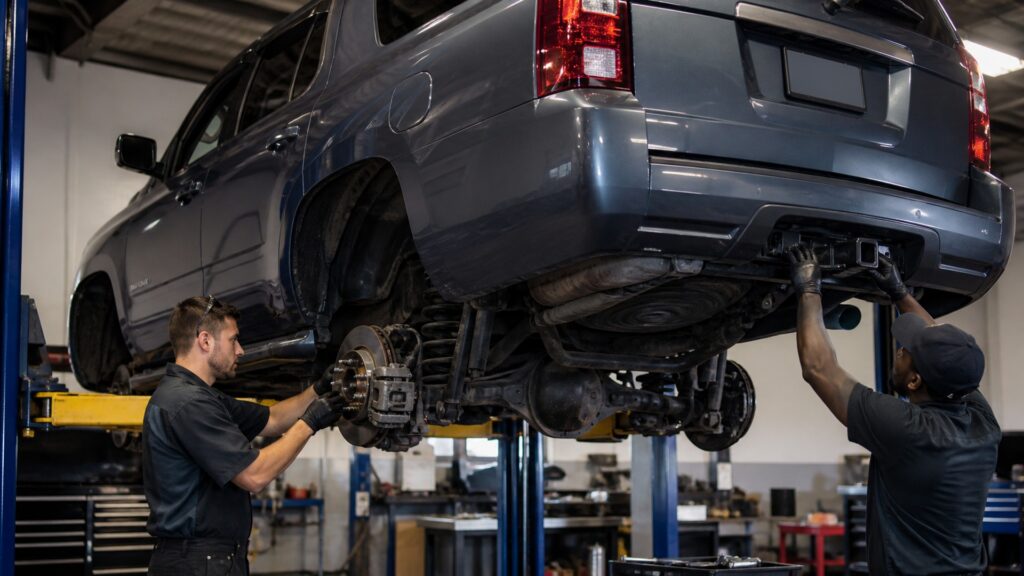
full size suvs explainer hero image for Review Streets
What You'll Learn

Preserve Capability Before the Demanding Trip

Connect scheduled service, present condition, and actual vehicle use.

  • Build the schedule for the exact powertrain and equipment.
  • Check tires, brakes, and cooling before heavy use.
  • Review special-use instructions for recurring towing or harsh conditions.
  • Distinguish an inspection finding from a blanket replacement recommendation.
  • Keep records that explain what was done and why.

Tip: Arrange needed work early enough to resolve findings before a loaded journey.

Definitions

Service Concepts for a Heavily Used SUV

These terms help separate ordinary upkeep from a fault or special-use requirement.

Scheduled service

Work required at the time, mileage, or monitored interval specified for the vehicle.

  • Example: The engine oil service becomes due under the model’s system.
  • Check: Use the exact maintenance guide and calendar limits.
  • Limit: A general full-size-SUV package may omit or add work inappropriately.

Special operating conditions

Uses that trigger additional or different service requirements under the manufacturer’s instructions.

  • Example: Repeated trailer towing requires checking the applicable schedule.
  • Check: Match the listed condition to how the vehicle is actually used.
  • Limit: There is no single shortened interval for every type of demanding use.

Condition inspection

An assessment of wear, damage, or abnormal operation at the time of the check.

  • Example: Brake components are inspected rather than judged only by mileage.
  • Check: Ask for the finding and its significance.
  • Limit: An inspection cannot promise that no future failure will occur.

Cooling-system condition

The state of components that manage temperature, such as coolant circuits and associated hardware.

  • Example: A leak or warning is investigated before a towing trip.
  • Check: Follow the model’s inspection and fluid requirements.
  • Limit: Adding coolant without finding a recurring loss may leave the cause unresolved.

Driveline service

Applicable care for transmission, transfer, axle, or related drive components fitted to the vehicle.

  • Example: A specified fluid inspection is completed for the relevant drivetrain.
  • Check: Check the actual component and use-specific instructions.
  • Limit: Not every vehicle requires the same fluid work at the same mileage.

Pre-trip check

A focused review of condition and readiness before a particular journey.

  • Example: Tires, visible leaks, warnings, and required equipment are checked before departure.
  • Check: Use a checklist appropriate to the trip and vehicle.
  • Limit: It supplements maintenance rather than replacing the service schedule.

Tip: A service interval, a wear measurement, and a warning each provide different evidence.

Use and configuration

Build the Plan Around the Workload

Identify the vehicle’s engine, driven-wheel arrangement, towing equipment, and other relevant systems. Then compare the normal schedule with the conditions in which it is used. A lightly driven family vehicle and one that repeatedly tows in demanding conditions may have different applicable requirements.

  • Record calendar deadlines and mileage or monitor-based items.
  • Review the manufacturer’s listed special-use conditions.
  • Tell the service provider about repeated towing, dusty travel, or other relevant use.

Do not automatically buy every service described as heavy-duty. Ask which requirement applies to the actual vehicle and workload.

Tires and brakes

Inspect the Components That Carry and Control the Load

Tire condition and correct inflation remain fundamental when seats and luggage space are filled. Brakes need assessment for wear and normal operation. Capacity advertised when the vehicle is new does not mean worn or damaged components can be ignored later.

  • Use the specified cold tire pressures and inspect for damage or uneven wear.
  • Follow the relevant tire-rotation instructions where applicable.
  • Have new braking vibration, pulling, noise, or response changes assessed.

An oil-service receipt is not evidence that tires and brakes were inspected. Confirm what the appointment included and what findings were recorded.

Heat and fluids

Investigate Cooling or Fluid Problems Before Heavy Use

Sustained climbs and towing can demand prolonged work from the powertrain. The vehicle must have the required fluids and functioning temperature-management systems. Follow the correct specifications and scheduled work, and investigate recurring leaks or warnings directly.

  • Check maintenance requirements for the engine and fitted driveline components.
  • Use the manufacturer’s approved fluid specifications.
  • Respond to temperature warnings according to the manual, including stopping safely when instructed.

A larger radiator, more engine power, or a towing badge does not make an existing cooling fault harmless. Resolve the condition rather than expecting the vehicle’s size to compensate.

Before departure

Check the Journey Without Confusing Readiness with Capacity

Before a loaded trip, verify that maintenance is current and the intended load is within the relevant limits. If towing, confirm the condition and setup of the required hitch, connections, and trailer equipment under their instructions. Schedule professional assessment when findings require it.

  • Review unresolved warnings and recent symptoms.
  • Inspect the items the manuals specify for the trip.
  • Confirm the actual passenger, cargo, and trailer arrangement against applicable ratings.

Maintenance can preserve intended capability but cannot increase a weight rating. A fully serviced SUV can still be overloaded or paired with an unsuitable trailer.

Records and ownership

Use Evidence to Plan Repairs and a Used-Vehicle Purchase

Keep itemized records of inspections, replacements, fluids, dates, and mileage. For a used full-size SUV, ask about prior towing and service history, then obtain an independent inspection. Present condition and documented care matter more than assuming a vehicle is durable because it looks substantial.

  • Compare records with the applicable schedule.
  • Ask for measurements or findings supporting proposed wear-item replacement.
  • Budget for unverified or overdue work before setting the purchase cost.

A recurring symptom deserves a documented diagnosis and follow-up. Replacing parts repeatedly without establishing the cause is not the same as a maintenance plan.

Quick Reality Check

What Maintenance Can and Cannot Preserve

The goal is dependable condition within the vehicle’s original limits.

It can support…

Correct operation of the systems used during loaded travel.

Earlier recognition of wear, leaks, and service needs.

It cannot provide…

More permissible payload or trailer capacity.

A guarantee against all failures or a substitute for diagnosing a fault.

Common Myths

Misconceptions About Full-Size SUV Upkeep

Size does not replace evidence about condition.

A large SUV is built to tolerate neglected service

Capability assumes an appropriately maintained vehicle. Neglect does not become harmless because the body is large.

Towing always requires the same shortened schedule

Requirements vary. Use the manufacturer’s instructions for that vehicle and use.

A fluid flush is automatically due at a certain mileage

The correct service depends on the component and schedule. Ask what requirement or condition supports it.

Low mileage means age-related service can wait

Some work is time-based. Follow calendar requirements as well as distance or monitor indications.

Tip: Request a clear link between the vehicle’s condition or schedule and the proposed work.

FAQ

Questions About Maintaining a Full-Size SUV

Answers for keeping a capable vehicle ready to use.

Does occasional towing change every service interval?

Not necessarily. Check how the manufacturer defines the relevant use and which specific items are affected.

What should I check before a family towing trip?

Current service, unresolved symptoms, specified tire and vehicle checks, and the complete trailer setup under the applicable instructions and ratings.

Can I rely on a dashboard without warning lights?

No. Some wear and condition issues are found by inspection. No warning is not a complete condition report.

What matters most on a used example?

The applicable service history, actual condition, evidence of unresolved problems, and an inspection suited to the model and prior use.

Bottom Line

Full-size SUV maintenance matters because useful carrying and towing capability depends on the vehicle’s present condition.

Follow the exact schedule, inspect the systems the workload depends on, and resolve symptoms before relying on the vehicle for a demanding trip.

Next Steps

Go Deeper or Compare Your Options

Use these Review Streets paths to compare related categories and practical next decisions.

Vehicles

Compare related vehicle choices against the same carrying needs and driving routine.

SUVs

Compare related vehicle choices against the same carrying needs and driving routine.

Full Size SUVs

Explore Full Size SUVs with your passenger, cargo, and ownership requirements in mind.

Further reading: Ford: special-use maintenance example; NHTSA: tire care; Ford: towing guidance; NHTSA: recall lookup. Use the owner’s manual for the exact vehicle’s instructions and limits.