
Training Function
Training function is the job a tool performs in the workout.
- Example: a sled used for lower-body drive and conditioning
- Check: name the job before choosing the tool
- Limit: one tool cannot perform every job equally well
Training function matters in functional training equipment because the tool has to improve a real movement job. A kettlebell, band, cable, sled, medicine ball, suspension strap, or sandbag is not useful because it looks athletic. It is useful when it helps train strength, power, control, mobility, conditioning, or coordination in a clear way.
The strongest functional tools have a defined role, a manageable setup, and a progression path. Without that, the category can turn into random variety instead of better training.
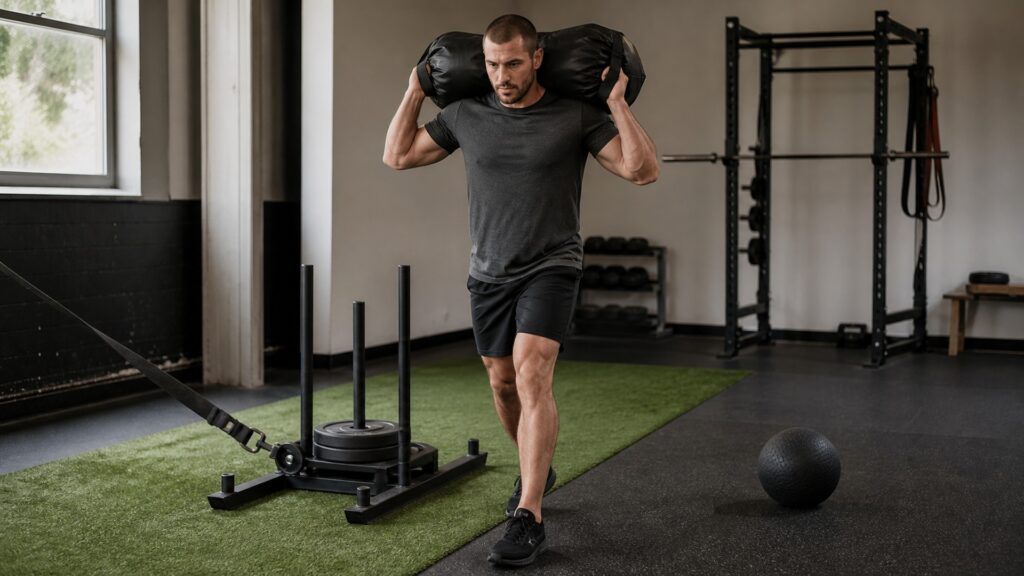
A practical guide to choosing functional tools by role, movement pattern, resistance, and progression.
Tip: Choose the equipment for the training function it performs repeatedly, not for the longest exercise list.
These concepts clarify what makes a functional tool useful in a routine.
Training function is the job a tool performs in the workout.
Movement match is how well a tool supports the target pattern.
Load control is how precisely the user can set and progress resistance.
Power role is a tool's use for fast, explosive movement.
Conditioning role is a tool's use for repeat-effort work.
Progression path is the planned way a tool becomes harder or more refined.
Tip: A functional tool becomes valuable when its role, setup, and progression are clear.
Functional equipment can support many goals, but one session should use each tool for a clear reason. Otherwise the workout becomes a pile of exercises.
A clear job keeps training focused.
The tool should support the pattern the user is trying to train. A mismatch between resistance and movement can make an exercise awkward or less useful.
The movement pattern decides whether the tool fits.
Training function weakens when every workout changes everything. A good tool lets the user repeat a pattern and progress one main variable.
Measurable progression is what turns tools into training.
Some functional tools require timing, grip, bracing, or coordination. If the tool is too complex for the user, it may distract from the goal.
Training function depends on usable skill level.
Space, flooring, anchor points, storage, noise, and safety affect whether a tool works in real life. A strong tool on paper may not fit the user's room.
A tool that fits the environment is more likely to be used well.
Training function keeps equipment choices tied to real outcomes.
It clarifies why each tool belongs in the routine.
It connects equipment choice to movement, resistance, and progression.
It cannot make every tool appropriate for every user.
It does not replace safe technique, recovery, or program design.
A tool is not useful just because it is labeled functional.
Options help only when they support the user's goal.
A tool is functional when it improves the target movement, not when it is simply difficult.
Conditioning still needs planned work, rest, and technique quality.
Most routines need a few tools with separate jobs, not one tool forced into every job.
Tip: Functional training equipment should make the workout more purposeful, not just more complicated.
Short answers about choosing tools by role and progression.
The most important function is the tool's role in the user's repeated movement goals.
Start with the movement pattern, then choose the tool with the best resistance, setup, and progression path.
Sometimes, but many routines need different tools for strength, power, mobility, or conditioning.
Repeat key patterns and track one main progression variable at a time.
Choose functional training equipment by what it helps train, how it progresses, and whether the user can control it safely.
Functional training equipment training function matters because each tool needs a real job.
The best tools match movement patterns, resistance needs, user skill, environment, and a clear progression path.
Use these Review Streets paths to compare related categories and practical next decisions.
Explore tools for practical strength, mobility, power, and conditioning.
Compare strap-based bodyweight training with broader functional gear.
Browse related fitness training equipment categories.
Choose a retailer
Prices checked regularly. We may earn a commission at no cost to you.