
Air Velocity
Speed of air leaving the dryer or nozzle.
- Use: move water and direct shape
- Variable: motor, fan and outlet
- Tradeoff: High velocity can tangle
Hair dryer technology matters because drying speed and control depend on how effectively a tool moves air, adds heat, and directs both through a section. Wattage alone cannot reveal air velocity, temperature stability, noise, weight, or how well a concentrator fits.
A capable dryer removes water without forcing prolonged high heat, chaotic tangling, or awkward arm positions. Motor and heater design, inlet cleanliness, nozzle geometry, control placement, cord construction, and immersion protection all affect everyday performance. The practical goal is predictable drying at the lowest workable thermal load—not the hottest possible airflow.
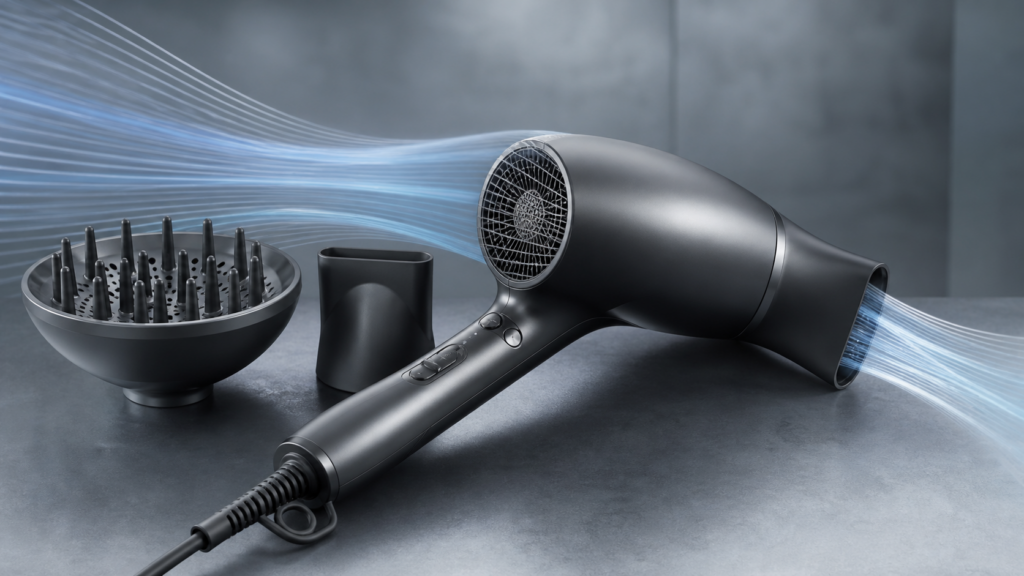
Explain dryer performance as a system of airflow, temperature, motor response, heater control, nozzle geometry, filtration, ergonomics, noise, and electrical safety rather than wattage or one material claim.
Tip: Drying efficiency is controlled water removal, not a heat contest.
These hair dryer technology concepts separate mechanism, application, limits, and purchasing consequences.
Speed of air leaving the dryer or nozzle.
Quantity of air moved over time.
Control of heater output as airflow and conditions change.
Attachment narrowing and directing the air stream.
Screen protecting airflow from lint and hair.
Protective plug feature intended to reduce shock risk if a hand-supported dryer contacts water.
Tip: Use these terms to test hair dryer technology instead of relying on a front-label promise.
Efficient airflow can remove water and support brush tension without relying on the hottest setting. Compare drying time at low or medium heat on equivalent sections.
Drying efficiency is controlled water removal, not a heat contest.
A concentrator supports directional smoothing; a diffuser spreads flow for lower disturbance. Poorly fitting heads, extreme restriction, or oversized diffusers can undermine control.
An attachment should change the air pattern predictably.
Separate heat and speed choices create more useful combinations than one escalating switch. A cool function can help finish a shape, but it does not reverse earlier excessive exposure.
Control placement becomes a safety feature during motion.
Lint, dust, and hair restrict airflow and may increase noise, heat, and motor strain. Follow the maker's unplugged cleaning method and never insert objects into a live dryer.
A neglected intake changes the machine being evaluated.
A fast dryer that causes arm strain or has a damaged cord is not a good system. In the United States, hand-supported dryers should have immersion protection, while safe distance from water remains mandatory.
Usability and electrical safety belong in the performance score.
Dryer technology can improve control and efficiency, but it cannot make high heat, blocked airflow, or unsafe use harmless.
Airflow remains stable and useful across normal sections.
Heat and attachments are controllable without uncomfortable handling.
Premium terminology does not prove measured airflow or calibration.
A powerful dryer can still overdry, tangle, burn, or create electrical risk.
These claims flatten the variables that determine how hair dryer technology performs in a real routine.
Wattage is electrical input, not a standardized measure of useful airflow or drying time. Fan design, heater balance, restrictions, sectioning, and technique determine the result.
Ion-related features may affect static or droplet behavior in some designs, but they do not cancel temperature, time, distance, tension, or repeated exposure.
High heat can increase risk and discomfort. AAD recommends low or medium settings; use airflow, preparation, and movement to reduce total time.
A diffuser spreads airflow, but high heat, prolonged hovering, scalp contact, or repeated drying can still create excess exposure. Technique and settings remain decisive.
Immersion protection reduces a specific electrical hazard; it does not make use near tubs, sinks, or standing water safe. Keep the dryer dry and unplugged after use.
Tip: Test the exact hair dryer technology tool, setting, and routine before generalizing from its category.
The remaining decisions about hair dryer technology concern technique, compatibility, safety, upkeep, and value.
Useful airflow, stable temperature, nozzle fit, controls, filter access, weight, noise, cord quality, safety certification, and measured drying time matter more.
Use the same hair preparation and section size, begin on medium heat, time drying, note tangling and comfort, then compare the finish after full cooling.
Follow the manufacturer's interval and clean sooner when visible lint, reduced flow, unusual noise, or extra heat appears. Unplug and cool it first.
Motor labels can suggest design but do not guarantee service life. Warranty, repairability, filter access, duty cycle, and verified performance are stronger evidence.
It reduces or stops heater output while airflow continues, which can help cool a set shape and improve comfort. It cannot undo prior overheating.
Stop using one with cord damage, cracked housing, sparking, burning odor, intermittent power, failed protection, severe overheating, or unsafe attachments.
Hair dryer technology matters when airflow, heat regulation, attachments, and ergonomics shorten a controlled routine without demanding maximum temperature. The complete air path matters more than wattage or a single feature label.
Choose reachable controls, stable output, cleanable filtration, usable weight, and appropriate electrical protection. Maintain the intake, keep the dryer moving, and replace damaged equipment.
These Review Streets paths narrow the next hair dryer technology decision by format, goal, and routine fit.
Compare dryers, irons, wands, multi-stylers, and their buying paths.
Explore airflow, heat control, attachments, ergonomics, and long-term versatility.
Choose a retailer
Prices checked regularly. We may earn a commission at no cost to you.