
Routine Anchor
Existing event used to cue nail care, such as handwashing or bedtime.
- Use: improve consistency
- Variable: schedule
- Tradeoff: Too many anchors create burden
Healthy nail routines matter because nail condition reflects repeated daily choices more than occasional intensive treatments. Gentle washing, thorough drying, moisturization, practical length, smooth edges, intact cuticles, task-specific gloves, clean tools, and careful coating removal reduce common sources of splitting, irritation, and hidden damage.
A routine should also create observation opportunities. Nail plate grows slowly, so a helpful change must be judged at the grow-out boundary over months, not by one glossy manicure. Persistent pain, swelling, lifting, thickening, drainage, or unusual color should interrupt the cosmetic cycle. The best routine is small enough to repeat and flexible enough for occupation, climate, hobbies, and service preferences.
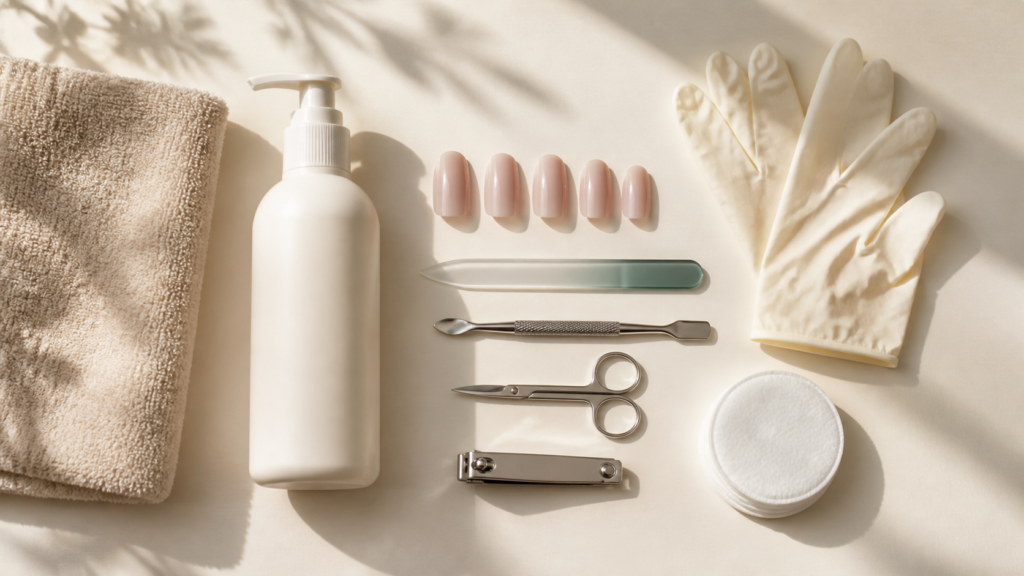
Build a sustainable routine around inspection, gentle cleaning, drying, moisturization, practical length, intact cuticles, exposure protection, conservative manicures, hygienic tools, safe removal, and escalation triggers rather than a crowded product calendar.
Tip: Healthy routines begin with boring repeatable actions.
These healthy nail routines concepts separate mechanism, application, limits, and purchasing consequences.
Existing event used to cue nail care, such as handwashing or bedtime.
Documented view of bare nails before changing products.
Shortest length that preserves the desired function and style.
Cleaning, drying, disinfection, and personal-use control for nail implements.
Period after a manicure used for conditioning and evaluation.
Symptom or change that stops cosmetic experimentation and prompts care.
Tip: Use these terms to test healthy nail routines instead of relying on a front-label promise.
Use gentle hand hygiene, dry folds, apply a practical moisturizer, and stop biting or pulling hangnails. This baseline does more than a large treatment shelf.
Healthy routines begin with boring repeatable actions.
File snags before they catch, check for lifting or discoloration, and clean personal tools. Do not dig beneath the nail with sharp objects.
A weekly check turns small damage into an early decision.
Wet work, healthcare, food service, mechanics, gardening, music, and sports require different compromises. Fit the routine to function.
A routine that conflicts with work will not survive.
Keep products off skin, avoid communal dip, follow cure systems, monitor lifting, and remove without peeling. Condition afterward and inspect before reapplication.
The manicure is a cycle, not the application appointment.
Pain, swelling, pus, spreading redness, lifting, thickening, dark or green change, and persistent single-nail abnormalities need qualified assessment.
Healthy routines include knowing when to stop routine care.
A healthy routine reduces avoidable trauma and catches changes early; it cannot guarantee perfect nails or self-treat every abnormality.
Daily care is simple enough to follow through work and washing.
Manicure cycles include hygienic application, safe removal, and inspection.
More products can increase contact, allergy, residue, and cost without improving outcomes.
Nail appearance alone does not prove nail or surrounding-skin health.
These claims flatten the variables that determine how healthy nail routines performs in a real routine.
Nails do not detox. Breaks can reduce exposure, permit inspection, and allow damaged plate to grow out, but they do not extract toxins.
Extra hardeners, oils, serums, base coats, and masks can overlap and increase cost or irritation. Use the smallest system with distinct jobs.
Minor trauma is a common cause, while many patterns exist. Persistent or widespread changes should not be diagnosed from appearance alone.
AAD advises leaving cuticles alone. Repeated pushing and cutting can compromise the protective seal.
Daily wet work, picking, moisturizing, and tool hygiene continue between services. Salon quality cannot compensate for repeated home exposure.
Tip: Test the exact healthy nail routines tool, setting, and routine before generalizing from its category.
The remaining decisions about healthy nail routines concern technique, compatibility, safety, upkeep, and value.
Gentle washing, thorough drying, moisturizer after water exposure, practical length, intact cuticles, gloves for wet work, and nontraumatic removal.
Only as needed to smooth snags and maintain functional length. Use a gentle file and avoid thinning the top surface repeatedly.
Personal tools are preferable. Salon tools should be cleaned and disinfected appropriately, while porous items may need single use.
Keep edges smooth, identify triggers, use behavioral barriers, and seek professional help when biting causes wounds or is difficult to control.
Remove for lifting, pain, unusual color, odor, surrounding reaction, or when the scheduled inspection interval arrives.
Track new growth, free-edge splits, peeling, skin breaks, task comfort, and exposure over months rather than judging shine after one service.
Healthy nail routines matter because repeated gentle actions reduce cumulative damage and create regular chances to notice change. The core is cleaning, drying, moisturizing, practical length, intact cuticles, and exposure control.
Build manicure preparation, wear, removal, and inspection into one cycle. Keep the system small, hygienic, and compatible with daily work, and escalate persistent or painful changes instead of concealing them.
These Review Streets paths narrow the next healthy nail routines decision by format, goal, and routine fit.
Browse nail treatments, polish, removal, and care categories.
Compare cuticle oils by vehicle, applicator, feel, and routine fit.
Choose a retailer
Prices checked regularly. We may earn a commission at no cost to you.