
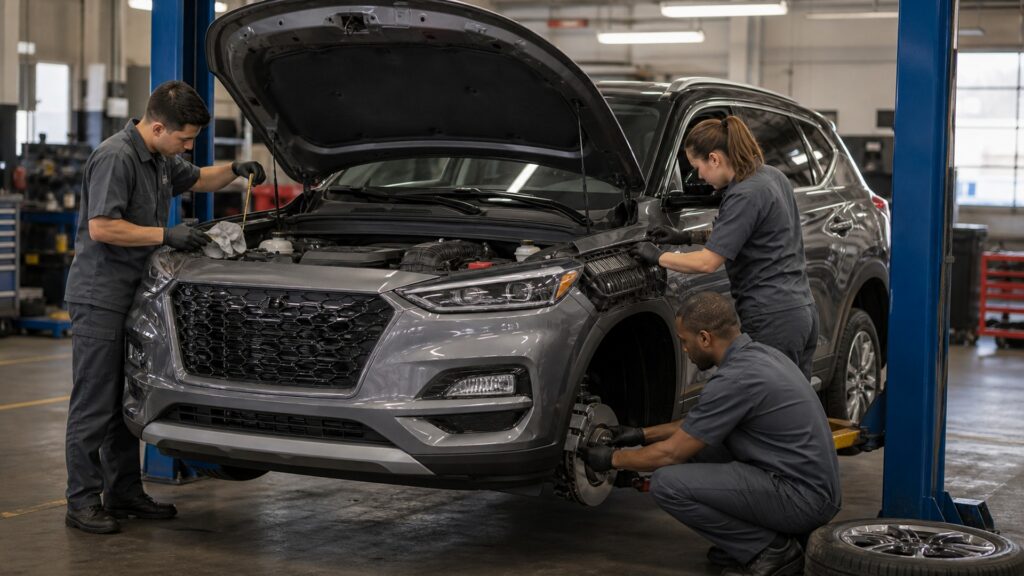
Why Hybrid SUVs Maintenance Role Matters

Hybrid SUV maintenance matters because an engine, electric drive, battery system, and conventional vehicle hardware must keep working together. Electric assistance can reduce some engine operation and brake wear, but it does not remove engine service, tire care, brake inspections, or the need to investigate warnings.

The correct plan is specific to the model and hybrid type. Conventional hybrids and plug-in hybrids can have different schedules and cooling arrangements. Follow the manufacturer’s instructions for that vehicle rather than assuming either that every hybrid is maintenance-free or that it needs extra service simply because it contains a traction battery.

By: Review Streets Research Lab
Updated: September 30, 2026
Explainer · 8-12 min read
hybrid suvs explainer hero image for Review Streets
What You'll Learn

What a Hybrid SUV’s Service Plan Must Cover

Separate routine engine and chassis work from model-specific hybrid requirements.

  • Keep engine service on the manufacturer’s schedule.
  • Distinguish the traction battery from the low-voltage battery.
  • Check cooling-system and air-intake instructions where applicable.
  • Inspect friction brakes even when energy recovery reduces their use.
  • Use records and qualified diagnosis to assess faults and used vehicles.

Tip: Ask which manufacturer requirement or measured condition supports each proposed service.

Definitions

Hybrid Maintenance Terms That Prevent Confusion

Similar-sounding components can have different jobs and service needs.

Traction battery

The battery supplying energy to the electric propulsion system. It is distinct from the low-voltage battery used for control and accessory functions.

  • Example: Electric assistance draws energy from the traction battery.
  • Check: Review model-specific care instructions and warranty terms.
  • Limit: A battery warning does not identify the faulty component by itself.

Low-voltage battery

The battery supporting vehicle electronics and startup control functions according to the vehicle’s design.

  • Example: A weak auxiliary battery can prevent the vehicle from entering its ready state.
  • Check: Have the appropriate battery and electrical system tested when indicated.
  • Limit: Its condition is separate from the traction battery’s condition.

Battery thermal management

The arrangement that manages traction-battery temperature, using air, liquid, or another model-specific design.

  • Example: An air-cooled system has an intake that must remain unobstructed.
  • Check: Follow the exact inspection or cleaning instructions where fitted.
  • Limit: Not every hybrid has the same vents, filters, or coolant circuits.

Engine service interval

The manufacturer’s timing for engine-related work, which may use elapsed time, mileage, or a monitoring system.

  • Example: Oil service becomes due even though the engine sometimes stops in traffic.
  • Check: Use the specified schedule and required fluid approval.
  • Limit: Engine-off operation does not authorize an owner-invented longer interval.

Blended braking

Coordination of energy-recovery braking and friction braking in an electrified vehicle.

  • Example: The system combines available electrical recovery with the braking force needed for a stop.
  • Check: Recognize normal feel and report significant changes.
  • Limit: Reduced pad wear does not eliminate inspection needs.

Hybrid-system diagnosis

Model-appropriate investigation of warnings or abnormal operation across the engine and electrical systems.

  • Example: A technician identifies why electric assistance is unavailable.
  • Check: Use a service provider with suitable training and equipment.
  • Limit: A fault message is not a reason to guess at a battery replacement.

Tip: Identify the system before deciding what work it needs.

Engine and fluids

Keep the Engine on Its Required Schedule

A hybrid engine still needs the lubrication, filtration, and other work specified for it. Its operating pattern may differ from a conventional vehicle, but the manufacturer has a schedule for that design. A plug-in driven electrically much of the time still has applicable engine and time-based requirements.

  • Record service dates as well as distance.
  • Use the approved oil and other fluid specifications.
  • Check any special-use instructions that apply to towing or other repeated demands.

A low-mileage owner should not wait indefinitely for a distance threshold. If the schedule specifies a calendar limit, that requirement remains part of the plan.

Temperature management

Protect the Cooling Arrangement the Vehicle Actually Uses

Battery and power-electronics temperature management helps the hybrid system operate as intended. Some models specify care for an air intake or filter; others have liquid circuits with their own requirements. Identify the arrangement before buying a generic battery-cooling service.

  • Keep specified air inlets clear of bags, covers, and debris.
  • Follow the manufacturer’s method for any permitted filter care.
  • Have coolant or temperature warnings assessed according to the manual.

For example, some RAV4 Hybrid maintenance guides include an HV-battery cooling intake filter. That is a model-specific example, not proof that all hybrid SUVs need the same filter service or interval.

Brakes and running gear

Reduced Friction-Brake Use Still Requires Inspection

Energy recovery may reduce the work done by friction brakes, but pads, discs, calipers, and brake fluid still have inspection or service requirements. Corrosion, uneven operation, and other condition issues cannot be ruled out merely because the pads have not worn quickly.

  • Follow the model’s brake inspection and fluid requirements.
  • Report new grinding, pulling, vibration, or major changes in pedal feel.
  • Keep tire condition, pressure, and applicable rotation work current.

An owner may see less pad wear without having a maintenance-free braking system. The question is whether the components are functioning correctly, not simply how long they have lasted.

Electrical systems

Do Not Confuse a Starting Problem with Traction-Battery Failure

Hybrid vehicles rely on low-voltage electronics as well as their propulsion battery. A failure to enter the ready state can have several causes. Proper testing should identify the fault before an expensive component is condemned.

  • Describe the warning, conditions, and recent changes to the technician.
  • Follow the exact manual for any permitted jump-start procedure.
  • Leave high-voltage testing and repairs to appropriately qualified personnel.

Do not open battery enclosures or probe high-voltage components to investigate a warning. A diagnosis should explain the evidence for the repair rather than treating every electrical symptom as the same problem.

Ownership records

Use Maintenance History to Judge Condition and Cost

A service record helps establish which work has been completed and whether a recurring issue was resolved. For a used hybrid SUV, review the exact schedule, ask about gaps, and obtain an inspection suited to that model. Check applicable warranty terms directly rather than assuming coverage from the word hybrid.

  • Retain itemized invoices, dates, and mileage.
  • Ask whether cooling, brake, and other inspections were included.
  • Budget from documented needs and findings, not a promised universal battery lifespan.

A good record cannot guarantee future reliability, but it reduces uncertainty. A missing record is a reason to verify condition and plan any unconfirmed work before setting the purchase budget.

Quick Reality Check

What Hybrid Maintenance Can Deliver

The goal is reliable coordination of the vehicle’s systems.

It supports…

Correct engine, cooling, braking, and chassis condition.

Earlier recognition of faults and a clearer record of ownership care.

It cannot promise…

A fixed traction-battery lifespan or freedom from every repair.

That routine service will resolve a warning without diagnosis.

Common Myths

Misconceptions About Hybrid SUV Upkeep

Avoid both under-servicing and unsupported extra work.

The engine stops often, so oil service is optional

Use the manufacturer’s schedule. Reduced engine operation does not cancel the specified work.

Energy recovery means the brakes never need attention

Friction brakes remain part of the vehicle and require inspection and applicable service.

Every battery problem means a new traction battery

The low-voltage system and other components can also cause symptoms. Diagnose the actual fault.

All hybrids need the same cooling service

Cooling layouts differ. Verify the requirement for the exact model before authorizing work.

Tip: Request a clear explanation that connects the recommended work to the vehicle’s schedule or condition.

FAQ

Questions About Maintaining a Hybrid SUV

Practical answers without inventing a universal service plan.

Is hybrid maintenance always more expensive?

No universal answer applies. Price the actual scheduled work and consider condition, local service access, and repair needs for the candidate vehicle.

How long will the traction battery last?

There is no guaranteed lifespan for every vehicle. Review the specific warranty, history, condition, and manufacturer guidance rather than relying on a general replacement date.

Can an independent shop service a hybrid?

A qualified shop with the appropriate training, information, and equipment may be suitable. Confirm its capability for the specific work, especially high-voltage diagnosis.

What can I check myself?

Use only the owner checks and procedures described in the manual, such as appropriate visual or tire checks. Do not improvise work on high-voltage components.

Bottom Line

Hybrid SUV maintenance matters because efficient operation still depends on a serviced engine, effective temperature management, sound brakes, and healthy electrical systems.

Follow the exact schedule, preserve records, and diagnose warnings before choosing a repair. Electric assistance changes some work; it does not remove the need for care.

Next Steps

Go Deeper or Compare Your Options

Use these Review Streets paths to compare related categories and practical next decisions.

Vehicles

Compare related vehicle choices against the same carrying needs and driving routine.

SUVs

Compare related vehicle choices against the same carrying needs and driving routine.

Hybrid SUVs

Explore Hybrid SUVs with your passenger, cargo, and ownership requirements in mind.

Further reading: DOE: hybrid maintenance and safety; Toyota: RAV4 Hybrid maintenance-guide example; Toyota: general maintenance example; NHTSA: tire care. Use the owner’s manual for the exact vehicle’s instructions and limits.