
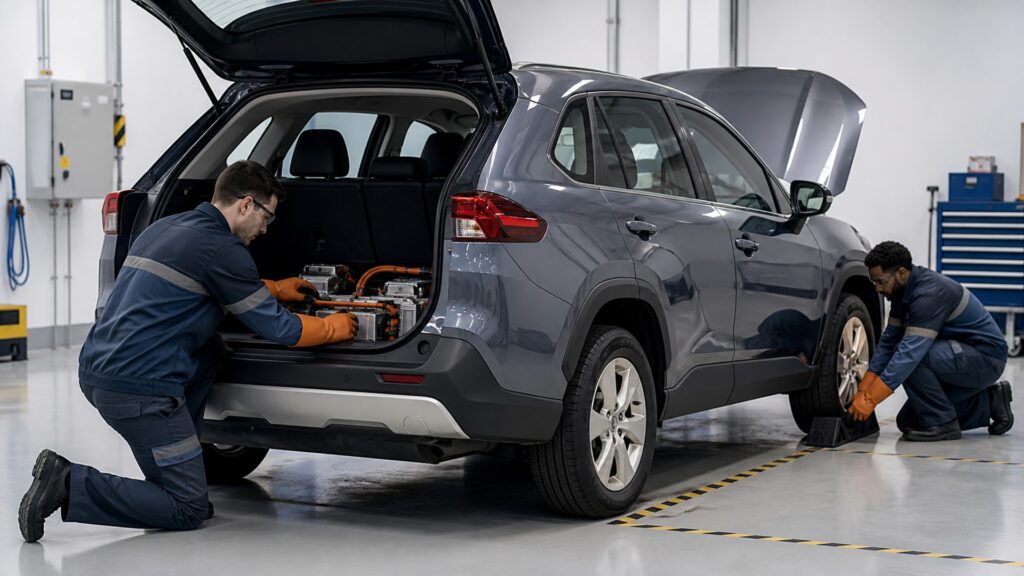
Why Hybrid SUVs Safety Factors Matters

Hybrid SUV safety combines ordinary vehicle protection with a few operating characteristics that deserve particular attention. Occupants still depend on the structure, restraints, tires, brakes, and driver. Electric assistance adds a propulsion battery and control systems, while quiet engine-off operation can make it easier to misjudge whether the vehicle is ready to move.

The hybrid label is neither a safety rating nor a reason to assume the vehicle is unusually hazardous. Evaluate the exact model’s crash evidence and equipment, learn its operating indicators, and follow its instructions for warnings, servicing, and an emergency.

By: Review Streets Research Lab
Updated: September 30, 2026
Explainer · 8-12 min read
hybrid suvs explainer hero image for Review Streets
What You'll Learn

Safety Checks That Matter in a Hybrid SUV

Understand both the vehicle’s protection and how its hybrid system behaves.

  • Verify crash results for the applicable model and version.
  • Recognize that a silent hybrid can still be ready to drive.
  • Keep normal braking, restraint, and tire checks in view.
  • Distinguish owner checks from high-voltage service work.
  • Know how to respond to warnings or damage without improvising.

Tip: Learn the ready, parked, and powered-off indications from the specific owner’s manual.

Definitions

Hybrid Safety Terms with Different Jobs

These distinctions help avoid treating all electrical and driving concerns as the same issue.

Ready state

The operating state in which the vehicle can provide propulsion even if its engine is not currently running.

  • Example: A ready indicator remains illuminated while the gasoline engine is silent.
  • Check: Learn the model’s indicator and shutdown procedure.
  • Limit: Sound alone cannot prove that the vehicle is switched off.

High-voltage system

The traction-battery and electric-drive circuitry used for propulsion. It requires specialized service procedures.

  • Example: Power electronics supply the electric motor from the traction battery.
  • Check: Leave service and fault testing to appropriately qualified personnel.
  • Limit: Switching the vehicle off does not authorize touching or dismantling its high-voltage parts.

Crashworthiness

The protection supplied by the vehicle structure and restraints during the tested collision conditions.

  • Example: A crash test measures occupant-related forces in a particular impact.
  • Check: Check the exact model and applicable rating information.
  • Limit: A hybrid badge does not establish a crash-test result.

Brake blending

Coordination of available electrical energy recovery and friction braking.

  • Example: The vehicle uses both systems as needed during deceleration.
  • Check: Understand normal brake feel and investigate important changes.
  • Limit: Energy recovery does not remove the friction brakes or their maintenance needs.

Driver assistance

Warnings or interventions that support parts of the driving task within stated limits.

  • Example: A collision-avoidance feature alerts the driver or may brake in defined conditions.
  • Check: Review fitted equipment and its operating restrictions.
  • Limit: The driver must still observe and respond to the road.

Post-incident precautions

Model-specific actions after a collision, flooding, fire, or other serious damage.

  • Example: Occupants move to safety and tell responders that the vehicle is a hybrid.
  • Check: Follow emergency instructions and qualified responder guidance.
  • Limit: An apparently quiet vehicle or battery is not proof that damage is harmless.

Tip: Identify whether a concern involves driving status, ordinary vehicle condition, or damaged electrical equipment before deciding what help is needed.

Operating status

Do Not Use Engine Noise as the On-Off Switch

A hybrid may stop its gasoline engine while the vehicle remains ready to drive. The engine can also restart automatically when the system requires it. Use the displayed status and the prescribed parking and shutdown sequence rather than relying on silence.

  • Learn the ready-state indication for the vehicle.
  • Secure the parked vehicle and confirm it is powered off before leaving it.
  • Do not leave a ready hybrid in an enclosed garage; its engine may start and produce exhaust.

For example, unloading groceries beside a silent SUV does not tell you whether its propulsion system is still active. Check the controls and indicators that establish its actual state.

Crash protection

Check the Applicable Hybrid Version, Not a General Impression

Crash ratings and safety equipment need to apply to the vehicle being considered. Consult the testing organization’s model and version information rather than transferring a result yourself from a related gasoline vehicle. Different tests address different aspects of protection and avoidance.

  • Use the correct year and configuration where specified.
  • Read qualifications and individual test results.
  • Check seating and restraint suitability for the people who will travel.

NHTSA frontal and overall comparisons are restricted to the same vehicle class and weights within 250 pounds. Similar stars outside those limits do not establish equal protection.

Everyday control

Keep Tires, Brakes, and Observation in the Assessment

Electric assistance changes propulsion, not the basic need for grip, controlled speed, and attention. Energy-recovery braking can change how deceleration feels, but the friction brakes remain important. Quiet low-speed travel also warrants careful observation around pedestrians and parking areas.

  • Learn normal braking behavior during ordinary, safe driving.
  • Follow tire-pressure and condition checks for the model.
  • Use cameras and alerts as assistance alongside direct observation.

A new warning, strong vibration, pulling, or marked braking change needs assessment according to the manual. Do not dismiss it as normal simply because the vehicle is a hybrid.

Electrical service

Keep High-Voltage Work Outside Routine Owner Checks

Owners can carry out the checks their manual permits, but traction-battery enclosures, high-voltage cables, and power electronics are not ordinary DIY inspection points. Appropriate service requires training, equipment, and model-specific procedures.

  • Do not open or probe high-voltage components.
  • Report warnings and symptoms accurately to a qualified service provider.
  • Use only the model’s permitted instructions for low-voltage assistance or other owner procedures.

A warning does not by itself identify a failed battery, and guessing at a repair can add risk without resolving the cause. Diagnosis should establish the affected system.

Damage and emergencies

Treat Serious Damage as an Emergency, Not a Repair Opportunity

After a collision or suspected battery damage, prioritize people and a safe location. Contact emergency services when warranted and identify the vehicle as a hybrid. Do not touch exposed electrical parts or attempt to manage damaged battery equipment yourself.

  • Follow the vehicle’s emergency guidance and responders’ instructions.
  • Keep away from a vehicle showing smoke, fire, or other serious danger.
  • Use qualified recovery and inspection before returning a damaged vehicle to service.

Routine hybrid ownership does not require fear of the battery. It requires knowing which conditions belong to trained responders and technicians rather than trying to investigate them at the roadside.

Quick Reality Check

What a Good Safety Assessment Includes

Combine ordinary vehicle evidence with an understanding of hybrid operation.

It establishes…

Applicable crash information, suitable restraints, and properly functioning safety equipment.

Familiarity with ready-state indicators, warnings, and the limits of owner maintenance.

It does not establish…

That every hybrid has identical protection or operating behavior.

That a silent or powered-off damaged vehicle is safe to inspect internally.

Common Myths

Misconceptions About Hybrid SUV Safety

Avoid shortcuts based on noise or the powertrain badge.

If the engine is silent, the vehicle is off

A hybrid can be ready to move with its engine stopped. Check the specified status indicator.

Energy recovery makes friction brakes unnecessary

Friction brakes remain part of stopping the vehicle and need appropriate care.

Hybrid vehicles have a single universal safety rating

Ratings apply to particular vehicles and tests. Check the relevant version and equipment.

An electrical warning always means traction-battery failure

Several systems can cause warnings. Qualified diagnosis is needed before deciding on a repair.

Tip: Use the manual and vehicle-specific evidence rather than assumptions about all hybrids.

FAQ

Questions About Hybrid SUV Safety

Answers for evaluating and using the vehicle responsibly.

Are hybrids automatically safer or less safe than gasoline SUVs?

The powertrain label does not settle the comparison. Examine the applicable crash results, avoidance equipment, vehicle condition, and intended use.

Can I leave a hybrid ready in the garage if the engine is stopped?

No. The engine can start automatically and create exhaust. Follow the shutdown instructions and do not operate it in an enclosed garage.

Does the high-voltage system need owner inspection?

Only perform the owner checks explicitly described in the manual. High-voltage testing and repairs belong to appropriately qualified personnel.

What should I learn first after purchase?

The ready and off indications, parking procedure, important warnings, and emergency guidance for the exact model.

Bottom Line

Hybrid SUV safety depends on vehicle-specific protection, sound condition, and correct understanding of a system that can operate quietly.

Know when the vehicle is ready, keep ordinary safety checks current, and leave high-voltage faults and serious damage to qualified help.

Next Steps

Go Deeper or Compare Your Options

Use these Review Streets paths to compare related categories and practical next decisions.

Vehicles

Compare related vehicle choices against the same carrying needs and driving routine.

SUVs

Compare related vehicle choices against the same carrying needs and driving routine.

Hybrid SUVs

Explore Hybrid SUVs with your passenger, cargo, and ownership requirements in mind.

Further reading: NHTSA: electric and hybrid vehicle safety; Toyota: hybrid operating indicators example; NHTSA: crash-rating comparison rules; NHTSA: driver assistance. Use the owner’s manual for the exact vehicle’s instructions and limits.