
Ion Generator
Component that produces charged particles near airflow.
- Use: identify the feature
- Variable: design and mode
- Tradeoff: Adds cost and complexity
Ionic technology matters because some dryers and brushes generate charged particles around wet or dry hair. Brands commonly connect the feature with less static, smoother appearance, or altered drying behavior.
The word ionic cannot guarantee faster drying, hydration, color protection, or healthier hair. Motor airflow, heat, nozzle, humidity, hair condition, and products may dominate. Ion output also lacks a shopper-friendly standardized comparison, so test switchable modes at the same settings and judge static, volume, time, and corrective passes.
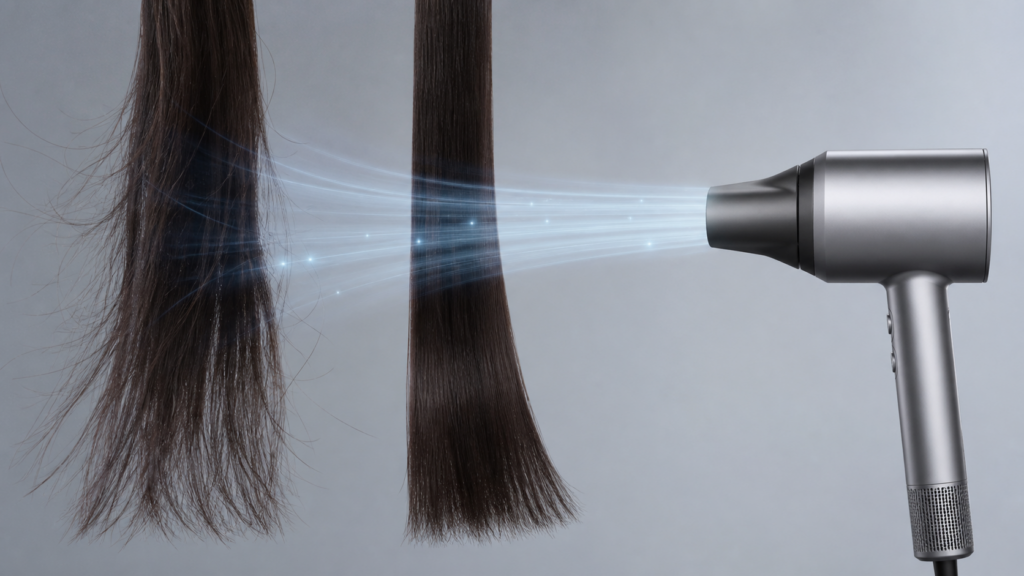
Explain ions as one variable that may affect static and surface behavior while airflow, heat, humidity, sectioning, and conditioning still determine the result.
Tip: Ionic describes an electrical function, not a health rating.
These ionic hair tool technology concepts separate mechanism, application, limits, and purchasing consequences.
Component that produces charged particles near airflow.
Electrical imbalance causing fibers to repel or cling.
Response of water beads and films during drying.
Ability to switch or adjust ion output.
Elevation and separation near the scalp.
Test holding heat, speed, nozzle, and moisture constant.
Tip: Use these terms to test ionic hair tool technology instead of relying on a front-label promise.
Generated ions may interact with charged surfaces and moisture. They do not biologically hydrate hair, seal every cuticle, or set temperature.
Ionic describes an electrical function, not a health rating.
Humidity response, curl pattern, breakage, and roughness can create frizz unrelated to static. Ionic output may affect one path without solving the rest.
A smoother finish does not identify the mechanism.
Motor strength or a concentrator can shorten time independently. Compare identical sections, settings, nozzle, distance, and starting moisture.
Drying speed belongs to the whole system.
Some styles need airy roots or texture rather than maximum smoothing. Switchable output can serve different zones and finishes.
Smoothness is not every style's goal.
Large numbers rarely share measurement distance, humidity, or method. Weight motor, controls, heat stability, filter, warranty, noise, and price more heavily.
A number without conditions is weak evidence.
Ionic capability can influence charge-related behavior but does not grade the whole tool.
Dry-weather flyaways decline under a controlled comparison.
Switchable output supports both sleek lengths and volume goals.
Humidity frizz and structural damage may remain unchanged.
Weak airflow, unstable heat, or poor ergonomics remains a poor tool.
These claims flatten the variables that determine how ionic hair tool technology performs in a real routine.
Ion generation and heater temperature are separate. Ionic tools can still run hot, so choose conservative heat, keep airflow moving, and monitor actual time.
Negative describes electrical charge, not quality or temperature. Judge repeatable static and finish results rather than the emotional meaning of the sign.
Air velocity, heat, water load, nozzle, section size, and endpoint affect time. Unstandardized ion counts cannot prove a faster dry.
Static is only one contributor. Humidity, damage, curl structure, friction, and broken fibers can remain.
Volume also follows root direction, tension, airflow, cut, and products. Switchable modes allow a fair test rather than a universal rule.
Tip: Test the exact ionic hair tool technology tool, setting, and routine before generalizing from its category.
The remaining decisions about ionic hair tool technology concern technique, compatibility, safety, upkeep, and value.
Use comparable sections with identical dampness, heat, speed, nozzle, distance, and products. Record time, static, volume, feel, and corrective passes.
Use a compliant product, keep it away from water, inspect cord and plug protection, and stop after sparking, electrical odor, or unstable operation.
They do not guarantee retention. Shorter drying for a particular user may reduce exposure, but washing, UV, heat, and dye chemistry still matter.
It can be when different users or styles need smoothing and volume. Compare the premium against motor quality, controls, warranty, and actual use.
Reduced static, conditioning films, tension, overdrying, or technique can all reduce body. Isolate ion mode before assigning cause.
They may share charge claims but lack the same airflow system. Evaluate the exact ion source, contact, heat, cleaning, and results independently.
Ionic technology matters as an electrical variable that may change static and surface behavior. It does not independently set temperature, airflow, time, damage, or hydration.
Test ion mode with other variables held steady. Clear controls, strong airflow, even heat, safe construction, and comfortable use deserve more weight than unexplained ion counts.
These Review Streets paths narrow the next ionic hair tool technology decision by format, goal, and routine fit.
Compare dryers, irons, wands, multi-stylers, and their buying paths.
Explore airflow, heat control, attachments, ergonomics, and long-term versatility.
Choose a retailer
Prices checked regularly. We may earn a commission at no cost to you.