Why Jigsaws Blade Type Matters

Blade type is a primary determinant of how a jigsaw interacts with material, yet it is often reduced to simple labels like “fine” or “coarse.” In reality, geometry, tooth form, set pattern, and material composition govern how the blade engages fibers, clears debris, and stabilizes the cut path. These factors define the mechanical behavior at the cutting edge, shaping how force is transferred and how the tool maintains control through varying densities and grain structures.

This explainer outlines the core blade design variables, including tooth pitch, tooth geometry, and blade materials, and how they influence cutting mechanics. It also clarifies how these elements interact with stroke motion and feed pressure, providing a structured understanding of how blade type governs cutting dynamics across different materials.

By: Review Streets Research Lab
Updated: April 7, 2026
Explainer · 8–12 min read
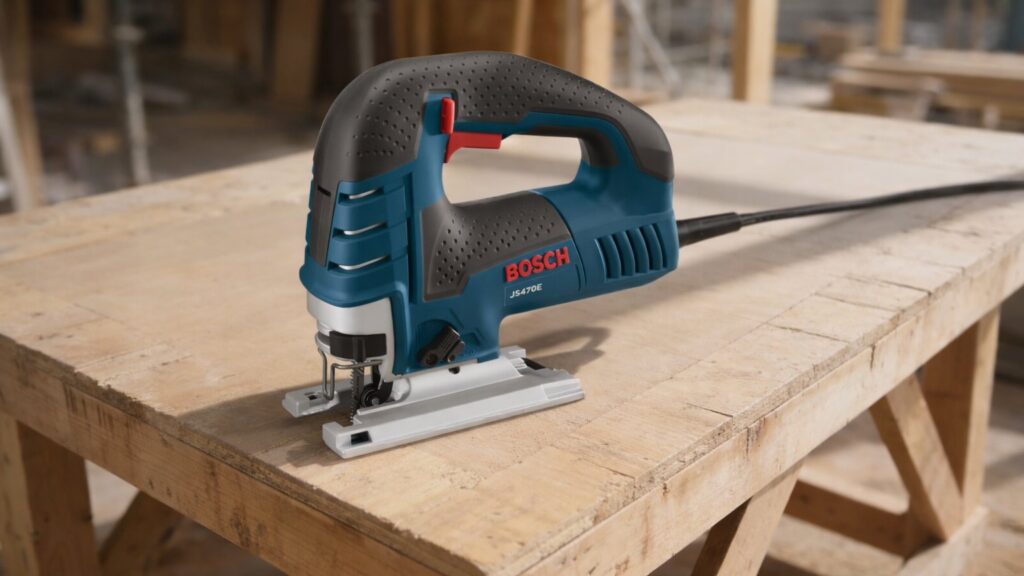
Bosch JS470E jigsaw for woodworking projects
What You’ll Learn

How Jigsaw Blade Design Shapes Cutting Behavior

A structured breakdown of blade design variables and how they govern cutting mechanics, material interaction, and stability throughout the jigsaw’s stroke cycle.

  • How tooth pitch controls chip size, feed rate, and cutting smoothness
  • What tooth geometry changes about material engagement and fiber separation behavior
  • How blade material affects edge retention, flexibility, and heat resistance
  • Why tooth set influences kerf width, friction, and debris clearance efficiency
  • How blade thickness and width impact tracking stability and deflection control
  • What happens at the cutting edge during upward and downward stroke motion
  • How different materials respond to blade interaction at varying cutting speeds

Tip: Blade type defines how force is applied and managed at the cutting edge, shaping the entire cutting process from entry to exit.

Definitions

Key Elements That Define Jigsaw Blade Behavior

Understanding blade performance starts with how its geometry, materials, and structure interact to control cutting forces, stability, and material response.

Tooth Pitch

The spacing between teeth determines how much material is removed with each stroke and how smoothly the blade advances through the cut.

  • Coarse pitch: Larger chips removed per stroke, increasing feed speed
  • Fine pitch: Smaller chips reduce tearing and improve surface consistency
  • Balance: Pitch must match material density for stable cutting behavior

Tooth Geometry

The shape and angle of each tooth determine how the blade engages, slices, or scrapes material during the cutting cycle.

  • Rake angle: Controls how aggressively the tooth bites into material
  • Tooth shape: Influences cutting direction and chip formation
  • Edge profile: Affects how fibers separate or deform under force

Blade Material

The alloy or composite construction governs how the cutting edge resists wear, heat, and deformation during repeated stroke cycles.

  • Hardness: Determines edge retention under abrasive conditions
  • Flexibility: Allows the blade to absorb lateral forces without fracturing
  • Heat tolerance: Influences performance during extended cutting under load

Tooth Set

The outward bending of teeth creates clearance in the cut, reducing friction and allowing debris to move away from the blade path.

  • Alternating set: Teeth bend left and right to widen the kerf
  • Kerf width: Impacts resistance and blade stability during motion
  • Debris flow: Determines how efficiently chips exit the cutting zone

Blade Thickness and Width

The cross-sectional dimensions of the blade influence how it resists bending forces and maintains a consistent path through the material.

  • Thickness: Adds rigidity to reduce deflection under load
  • Width: Stabilizes tracking during straight or curved cutting paths
  • Trade-off: Increased stiffness can limit maneuverability in tight curves

Cutting Stroke Interaction

The blade engages material primarily on the upward stroke, where tooth design and spacing determine how force is applied and material is removed.

  • Upstroke cutting: Teeth pull material upward during engagement
  • Downstroke relief: Blade clears chips and resets for the next cycle
  • Force transfer: Geometry controls how energy becomes cutting action

Tip: Blade behavior is not defined by one feature, but by how pitch, geometry, material, and structure work together during each stroke.

Power Path

How Blade Design Transfers Force Into the Cut

A jigsaw blade does not cut through material by sharpness alone. Its tooth spacing, geometry, and structure determine how force is applied, how material separates, and how the blade remains stable through each stroke.

  • Tooth pitch controls how much material is removed during each cutting cycle
  • Tooth geometry determines whether the blade slices, scrapes, or tears material fibers
  • Tooth set creates clearance so the blade can move without excessive binding
  • Blade thickness and width influence how consistently the cut path is maintained
  • Blade material affects how the cutting edge resists wear and heat buildup

When these elements are aligned, the blade converts reciprocating motion into a more controlled and predictable cutting action.

Motors

Tooth Geometry Changes How Material Breaks and Clears

The shape of each tooth governs how the blade engages the workpiece and how chips are formed and removed. Small changes in tooth angle or profile can significantly alter cutting behavior.

  • Rake angle changes how aggressively the tooth enters the material surface
  • Tooth profile affects whether the cut edge is sheared cleanly or fractured more abruptly
  • Gullet size determines how much debris each tooth can carry away between strokes

Tooth geometry defines the character of the cut because it controls both material entry and material evacuation.

Gearing

Pitch Matters More Than Tooth Count Alone

Blade pitch is often simplified into coarse versus fine categories, but its role is more specific than that. It regulates the size of each bite, the pace of chip removal, and the resistance generated during the stroke.

  • Wider tooth spacing removes larger chips and changes feed behavior
  • Tighter tooth spacing distributes cutting force across more contact points
  • Pitch influences how smoothly the blade moves through dense or layered material

Pitch sets the rhythm of the cutting process by controlling how much work each tooth performs.

Heat Management

Blade Material Determines Edge Stability Under Friction

As the blade moves through material, friction and repeated loading create heat at the cutting edge. The blade’s material composition determines how well it resists softening, dulling, and structural fatigue.

  • Harder alloys maintain cutting edges longer under abrasive conditions
  • More flexible constructions absorb side loads with less risk of fracture
  • Heat resistance affects how consistently the blade performs during extended cutting

Material choice shapes cutting consistency because it controls how the blade responds to stress, friction, and repeated impact.

User Control

Blade Dimensions Influence Tracking and Deflection

Beyond the teeth themselves, the blade body plays a major role in how the cut behaves. Width and thickness determine how well the blade resists bending forces and stays aligned as it moves through the kerf.

  • Thicker blades resist lateral flex and help preserve a straighter cut path
  • Narrower blades change direction more easily but give up some lateral stability
  • Wider blades support straighter tracking by increasing resistance to twisting forces

Dimensional stability affects real cutting behavior because the blade body governs how accurately tooth action follows the intended path.

Quick Reality Check

Where Blade Type Helps — and Where It Constrains

A quick reality check on how blade design supports cleaner cutting in some conditions while introducing tradeoffs in others.

What Blade Design Supports

Blade type can improve cutting stability, debris removal, and edge formation when tooth geometry and spacing align with how the material separates under motion.

A finer tooth pattern, for example, spreads cutting work across more contact points, which changes how force is applied and how the cut edge develops.

Where Blade Design Constrains

Every blade type carries limits because tooth spacing, set, and body dimensions are tuned for certain cutting behaviors rather than universal performance.

A blade built for faster chip removal may generate a rougher edge, while a tighter tooth pattern may cut more slowly as material clears less efficiently.

Common Myths

Misconceptions About How Jigsaw Blade Types Work

Blade types are often reduced to simple labels, but their real effects come from geometry, material properties, and how they manage cutting forces.

More teeth always means a better cut

Higher tooth counts do not automatically improve cutting quality. Tooth pitch changes chip size, feed resistance, and debris clearance, so a finer pattern can smooth the edge while also altering cutting speed and heat generation.

Any blade can cut any material

Blade type matters because materials resist cutting in different ways. Tooth geometry, edge material, and tooth set must interact properly with density, abrasiveness, and chip formation for the cutting process to remain stable.

Blade sharpness is the whole story

Sharpness matters, but it is only one part of blade behavior. Pitch, tooth shape, body stiffness, and heat resistance all influence how the blade tracks, clears waste, and transfers force through the stroke.

Thicker blades are always more accurate

Greater thickness can reduce deflection, but it also changes how the blade moves through the kerf. Accuracy depends on the balance between rigidity, tooth action, and how easily the blade can follow the intended path.

Blade type only affects cut speed

Blade type influences much more than cutting pace. It also shapes edge finish, tracking stability, kerf friction, chip evacuation, and how consistently the blade maintains its behavior as heat and loading increase.

Tip: Think of blade type as a cutting system, where tooth design, blade body, and material interaction work together to shape the entire cut.

FAQ

Frequently Asked Questions About Jigsaw Blade Types

Quick answers to common follow-up questions about how blade geometry, spacing, and construction influence cutting mechanics and material interaction.

What actually makes one jigsaw blade behave differently from another?

Blade behavior comes from the combined effect of tooth pitch, tooth geometry, tooth set, blade material, and body dimensions. Together, these factors determine how the blade enters the material, clears debris, resists deflection, and manages friction through each stroke.

Does a blade with more teeth always cut more cleanly?

Not automatically. More teeth usually means each tooth removes less material per stroke, which can smooth the cut edge, but it also changes feed resistance and chip clearance. Cleanliness depends on how tooth spacing matches the material’s structure and cutting demands.

Why does blade material matter if the teeth are sharp?

Sharpness is only the starting condition. Blade material determines how long the edge stays stable under friction, heat, and repeated impact. It also affects flexibility and fracture resistance, which changes how consistently the blade performs as cutting stresses accumulate.

Why does a blade sometimes wander away from the cut line?

Wandering usually comes from a combination of lateral deflection, uneven cutting forces, and insufficient blade stiffness for the load. Blade width, thickness, tooth pattern, and the amount of resistance in the material all influence how well the blade stays aligned.

What role does tooth set play in the cut?

Tooth set creates side clearance by pushing teeth outward from the blade body, which widens the kerf. This reduces friction between the blade and the cut walls while also helping chips move out of the cutting zone more efficiently.

Why do some blades cut faster but leave rougher edges?

Faster-cutting blades often remove larger chips with fewer teeth engaged at once, which changes how material fibers break apart. That can increase cutting pace while producing a more fractured edge because the material is separated less gradually.

Does blade thickness only affect durability?

Thickness affects more than structural strength. A thicker blade usually resists lateral bending more effectively, which changes tracking stability and deflection behavior. That added rigidity can alter how accurately the blade follows a path under cutting load.

What matters more for blade behavior: teeth or blade body?

Neither works in isolation. The teeth govern how material is cut and cleared, while the blade body determines how well that cutting action stays aligned and controlled. Real cutting behavior comes from the interaction between cutting geometry and structural stability.

Tip: When a cut behaves unexpectedly, trace it back through tooth action, chip clearance, heat, and blade stability rather than treating blade type as a single variable.

Bottom Line

Jigsaw blade type governs cutting forces, chip flow, and path stability together. Tooth geometry, pitch, set, and blade structure determine how material separates and how consistently the blade maintains control through the cut.

Once those relationships are clear, it becomes easier to interpret cutting behavior as a system of interacting variables rather than a single blade attribute.

Next Steps

Continue Through Related Jigsaw Guides

With the core mechanics in place, these pages extend the topic into broader jigsaw categories, side-by-side distinctions, and structured decision frameworks.

Jigsaw Picks

A broader category page that organizes jigsaws by intended use, cutting demands, and the kinds of tradeoffs different designs introduce.

Jigsaw Comparisons

A focused set of matchups that isolates specific design differences and shows how those differences affect control, cutting behavior, and overall tool character.

Jigsaw Buying Guides

A structured reference section that explains which tool characteristics shape real use and how to interpret them within a clearer decision-making framework.

Quick Summary

Why Blade Type Matters

  • Blade type shapes cutting force, chip removal, and edge formation together
  • Tooth pitch changes feed resistance, debris clearance, and cut smoothness
  • Tooth geometry determines how material fibers separate during each stroke
  • Blade width and thickness influence tracking stability and deflection control
  • Blade material affects heat resistance, edge retention, and structural behavior