
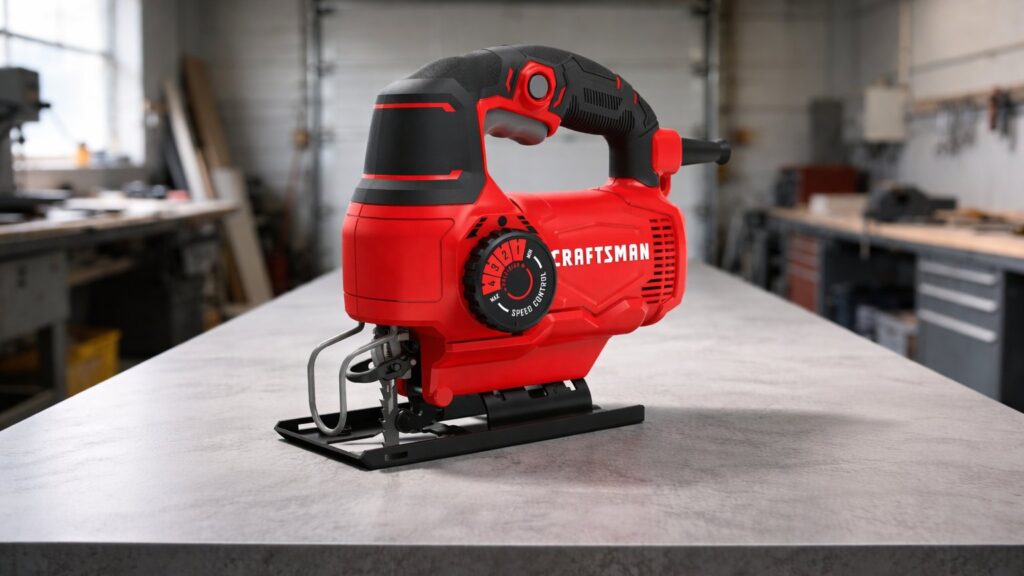
Why Jigsaws Orbital Action Matters

Orbital action in a jigsaw is often misunderstood as a simple speed adjustment, when it is fundamentally a change in how the blade moves through the cut. Instead of traveling strictly up and down, the blade follows a forward-tilting path on the upstroke, altering tooth engagement and material interaction. This motion changes how chips are cleared, how force is applied, and how the cutting edge meets the workpiece.

This explainer breaks down the mechanics behind orbital motion, including stroke geometry, blade path, and how different orbital settings influence cutting behavior. It will clarify how the system functions internally and how these changes affect material removal, blade load, and the overall cutting process.

By: Review Streets Research Lab
Updated: April 19, 2026
Explainer · 8–12 min read
craftsman cmes610
What You’ll Learn

How Jigsaws Orbital Action Works

A clear breakdown of how orbital motion changes blade movement, material interaction, and cutting dynamics within a jigsaw system.

  • How orbital mechanisms alter blade path beyond simple vertical reciprocation
  • What changes in tooth engagement during forward-tilting upstroke motion
  • How chip ejection improves through increased forward blade travel during cutting
  • Why higher orbital settings reduce friction but increase material disruption
  • How stroke geometry affects cutting force direction and blade loading
  • What internal linkages create adjustable orbital movement within the mechanism
  • How orbital motion changes heat buildup and cutting efficiency over time

Tip: Think of orbital action as changing the blade’s path, not its speed, which reshapes how force and material removal occur.

Definitions

Key Parts That Shape Jigsaw Orbital Action

Understanding orbital cutting starts with how internal components guide blade motion, redirect force, and influence how material is removed during each stroke.

Reciprocating Drive

The core mechanism that converts motor rotation into vertical blade motion. It establishes the baseline up-and-down stroke that orbital systems build upon.

  • Stroke path: Defines the vertical travel distance of the blade
  • Cycle timing: Controls how quickly strokes repeat during operation
  • Load transfer: Directs cutting force straight into the workpiece

Orbital Cam Mechanism

An internal cam shifts the blade forward during the upstroke, creating an arcing motion. This added movement changes how the teeth engage and exit the material.

  • Forward tilt: Pushes the blade into the cut on the upstroke
  • Return path: Pulls the blade back slightly on the downstroke
  • Adjustment: Alters how pronounced the orbital motion becomes

Blade Path Geometry

The combined motion of vertical stroke and forward travel creates a curved cutting path. This geometry determines how the blade meets and leaves the material.

  • Entry angle: Changes how teeth first contact the surface
  • Exit clearance: Helps release material after each cut cycle
  • Path shape: Influences how aggressively material is removed

Chip Ejection Flow

Orbital motion affects how debris is cleared from the cut. Forward movement helps lift chips away, reducing buildup around the blade during operation.

  • Clearance: Improves space for chips to escape the kerf
  • Heat control: Reduces friction from trapped material
  • Continuity: Supports smoother cutting cycles without clogging

Blade Support System

Guides and rollers stabilize the blade as it moves through both vertical and orbital paths. Proper support limits deflection and maintains consistent alignment.

  • Roller contact: Keeps the blade tracking straight under load
  • Lateral stability: Reduces side-to-side movement during cutting
  • Alignment: Ensures motion follows the intended path geometry

Cutting Force Direction

Orbital action redirects cutting force forward rather than purely vertical. This shift changes how energy is applied to the material during each stroke.

  • Force vector: Combines upward and forward motion during cutting
  • Material interaction: Alters how teeth shear and lift fibers
  • Load distribution: Spreads cutting effort across a longer path

Tip: Orbital action is best understood as a change in blade path geometry, where motion direction reshapes force, chip flow, and cutting interaction.

Power Path

How Orbital Motion Changes the Blade’s Cutting Path

A jigsaw does not cut through vertical motion alone when orbital action is engaged. The system adds forward movement to the upstroke, changing how the blade enters, travels through, and exits the material.

  • The blade still moves up and down as the primary cutting motion
  • An internal mechanism pushes the blade slightly forward during the upstroke
  • That forward travel increases tooth engagement while the blade is cutting
  • The blade pulls back slightly on the return stroke to reduce drag
  • This combined path creates a more aggressive cutting cycle than straight reciprocation

Because the blade follows a different path through the cut, orbital action changes both cutting behavior and material interaction at a system level.

Motors

Why the Upstroke Does Most of the Cutting Work

In most jigsaw systems, the teeth are oriented to cut on the upstroke rather than the downstroke. Orbital action matters because it amplifies what happens during that cutting phase.

  • Tooth engagement increases when the blade moves upward and slightly forward together
  • Material entry becomes more forceful because the teeth meet the cut face at an angle
  • Return motion does less cutting work and helps reset the blade for the next stroke

Once orbital action is understood through the upstroke, the reason it changes cutting speed, friction, and surface behavior becomes much clearer.

Gearing

How Adjustable Orbital Settings Change Cutting Aggression

Orbital action is not simply on or off in many jigsaw systems. Different settings alter how much forward bias is added to the stroke, which changes how aggressively the blade works through the cut.

  • Lower settings keep the blade path closer to straight reciprocation
  • Higher settings increase forward travel during the cutting stroke
  • More forward motion usually increases material removal per cycle
  • Greater orbital movement also changes how the blade loads and releases

The setting changes the cutting geometry itself, which is why the same tool can behave differently even at similar stroke speeds.

Heat Management

Why Orbital Action Changes Friction, Debris Flow, and Heat

Cutting is not only about tooth motion; it also depends on how efficiently the kerf clears material. Orbital action affects friction by helping chips escape and by reducing continuous rubbing on the return stroke.

  • Forward motion helps lift chips away from the cutting zone
  • Cleaner chip evacuation reduces packing around the blade
  • Less trapped debris means less frictional drag during repeated strokes
  • Lower drag changes how quickly heat builds along the blade and cut line

By reshaping chip flow and contact time, orbital action influences how efficiently cutting energy becomes material removal instead of wasted heat.

User Control

Why Blade Path Geometry Affects Cut Behavior

Blade motion determines more than speed; it also shapes how the cut feels and how the material responds. When orbital action changes the direction of force, it also changes smoothness, tracking behavior, and edge disruption.

  • A straighter blade path generally produces a more restrained cutting action
  • A more arcing path applies force more aggressively into the material
  • Changes in force direction influence how fibers break and clear
  • Blade support becomes more important as forward cutting pressure increases

What feels like a simple setting change is actually a shift in blade geometry, which is why orbital action has such visible effects on cutting behavior.

Quick Reality Check

Where Orbital Action Helps — and Where It Changes the Cut

A quick balance of what orbital action improves, and what it changes when blade motion becomes more aggressive.

Where Orbital Action Helps

Orbital action can remove material more quickly because the blade moves upward and forward together, increasing tooth engagement during the cutting stroke.

That forward-biased motion also helps clear chips from the kerf, reducing drag and allowing the blade to spend less time rubbing through packed debris.

Where It Changes Behavior

Orbital action also makes the cut more forceful because the blade enters the material on an arcing path rather than a straighter vertical stroke.

As that path becomes more pronounced, surface disruption, blade loading, and edge roughness can increase because force is applied less gently at the cut face.

Common Myths

Misconceptions About What Orbital Action Actually Does

Orbital action is often reduced to a speed feature, when it actually changes blade path, force direction, and cutting interaction.

Orbital action only makes the blade move faster

Orbital action does not mainly change stroke speed; it changes stroke shape. The blade still reciprocates, but it also moves forward on the upstroke, which alters tooth engagement and cutting force.

Higher orbital settings are always more efficient

Higher settings can remove material more aggressively, but they also apply force differently at the cut face. That change can increase surface disruption and blade loading even while cutting becomes faster.

Orbital action and straight stroke cut identically

These motions behave differently because the blade follows a different path through the material. A straighter stroke cuts with less forward bias, while orbital motion changes how the teeth enter and clear the kerf.

It only matters in thick materials

Orbital action affects cutting mechanics in any material because it changes blade geometry during the stroke. Thickness may make the effect more visible, but the underlying shift in force direction is always present.

Rougher cuts come only from blade quality

Blade design matters, but orbital motion also influences surface behavior by changing how aggressively the teeth meet the material. A more arcing path can disturb fibers differently than a straighter reciprocating stroke.

Tip: The clearest way to think about orbital action is as a change in blade path geometry, not as a simple increase in speed.

FAQ

Frequently Asked Questions About Jigsaw Orbital Action

Clear answers to common questions about how orbital motion changes blade movement, cutting force, and overall interaction with the material.

What does orbital action actually change in a jigsaw cut?

Orbital action changes the blade’s path, not just its speed. By adding forward motion during the upstroke, it alters how the teeth engage the material, how force is applied, and how efficiently chips are cleared from the cut.

Why does orbital action make cutting feel more aggressive?

The blade enters the material at a forward angle instead of straight up and down. This increases tooth engagement per stroke, which raises cutting force at the contact point and changes how material is displaced.

Does orbital action change how the blade removes material?

Yes, because the forward motion lifts chips away more effectively during the cutting stroke. This reduces packing in the kerf and allows each stroke to remove material more continuously rather than repeatedly cutting through debris.

Why can orbital cuts look rougher at higher settings?

As orbital motion increases, the blade applies force more directly into the material face. This can disturb fibers more aggressively, especially on the surface, because the cutting path is less controlled than a straight reciprocating motion.

Is orbital action always active during a jigsaw’s operation?

Orbital action is typically adjustable and can be reduced or removed depending on the mechanism setting. When minimized, the blade follows a more vertical path, changing how force is applied and how the cut progresses.

How does orbital motion affect friction and heat buildup?

By pulling the blade slightly back on the return stroke, orbital motion reduces continuous rubbing against the material. Combined with better chip ejection, this can lower friction and slow the rate of heat buildup along the blade.

What role does the upstroke play in orbital cutting behavior?

The upstroke is where most cutting occurs, and orbital motion enhances it by adding forward movement. This increases tooth engagement during that phase, making the upstroke more dominant in material removal compared to the return stroke.

Why does changing orbital settings alter cutting behavior so noticeably?

Each setting changes the degree of forward blade travel during the stroke. That shift modifies cutting geometry, which directly affects how force is applied, how chips move, and how the blade interacts with the material.

Tip: When cutting behavior changes, think in terms of blade path geometry first, since motion direction shapes force, chip flow, and surface interaction.

Bottom Line

Orbital action changes blade path geometry, not just cutting speed or power. By adding forward motion to the upstroke, it reshapes how force is applied, how teeth engage, and how material is cleared during each cutting cycle.

Once blade motion is understood as a geometric system, differences in cutting behavior become easier to interpret in terms of force direction, chip flow, and surface interaction.

Next Steps

Go Deeper or Compare Your Options

Now that the cutting mechanics are clearer, these pages extend that understanding into broader jigsaw categories and decision frameworks.

Jigsaw Roundups

A broader view of jigsaw categories, intended uses, and how different tool designs align with different cutting priorities.

Jigsaw Comparisons

Focused head-to-head breakdowns that isolate design differences and explain how specific features change cutting behavior in practical terms.

Jigsaw Buying Guides

Decision-oriented guides that organize key features, tradeoffs, and terminology so the category feels easier to interpret.

Quick Summary

Why Orbital Action Matters

  • Orbital action adds forward motion to the blade’s upward cutting stroke
  • That altered blade path changes force direction and tooth engagement
  • More orbital movement usually increases chip clearance and material removal
  • Higher settings also make the cut feel more aggressive and disruptive
  • Understanding blade geometry explains speed, friction, and surface behavior together