Why Luxury Performance Cars Maintenance Role Matters

Maintenance matters in a luxury performance car because its appeal depends on several systems working well at the same time. Strong propulsion needs dependable braking and tire contact, while a refined cabin depends on the condition of the chassis, tires, climate equipment, and other supporting parts. A vehicle can retain its power yet lose the quietness, composure, or consistent response that made it satisfying to drive.

The correct care plan follows the exact model, powertrain, equipment, and operating history. A service display can organize some requirements, but it is not a substitute for the full schedule or attention to new symptoms. Engine-powered, hybrid, and electric vehicles also differ in their maintenance needs, so a broad luxury-performance label cannot supply a universal list of fluids or intervals.

By: Review Streets Research Lab
Updated: October 5, 2026
Explainer · 8-12 min read
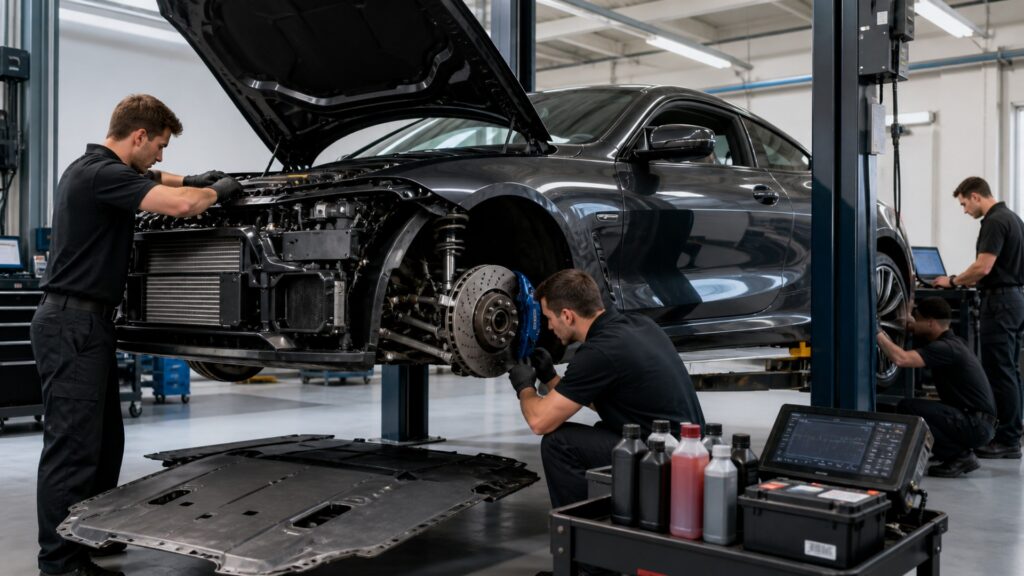
luxury performance cars explainer hero image for Review Streets
What You'll Learn

Preserving Both Performance and Refinement

Connect scheduled care and condition checks with the experience the complete vehicle was designed to provide.

  • Use service reminders with the complete vehicle schedule.
  • Recognize how tires and chassis condition affect ride and response.
  • Match brake care to the fitted system.
  • Account for the exact propulsion and cooling requirements.
  • Record changes in comfort and behavior before they become harder to diagnose.

Tip: A new vibration, warning, or change in ride is useful information even if the next scheduled service is still some time away.

Definitions

Six Concepts for Maintaining a Luxury Performance Car

These ideas distinguish planned service, actual condition, and the experience occupants notice.

Service reminder

A display or system that indicates specified maintenance requirements or forecasts when they are due.

  • Example: an upcoming service shown by date, distance, or both
  • Check: read it together with the full maintenance instructions
  • Limit: not every required item is necessarily displayed separately

Component condition

The actual state of a part, including wear, damage, leakage, or abnormal operation.

  • Example: a tire developing uneven wear before a routine service visit
  • Check: use appropriate inspections and measurements
  • Limit: a future service date does not prove current condition

Approved specification

The required compatibility standard for a fluid, part, or service item.

  • Example: the correct replacement component for a particular brake package
  • Check: match the actual equipment and instructions
  • Limit: a premium price or similar appearance does not establish suitability

Adaptive chassis equipment

Fitted systems that vary supported chassis behavior, such as damping, under control.

  • Example: an adjustable damper changing movement resistance
  • Check: identify the exact equipment and diagnostic requirements
  • Limit: adjustability does not remove mechanical wear or faults

Refinement baseline

The vehicle's familiar ride, sound, and comfort behavior under comparable conditions.

  • Example: a previously smooth car developing a repeatable vibration
  • Check: describe what changed and when it occurs
  • Limit: subjective feel alone does not identify the failed part

Diagnostic history

A record of symptoms, conditions, warnings, and work that helps explain a problem.

  • Example: noting that a ride change began after a tire replacement
  • Check: keep dates, specifications, and warning details
  • Limit: a correlation is evidence to investigate rather than proof of cause

Tip: A good record connects the service performed with the equipment fitted and any change the occupants noticed.

Service information

Read the Reminder With the Full Maintenance Plan

Service displays can help organize maintenance by date, distance, or monitored conditions, but the full instructions remain important. BMW's maintenance booklet, for example, explains that some tasks are associated with other service visits rather than appearing as separate display items. Apply that guidance to the correct vehicle and model year. Do not infer that a blank warning area means every inspection or time-based requirement is complete.

  • Use the correct schedule and any equipment-specific supplements.
  • Check items that are not individually displayed.
  • Keep time-based requirements accurate after storage or interrupted use.

A service screen can be useful without being an exhaustive checklist. A complete record should identify what work was actually performed at each visit.

Tires and chassis

Ride Quality Depends on Physical Condition

Tires, wheels, suspension components, and their setup influence both response and comfort. Uneven wear, damage, imbalance, or another fault can change the experience even when the engine performs normally. Adjustable damping changes supported behavior within the hardware; it cannot repair a damaged component. Have new pulling, persistent vibration, unusual noises, or a marked ride change assessed rather than trying to hide it with a different mode.

  • Check tire condition and specified cold inflation.
  • Investigate changes after impacts or component replacement.
  • Use the correct procedures for the fitted chassis equipment.

A vibration that appears after a wheel or tire change is useful diagnostic context. It does not prove one cause, but it helps focus the investigation more than a general report that the car feels less refined.

Braking

Maintain the Brake System That Is Actually Fitted

Luxury performance cars can use different brake materials and packages, each with its own service requirements. Inspection must assess the relevant components and limits rather than rely on size, appearance, or a generic interval. Heat created during friction braking also needs to be managed effectively. Brembo's maintenance guidance explains why inadequate heat dissipation can impair brake performance and damage components. Follow the vehicle-specific requirements and investigate changed pedal feel, noise, or braking behavior.

  • Identify the fitted brake package before selecting parts or procedures.
  • Follow the applicable wear and fluid requirements.
  • Distinguish ordinary road service from any supported event preparation.

A visually impressive brake assembly still needs appropriate inspection. A part intended for a different package is not a valid substitute merely because it looks similar or is marketed for performance.

Propulsion and cooling

Match Care to the Actual Energy System

A combustion engine, hybrid system, and battery-electric powertrain do not have identical service needs. Their cooling, lubrication where applicable, and diagnostic requirements depend on the exact design. Follow the manufacturer's instructions and use qualified service for systems requiring specialist procedures. Unexplained fluid loss, temperature warnings, or changed performance should be investigated in context rather than treated as an ordinary consequence of a powerful vehicle.

  • Identify powertrain-specific service items and limits.
  • Use specified fluids and compatible replacement parts.
  • Follow warning instructions and specialist-service requirements.

A hybrid combines systems rather than becoming maintenance-free when some journeys use electric drive. Conversely, an electric vehicle should not be given a combustion-engine service checklist that does not apply to it.

Cabin and records

Preserve the Comfort Features and Document Changes

Climate performance, visibility, controls, and unwanted cabin disturbance are part of the ownership experience. Include their specified care and inspection requirements rather than treating refinement as decoration. Keep a useful description of new symptoms: when they happen, which settings are active, what changed recently, and whether a warning appeared. Good records help distinguish ordinary operating differences from a developing problem and support continuity between service visits.

  • Follow care instructions for the fitted cabin and visibility systems.
  • Record repeatable conditions and warning messages.
  • Confirm completed work before service reminders are reset.

A recurring noise at one road speed or a climate problem in particular weather gives a technician a more useful starting point than a broad complaint that the car no longer feels luxurious.

Quick Reality Check

Maintenance Supports the Designed Experience

Performance and refinement depend on condition as well as equipment.

Appropriate care can help preserve

Consistent response, braking, ride, and everyday comfort.

A clear service history and earlier recognition of changes needing attention.

It cannot guarantee

Freedom from faults or readiness for an unsupported use.

That a display covers every requirement or a premium part suits every application.

Common Myths

Misconceptions About Luxury Performance Maintenance

Sophisticated equipment still needs compatible parts, inspections, and accurate records.

The service display tells me absolutely everything

Consult the full schedule; some tasks may be associated with other services or separate instructions.

Adaptive suspension can compensate for mechanical faults

It adjusts supported behavior but cannot repair worn or damaged hardware.

Low mileage means condition is automatically good

Time, storage, component condition, and use remain relevant.

Every luxury performance car needs the same service plan

Powertrains, equipment, model years, and requirements differ.

Tip: Use reminders to organize care and observed condition to identify issues that cannot wait for the next reminder.

FAQ

Questions About Maintaining Luxury Performance Cars

The right answer starts with the exact vehicle and its fitted systems.

Should I wait for a service alert if the car develops a vibration?

Have persistent or significant new symptoms assessed. A reminder forecasts particular work; it does not rule out a current fault.

Can any high-performance brake part be used?

No. It must suit the vehicle, fitted brake package, and required specifications.

Does an electric model still need care?

Yes. Its propulsion requirements differ, but tires, brakes, chassis, and other systems still need the specified maintenance.

Why record the settings present when a problem occurs?

Settings can change normal behavior. Recording them helps distinguish an expected response from an unexplained change.

What should a service record contain?

Date, mileage, work performed, relevant part and fluid specifications, warning details, and any unresolved symptoms or follow-up requirements.

Bottom Line

Maintenance preserves a luxury performance car's value in use by supporting its performance, composed ride, and cabin comfort together.

Follow the complete vehicle-specific plan, use compatible service items, and investigate changed behavior. A refined driving experience depends on maintained condition, not just the original specification.

Next Steps

Go Deeper or Compare Your Options

Use these Review Streets paths to compare related categories and practical next decisions.

Vehicles

Explore vehicle systems and ownership needs.

Further reading: BMW maintenance-system example and full schedule; BMW adaptive damping explanation; Brembo brake maintenance guidance; NHTSA tire care.