Why Luxury Performance Cars Operating Function Matters

Operating function matters in a luxury performance car because the intended experience depends on several systems coordinating their responses. Power delivery, transmission behavior, damping, steering assistance, and braking can all influence whether the car feels smooth, immediate, settled, or abrupt. Understanding their separate jobs helps an owner select appropriate settings and recognize a change that needs attention.

A mode name does not fully explain what the vehicle will do. One setting may adjust several functions, and optional hardware can change which adjustments are available. Hybrid and electric propulsion add further differences. Start with the exact vehicle instructions, then connect each control to the physical system it affects rather than treating every setting as a general increase in capability.

By: Review Streets Research Lab
Updated: October 5, 2026
Explainer · 8-12 min read
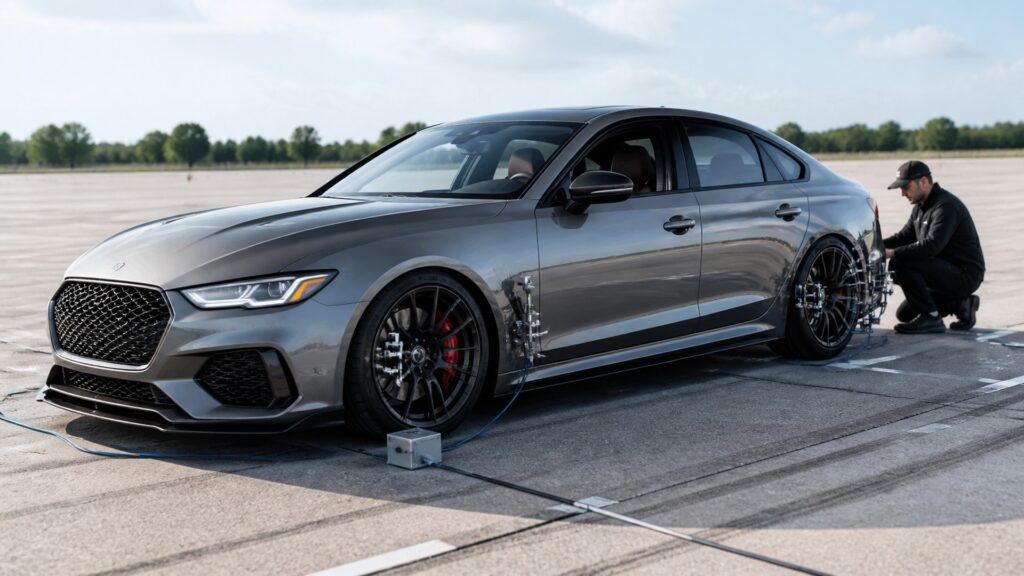
luxury performance cars explainer hero image for Review Streets
What You'll Learn

Understanding the Systems Behind a Refined Response

Learn how separate functions combine to shape the driving experience.

  • Connect driver requests with powertrain response.
  • Distinguish damping from ride height and tire grip.
  • Understand drive distribution and steering assistance.
  • Recognize the roles of friction braking and electrical energy recovery.
  • Read modes, limits, and warnings in context.

Tip: Before changing a setting, identify the response it adjusts and the equipment on which that adjustment depends.

Definitions

Six Functions Behind Luxury Performance Behavior

These concepts explain the mechanisms behind the controls.

Powertrain coordination

The management of available propulsion sources and transmission behavior to meet a drive request.

  • Example: a hybrid coordinating engine and motor output
  • Check: check the fitted powertrain and its operating modes
  • Limit: not every vehicle uses the same sources or strategy

Adaptive damping

Controlled variation of resistance to suspension movement.

  • Example: a damper changing how the body settles after a disturbance
  • Check: distinguish damping from spring support and ride height
  • Limit: adjustment cannot repair a worn component

Drive distribution

The delivery of propulsion through the driven axles and wheels.

  • Example: an all-wheel-drive system managing front and rear drive
  • Check: identify the actual drivetrain functions
  • Limit: distribution does not create unlimited tire grip

Energy recovery

The capture of some vehicle motion as electrical energy during supported slowing.

  • Example: an electrified powertrain returning some energy to its battery
  • Check: read the system-specific conditions and limits
  • Limit: friction brakes remain part of the braking system

Calibration

The settings and control rules that shape how a system responds.

  • Example: a selected mode changing input response or shift behavior
  • Check: learn which functions change together
  • Limit: a sharper feel does not necessarily mean more peak power

Protective limit

A restriction or action intended to keep a system within supported operating conditions.

  • Example: a temperature-related message requiring a specified response
  • Check: follow the exact warning instructions
  • Limit: overriding or ignoring a limit does not resolve its cause

Tip: Comfort and response are results of coordination. No single setting changes every physical property of the car.

Propulsion

The Driver Requests Motion Through a Coordinated Powertrain

Accelerator input is interpreted by controls that manage the fitted engine, motor, transmission, or combination. Different operating conditions can change which components contribute and how the vehicle responds. BMW's hybrid M5 provides a specific example of engine and motor coordination. Other luxury performance cars use different arrangements. Knowing the actual system helps explain normal changes without assuming that every variation in response is a fault.

  • Identify the propulsion sources and transmission.
  • Learn the functions of the available operating modes.
  • Consider conditions alongside the selected setting.

A hybrid can change its mix of propulsion during a journey. The relevant question is whether that behavior matches its instructions and indications, not whether it always sounds the same.

Ride control

Dampers Manage Movement Within the Existing Chassis

Springs support the vehicle and allow movement; dampers control the rate of that movement. Adaptive damping changes supported resistance according to its control strategy. It does not necessarily alter ride height, wheel travel, or tire construction. The complete chassis still determines how road disturbances reach the cabin. This distinction helps avoid expecting a comfort setting to solve every harshness or clearance concern.

  • Separate damping from other suspension functions.
  • Assess the fitted wheel and tire package.
  • Investigate a new ride problem rather than masking it with settings.

A setting may change how quickly the body settles after a bump while leaving the space beneath the car unchanged. Those are different functions even when both affect everyday use.

Direction and drive

Steering Feel and Torque Distribution Have Different Jobs

Steering assistance influences the effort required at the steering wheel, while drive distribution influences how propulsion reaches the driven wheels. Chassis and stability systems can coordinate additional actions. These functions contribute to the overall response but do not mean that heavier steering produces more grip or that all-wheel drive guarantees control. The tires and surface remain central to the result.

  • Distinguish steering effort from path-control capability.
  • Identify the fitted drivetrain and differential functions.
  • Use the recommended settings for the environment.

Two settings can feel different through the steering wheel without changing the tires. A change in feel should not be mistaken for a measured increase in available road grip.

Slowing

Electrical Recovery and Friction Braking Can Work Together

Where fitted, an electrified powertrain can recover some energy during slowing. Friction brakes handle another part of the required braking. The coordination and available adjustments vary by model and operating conditions. Learn the supported behavior rather than assuming that lifting off the accelerator always produces the same deceleration. Brake-system maintenance remains necessary, and unexpected behavior or warnings require the response specified by the manufacturer.

  • Read the exact energy-recovery and braking guidance.
  • Expect limits to depend on the system and conditions.
  • Keep required brake inspections and service current.

BMW's M5 documentation describes adjustable energy recuperation as one part of its coordinated controls. That is a model-specific function, not a feature to assume in every luxury performance car.

Settings and feedback

Use Modes as Defined Tools and Warnings as Information

A mode can coordinate multiple calibrations and may affect assistance availability as well as feel. Learn its intended use and restrictions before selecting it. If the car changes behavior unexpectedly, record the setting, conditions, warnings, and recent work. That context helps distinguish normal operation from a fault without guessing at a repair. Settings should not be used to override protective behavior or conceal a developing problem.

  • Review what changes together in each mode.
  • Keep public-road settings appropriate to the vehicle guidance.
  • Describe symptoms with their operating context.

A familiar response change after selecting a mode is different from unexplained reduced performance accompanied by a warning. The circumstances determine the appropriate next step.

Quick Reality Check

Knowledge Improves Expectations

Understanding functions helps the driver use and describe the vehicle appropriately.

It helps you

Connect controls with the responses they are intended to change.

Recognize and report unexpected behavior more clearly.

It does not replace

The exact manual, necessary maintenance, or qualified diagnosis.

Suitable tires, operating conditions, or physical system limits.

Common Myths

Misconceptions About Luxury Performance Controls

A feature name does not describe every effect or limitation.

Comfort mode changes every chassis property

Its effects depend on the fitted hardware and calibration.

Heavier steering creates more grip

Assistance feel and tire-road forces are different properties.

Energy recovery removes brake maintenance

Friction brakes remain part of the system and require specified care.

The sportiest setting is always the best setting

Modes have intended uses and restrictions. Choose appropriately for the environment.

Tip: Explain the job behind a control before deciding what result to expect.

FAQ

Questions About Luxury Performance Operating Function

Similar names can describe different functions on different vehicles.

Does every luxury performance car have adaptive damping?

No. Check the actual equipment rather than assuming it from the category.

Can a mode add hardware the car does not have?

No. It adjusts supported functions through fitted equipment.

Why can an electrified car slow differently in different circumstances?

Energy recovery and braking behavior depend on the specific system, settings, and conditions. Follow its guidance.

Does a sharper accelerator feel prove more power?

No. Input mapping can change without increasing maximum output.

What should I record when behavior changes?

The selected settings, conditions, warning messages, recent service, and the precise response you noticed.

Bottom Line

Operating function matters because luxury performance comes from coordinated propulsion, chassis, braking, and control systems.

Understand each function and its limits, then use the exact vehicle instructions to choose settings and recognize changes that need attention.

Next Steps

Go Deeper or Compare Your Options

Use these Review Streets paths to compare related categories and practical next decisions.

Vehicles

Explore vehicle systems and their roles.

Further reading: BMW M5 system coordination and energy recovery; BMW adaptive damping explanation; Bosch stability-control functions.