
Collision warning
A system alert about a detected potential collision.
- Example: a forward-collision alert calling for driver attention
- Check: learn the alert and expected response
- Limit: a warning function alone does not apply the brakes
Safety in a luxury performance car depends on more than powerful brakes, a quiet cabin, or an extensive assistance package. Strong acceleration can build speed quickly, while road grip, visibility, stopping space, and human attention remain limited. A refined driving experience does not establish that the chosen pace or conditions are safe.
The practical task is to understand the exact vehicle: which features warn, which can intervene, what their restrictions are, and how occupants should use the seats and restraints. Combine that knowledge with suitable tires, maintained systems, model-specific safety information, and attentive driving. Premium positioning is not a substitute for those checks.
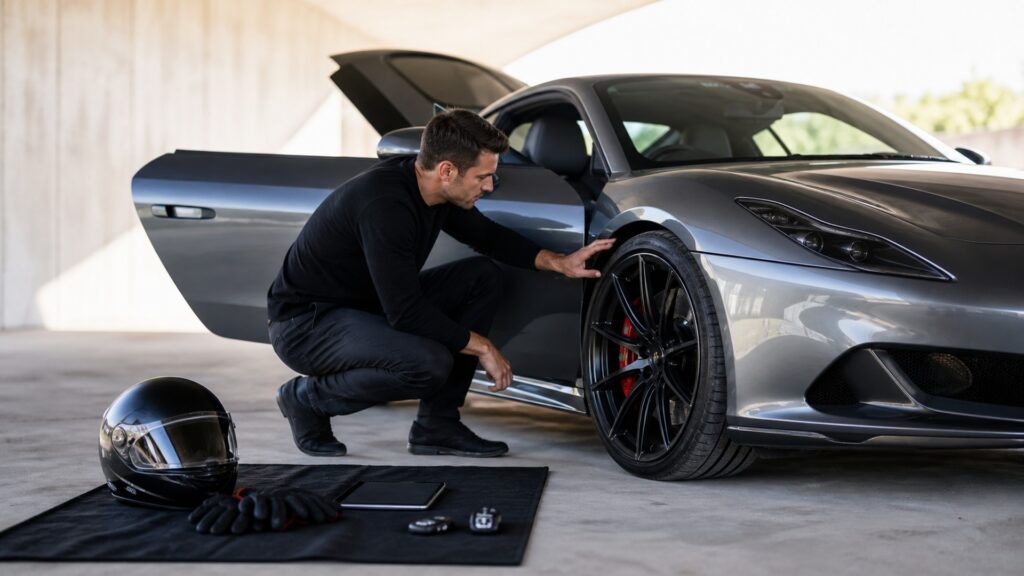
Separate driver assistance, physical capability, occupant protection, and current vehicle condition.
Tip: Learn what a feature actually does before relying on its name. A warning function and an intervention function are not the same thing.
Each concept addresses a different part of avoiding or reducing harm.
A system alert about a detected potential collision.
A supported system action intended to avoid or reduce a detected hazard.
The road needed during driver response and vehicle deceleration.
The tire-to-surface forces available for braking, steering, and drive.
Equipment and correct use intended to keep occupants properly positioned and reduce injury.
The vehicle configuration and conditions represented by a safety evaluation.
Tip: Avoidance technology, tire forces, and crash protection complement each other. None is a complete safety assessment by itself.
Manufacturers use different names for assistance features, making the function more important than the label. NHTSA distinguishes collision warnings from systems that can intervene. The owner manual explains the fitted equipment and its limitations. Learn those functions before use, and do not assume a sophisticated package makes the car self-driving or able to detect every road situation.
An alert can tell the driver about a developing risk without taking action to avoid it. Knowing that distinction prevents an expectation the system was never designed to meet.
Noise isolation and stable-feeling chassis behavior can make a journey comfortable, but neither changes the need for appropriate speed and space. Higher speed leaves less time to respond to a developing hazard and increases stopping demands. Use the speed display, road conditions, and available sight distance to guide decisions rather than relying on how relaxed the cabin feels.
A car can feel settled while approaching a concealed junction too quickly for the available view. Comfort describes the experience, not the margin for an unseen hazard.
Braking and direction changes still depend on forces passing through the tires. Tire specification, wear, damage, inflation, and suitability for weather matter regardless of the vehicle's price. Brake condition also requires the appropriate inspection and service. Stability control can help within available grip, but it cannot make damaged or unsuitable equipment perform as intended.
An extensive electronics package cannot change the compound or tread condition of a fitted tire. Hardware condition remains part of the safety assessment even when no warning is displayed.
Adjust seating and head restraints as directed, and use the appropriate belts and child restraints on every journey. NHTSA emphasizes that airbags provide supplementary protection. Cabin convenience does not justify an unsuitable seating posture or obstructed controls. Secure carried objects and keep the driver's view and working space clear. Follow the exact vehicle instructions rather than assuming every seat adjustment is appropriate while traveling.
A comfortable-looking reclined position is not automatically the correct travel position. The seating and restraint instructions establish how the systems are intended to work together.
Safety ratings describe performance in defined tests and should be checked for the exact vehicle. NHTSA also explains that different test types have different comparison rules. Do not extend a rating to an entire premium brand or informal category. Current faults, repairs, tire condition, and recalls are additional questions. Follow warning instructions and arrange qualified assessment when a safety system is unavailable or behaving abnormally.
A highly rated model with an unresolved fault is not equivalent to a properly maintained example. Test evidence and current condition are both relevant, but they describe different things.
Premium equipment remains dependent on correct use and suitable conditions.
Warn about or intervene in supported hazards.
Support control and occupant protection alongside maintained equipment.
Detection of every hazard or recovery from every loss of grip.
Safety regardless of speed, attention, restraints, or condition.
Price, comfort, and technology count do not remove physical limits.
Warning and intervention are different functions. Check the exact equipment.
Ride feel does not establish stopping space or visibility.
Suitability depends on their design, condition, and operating environment.
Ratings cover defined tests, not every possible event or vehicle condition.
Tip: Use each safety feature for its intended role while maintaining attention, space, and sound equipment.
The useful answers are specific to the vehicle and the situation.
No. Learn the fitted functions and follow their supervision and operating requirements.
No. Braking also depends on tires, surface, speed, system condition, and driver response.
Follow the manual and have unresolved faults assessed. Feel alone cannot confirm system availability.
No. Test organizations publish comparison rules that depend on the test and vehicle characteristics.
Yes. Airbags supplement the correctly used restraint system.
Luxury performance safety depends on understood assistance functions, appropriate speed, sound tires and brakes, and correctly protected occupants.
Check model-specific evidence and current condition. Refinement and sophisticated equipment are useful attributes, not guarantees.
Use these Review Streets paths to compare related categories and practical next decisions.
Explore vehicle features and their roles.
Compare specialized vehicle capabilities.
Continue with luxury performance maintenance and operation.
Further reading: NHTSA assistance-system explanations; NHTSA speeding guidance; NHTSA tire care; NHTSA occupant restraint guidance; NHTSA ratings and comparison rules; Bosch stability-control explanation.
Choose a retailer
Prices checked regularly. We may earn a commission at no cost to you.