
Surface Gloss
Amount of concentrated reflection from a smooth film.
- Use: evaluate glossy and dewy looks
- Variable: film and angle
- Tradeoff: Often increases transfer
Makeup finishes matter because they control how color and texture are perceived after a product sets. Matte, natural, satin, radiant, shimmer, metallic, glitter, and glossy surfaces distribute light differently and can change apparent dimension, contrast, texture, and form even when the base color is similar.
Finish is not merely a decorative label. It influences application, transfer, crease visibility, fallout, touch-up, camera response, comfort, and removal. Particle size, concentration, orientation, film smoothness, emollient residue, powder load, and placement all contribute. A useful routine selects finish by zone and purpose instead of applying one visual rule to the entire face.
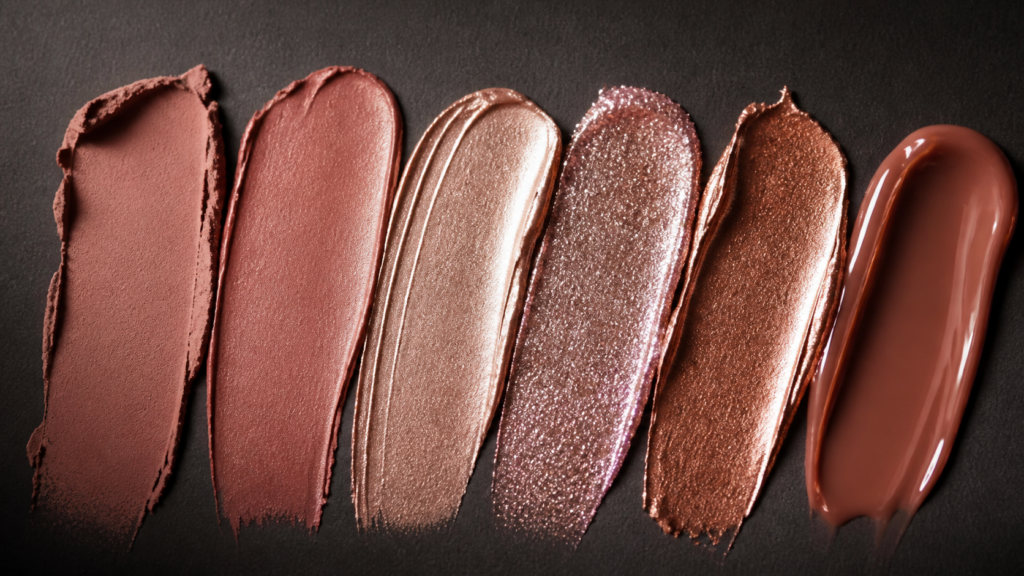
Organize finish as the combined optical and tactile result after set—matte, natural, satin, radiant, metallic, shimmer, glitter, glossy—showing how particle size, surface smoothness, film thickness, placement, lighting, photography, wear, and removal affect the decision.
Tip: Finish families are useful only when the actual surface agrees.
These makeup finishes concepts separate mechanism, application, limits, and purchasing consequences.
Amount of concentrated reflection from a smooth film.
Physical scale of reflective or absorbent solids.
Alignment of reflective platelets after application.
Reduced visual edge contrast created by scattering light.
Particles leaving intended placement during or after application.
Difference in reflection between adjacent zones.
Tip: Use these terms to test makeup finishes instead of relying on a front-label promise.
Natural and satin sit between extremes; shimmer uses fine reflection; metallic relies on dense aligned reflection; glitter contains more visibly discrete particles; gloss creates a smooth reflective film.
Finish families are useful only when the actual surface agrees.
Radiance on high points, matte in receding zones, and satin across movement areas can create dimension. The same reflector placed over texture may draw attention to it.
Placement determines whether reflection clarifies or competes.
Fluffy brushes diffuse powder; dense tools increase payoff; fingers can orient shimmer; gloss requires controlled edges. Pressing usually limits fallout better than aggressive sweeping.
A finish becomes predictable when pickup and pressure are predictable.
Shimmer can migrate, matte can polish shiny, gloss can spread, and flash can amplify pale powders or reflectors. Recreate the event conditions before committing.
The finish that photographs well may need different wear support.
FDA notes that cosmetic color permissions can differ around eyes. Use only products intended for that area, avoid loose particles entering the eye, and remove without abrasive scrubbing.
A dramatic finish does not justify unsafe particles or harsh removal.
Finish changes surface optics and feel; it does not permanently smooth skin, prove ingredient quality, or dictate one correct look for an age or skin type.
The finish produces the intended light response in relevant lighting.
Placement and film remain comfortable, stable, and removable for the use case.
Similar finish names can describe very different particles and films.
High reflection, tack, fallout, and resistant glitter can add practical costs.
These claims flatten the variables that determine how makeup finishes performs in a real routine.
Shimmer generally uses finer reflective material for continuous sheen; glitter appears as more discrete particles. Formula and labeling still vary.
Diffuse reflection can soften contrast, but heavy powder may catch on flakes and movement lines. Blur is optical, not physical resurfacing.
They describe reflection and film. A glossy surface can coexist with dehydration, irritation, or discomfort and is not a moisture measurement.
Particle shape, orientation, binder, base color, tool pressure, and surface smoothness affect the continuous metal-like reflection.
Use-area restrictions matter. Only use products specifically intended for the eye area near eyes, and do not substitute craft materials.
Tip: Test the exact makeup finishes tool, setting, and routine before generalizing from its category.
The remaining decisions about makeup finishes concern technique, compatibility, safety, upkeep, and value.
It usually balances diffuse and specular reflection without looking strongly flat or glossy, but brands use the term inconsistently. Test the dry surface.
Satin usually suggests gentle smooth reflection, while radiant may be brighter or contain visible luminosity. Actual particle size and film decide the result.
Concentrated reflection increases contrast as the viewing angle changes. Smaller particles, thinner layers, and selective placement may reduce emphasis.
Use a compatible base, controlled pickup, pressing motions, and eye-safe products. Remove fallout gently without rubbing particles toward the eye.
Sebum, friction, and repeated touching can flatten or wet powders, increasing reflection. Blot and restore only the affected zone.
Follow product directions, lift particles with a suitable remover and soft pad, avoid scratching or sweeping them into eyes, and cleanse gently afterward.
Makeup finishes matter because the final film and particles control reflection, perceived texture, dimension, transfer, and camera behavior. Finish exists on a spectrum wider than matte and dewy.
Choose by particle scale, film, placement, lighting, movement, and removal. Use contrast selectively, keep eye-area materials appropriate, and judge the fully set result rather than the wet swatch.
These Review Streets paths narrow the next makeup finishes decision by format, goal, and routine fit.
Browse face, eye, lip, brow, primer, and setting categories.
Compare liquid foundation coverage, finish, shade, and wear.
Choose a retailer
Prices checked regularly. We may earn a commission at no cost to you.