
Wear Interval
Time makeup is expected to remain acceptable for a defined use.
- Use: set a realistic target
- Variable: event and routine
- Tradeoff: Longer may cost comfort
Makeup longevity matters because a product that looks right for ten minutes may fail during the hours it is expected to perform. Wear is not one property: pigment can fade, films can transfer, oils can cause separation, movement can crease, particles can migrate, and touch-ups can accumulate texture.
Longer is not always better. A highly resistant film may set too quickly, feel tight, complicate correction, or require more removal. Define the event, environment, contact, skin behavior, and acceptable touch-ups first. Then measure whether the complete routine maintains color, placement, finish, and comfort for that interval without excessive layering or cleansing.
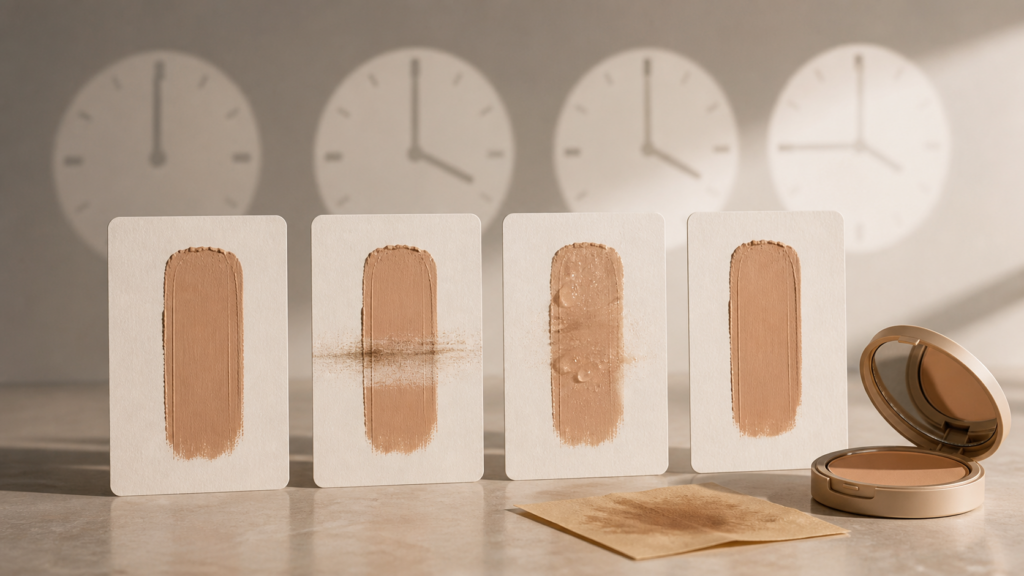
Define longevity as acceptable appearance and comfort through a specific wear interval, then separate fading, transfer, creasing, migration, shine, dryness, and color shift so preparation, formula, setting, touch-up, and removal decisions target the actual failure.
Tip: Longevity only has meaning against a schedule.
These makeup longevity concepts separate mechanism, application, limits, and purchasing consequences.
Time makeup is expected to remain acceptable for a defined use.
Movement of deposited product onto another surface.
Movement beyond the intended placement without full removal.
Accumulation in lines or folds during movement.
Preservation of visible pigment intensity and balance.
Ability to add or redistribute product over the worn layer.
Tip: Use these terms to test makeup longevity instead of relying on a front-label promise.
A workday, ceremony, stage performance, and short outing have different needs. Specify hours, climate, masks, meals, photography, and whether touch-ups are practical.
Longevity only has meaning against a schedule.
Each failure suggests different corrections. More powder may help shine yet worsen cracking; a stronger film may reduce transfer yet increase tightness.
Treat the first meaningful failure, not the word long-wear.
Compatible skin care, sufficient set time, thin pigment placement, selective powder, and a suitable spray can improve wear more than stacking every longevity product.
Every extra layer is another interface that can fail.
Blot oil before powder, replace lost lip color after eating, soften a crease before it sets, and avoid dragging fresh product across intact areas.
A repair should be smaller than the original application.
A product that lasts but causes irritation, eye migration, difficult cleansing, or repeated picking is not successful. Remove makeup before bed and clean tools regularly.
Acceptable wear ends with acceptable removal.
Longevity is fitness for a stated wear period and failure tolerance; it is not permanent adhesion or a reason to ignore comfort and removal.
Color, placement, and finish remain acceptable for the intended interval.
Touch-ups are predictable and do not cause escalating texture.
Different products and facial zones fail through different mechanisms.
Maximum resistance can trade away blendability, flexibility, and easy removal.
These claims flatten the variables that determine how makeup longevity performs in a real routine.
Additional layers can increase interfaces, thickness, creasing, cracking, and removal burden. Thin compatible films often wear more evenly.
Water resistance addresses selected water exposure. Oil, rubbing, meals, pressure, cleanser, and facial movement can still disrupt the product.
Powder can manage surface oil or tack, but excess can crack, dull color, and accumulate in movement zones. It cannot repair an incompatible base.
A useful primer can solve a defined problem, but some foundation and skin-care combinations wear better without another layer. Test it rather than assuming necessity.
Unused difficult formulas are poor value. Include application time, correction, comfort, removal, tool cleaning, and how often extreme wear is actually needed.
Tip: Test the exact makeup longevity tool, setting, and routine before generalizing from its category.
The remaining decisions about makeup longevity concern technique, compatibility, safety, upkeep, and value.
Use the normal skin-care routine and a representative day. Photograph at application, dry-down, first failure, and removal in similar lighting.
Sebum, movement, friction, moisture, excess layers, and repeated touching concentrate there. Thin the stack and correct only that zone.
Yes when each has a distinct job and the films are compatible. Use minimal powder, an even mist, and full drying before judging.
Allow full set, use thin layers, set contact zones selectively, and expect some transfer under pressure and humidity. Avoid claiming zero transfer.
Not inherently, but individual irritation, dryness, acne response, eye migration, and removal friction matter. Stop after a reaction and simplify the routine.
Choose an easier formula when the day is short, touch-ups are available, or maximum hold would add discomfort, cost, or difficult removal without benefit.
Makeup longevity matters when color, placement, finish, and comfort remain acceptable for a defined interval. The useful metric is first meaningful failure and how easily it can be corrected.
Build wear with thin compatible layers, adequate set time, targeted fixatives, and a specific touch-up plan. Do not trade away comfort, hygiene, or gentle complete removal merely to maximize hours.
These Review Streets paths narrow the next makeup longevity decision by format, goal, and routine fit.
Browse face, eye, lip, brow, primer, and setting categories.
Compare liquid foundation coverage, finish, shade, and wear.
Choose a retailer
Prices checked regularly. We may earn a commission at no cost to you.