Why Meditation Headbands Meditation Headbands Safety Factors Matters

Meditation headband safety starts with the exact model and what you plan to do with it. On the Muse S Athena, the fabric band can be hand-washed once you remove the electronic pod. If the meditation itself becomes distressing, you can pause the practice and ask for guidance.

By: Review Streets Research Lab
Updated: November 25, 2026
Explainer · 10–13 min read
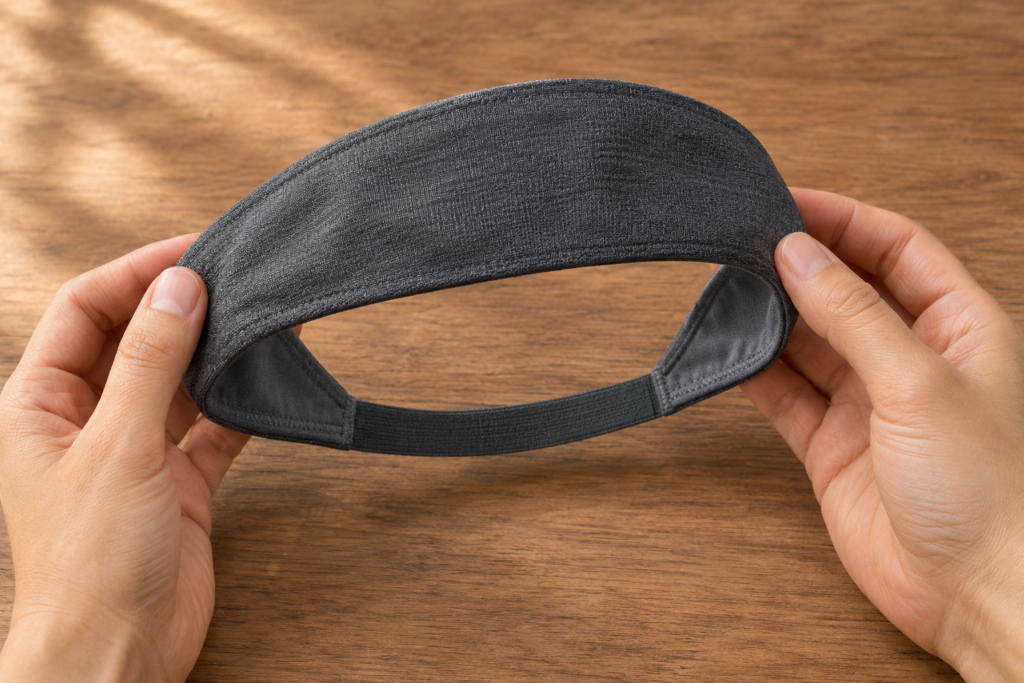
Two hands hold a dark gray fabric meditation headband above a wooden table.
What you’ll learn

Where the precautions come from

Start with the two things you’re bringing to the session. The wearable has fit instructions. The practice can feel different from what you expected.

  • What a manufacturer means by general wellness
  • Why magnet notices name specific models
  • What a comfortable fit has to do with skin contact
  • Which part a washing instruction refers to
  • Why listening time matters alongside volume
  • What to do if the skin under the band becomes irritated
  • Where to take a concern about how the practice made you feel

Tip: If you’re unsure how Muse’s 5-volt charging limit applies to your charger, share the charger’s model number when you ask Muse support.

Key terms

Six terms that help you read the instructions

Details such as phone speaker and sleep tracking identify the equipment or activity a help page is talking about.

Intended use

What the product is designed to do, according to its maker. Muse describes the Muse 2 as a wellness product.

  • Purpose: The Muse 2 product description excludes medical diagnosis and treatment.
  • Readings: Flowtime describes its readings as information for general wellness.
  • Setting: For the Muse 2, the maker describes a seated, still setting.

Precaution

An instruction that limits how something is used or handled. A cleaning instruction can allow a wipe while ruling out a soak.

  • Component: The removable pod on the Athena has a separate care limit.
  • Power: Muse specifies a limit for what a wall charger can deliver.
  • Compatibility: Muse’s magnet warning names the models that contain them.

Contact surface

The part of the wearable that rests against your skin. A single band can make contact in more than one place.

  • Placement: On the Muse 2, contact includes the forehead and the area behind the ears.
  • Material: Athena’s electrodes that pick up brain signals use fabric made with silver thread.
  • Fit: The Muse 2 fit instructions call for a band that feels comfortably snug.

Feedback mode

Here, the arrangement a session uses to give you feedback, if any. A documented tracking mode can run without spoken guidance or background sound.

  • Output: The Muse app can send audio to your phone’s speaker.
  • Listening time: For sessions with audio, duration is part of listening exposure.
  • Quiet tracking: Athena has a mode dedicated to sleep tracking.

Adverse experience

An unwanted experience during or after a session. How it felt and what it affected are separate parts of describing it.

  • Feeling: Unpleasantness describes how the experience felt.
  • Duration: Duration captures how long that experience lasted.
  • Impact: Impact describes whether the experience affected ordinary activities.

Escalation

Taking a concern to someone who can assess it. Primary care is one starting point for a mental health concern.

  • Product question: For a question about which charger the device calls for, start with the maker’s support instructions.
  • Medical compatibility: Muse directs people who use an implant or medical device to their healthcare provider.
  • Practice concern: A primary care provider can help connect you with a mental health professional.

Tip: When you look up a warning, read the heading above it as well. A care section about a detachable fabric band can give a different instruction from the one for its pod.

Model and intended use

Start with the exact device

Knowing what the manufacturer designed a headband to do gives you a starting point. Muse puts the Muse 2 in the general-wellness category. The limits of that description matter when you want a product to answer a health question.

  • Muse describes the Muse 2 as outside the diagnosis, treatment, cure or prevention of medical conditions. A useful place to look for that boundary is the intended-use language on the product page.
  • Flowtime presents its readings as information for general wellness.
  • Muse warns that magnets in the Muse S Gen 1, S Gen 2 and S Athena could disrupt some medical devices, including certain implants.
  • Muse says the original Muse and Muse 2 lack magnets.
  • If you use a medical device or implant, Muse says to ask your healthcare provider before using its headband.

If you’re asking a healthcare provider about using a Muse band with an implant, bring the warning you found and the model names for the band and implant.

Fit, cleaning and power

The part you’re handling matters

Look at what the instruction is asking you to handle. A band can have one rule for its fabric and another for its electronics.

  • Muse’s fit guidance calls for snug, comfortable contact on the Muse 2. The maker also warns that pushing the earpieces farther out after you feel resistance can damage the inside of the headband.
  • Muse’s washing instructions for the Athena cover the fabric band with its pod detached. The pod stays out of the wash. The maker describes the Muse 2 as a headband without waterproofing.
  • Muse specifies a compatible cable and says a wall charger capable of supplying more than 5 volts is unsuitable for its hardware. That gives you a specific question to ask about the charger you have.

Suppose the earpieces reach the point where the maker says to stop extending them and the band still feels too tight. That’s a fit question to take to product support.

Sound and activity

What the session asks of your attention

What else will you be doing during the session? Compare that activity with the setting the maker describes for the model and with how the app will deliver sound, if you use it.

  • The Muse 2 is designed for use while you’re still and sitting comfortably upright. In a simple example, a session in a chair fits that description more closely than listening to the same guidance on a walk.
  • A Muse app session can play through a phone speaker or headphones. With audio, louder sound and longer or repeated exposure matter for hearing, so keep the volume down and limit time listening loudly.
  • Athena’s Sleep Tracking Only option can run without a soundscape or spoken guidance. That example is specific to the documented mode on that headband.

Apply sound guidance to the audio you’ll actually hear. If you lengthen an audio session, listening time becomes part of the hearing exposure even at the same volume.

Discomfort and distress

Where the trouble shows up

Start by describing what happened. Irritation at the band’s contact area and feeling worse during mindfulness give you different questions to ask.

  • The Flowtime maker says to take its headband off if your skin starts to redden or feel irritated. You can describe where the change appeared without settling why it happened.
  • Suppose the headband feels comfortable and the practice itself becomes upsetting. In research on mindfulness-based cognitive therapy, researchers distinguished how unpleasant an experience felt, how long it lasted and whether it affected day-to-day functioning. In this example, those are three ways to put the experience into words.
  • NHS Professionals advises stopping if mindfulness is causing difficulty. The U.S. National Center for Complementary and Integrative Health says the evidence on possible harms from meditation or mindfulness remains limited.

If something felt wrong, describe it before trying to explain it. What lasted beyond the session and what got in the way of an ordinary activity are useful details to distinguish.

When to seek guidance

Take the question to the right person

A product help page can explain what the manufacturer specifies for charging. Primary care is a starting point when you’re concerned about your mental health. The useful next step follows the question you’re asking.

  • If a Muse 2 earpiece resists adjustment, stop pulling and tell product support which side.
  • The NHS advises medical review for possible contact dermatitis symptoms that are persistent, recurrent or severe. If you’re describing a skin concern, explain where you noticed it and whether it has come back.
  • If you’re concerned about your mental health, a primary care provider can help you find appropriate support. The National Center for Complementary and Integrative Health advises keeping conventional care in place and getting in touch with your provider about a medical concern.

In a message about a wear problem, describe the headband and the point of contact. For a practice concern, you can tell your primary care provider what you experienced. Those details help frame the question you need answered.

Reality check

Two sessions that call for different responses

In these hypothetical situations, one person notices redness where a headband rests and another feels worse during a mindfulness exercise. The distinction changes what each person can do next.

Redness where a band rests

Imagine noticing a red patch under your Flowtime band. The maker says to remove the band if redness or irritation starts.

The position of the patch is an observation you can describe, and its cause is a separate question. If you have symptoms that could be contact dermatitis and they persist, recur or are severe, NHS guidance recommends getting them assessed.

Distress that lingers after practice

Imagine taking off a headband after a guided exercise. The band felt comfortable. Later you cut short a call with a friend because you still feel unsettled.

When you describe the experience, mention that it carried into another activity. If the experience concerns you, you can share that detail with your primary care provider.

Common assumptions

What a headband can tell you about safety

These assumptions sound plausible until you compare them with the product’s stated role and the guidance for difficult mindfulness practice.

If the band stays outside my body, can I ignore fit precautions?

Muse says the Muse 2 should feel comfortably snug. If you feel resistance as you extend the earpieces, pulling them farther can damage the headband.

Can I carry over precautions from another model by the same maker?

Muse says some of its bands contain magnets. Match the notice to the model you use.

Can a headband reading tell me whether the practice is medically appropriate for me?

Flowtime presents its readings as general-wellness information and says its service cannot take the place of professional care. A medical suitability question needs its own assessment.

Will mindfulness always make me feel better?

The NHS notes that some people feel worse with mindfulness. Evidence on possible harms is still limited, according to NCCIH.

Does feeling upset during a session tell me what caused it?

Note when the distress began and whether it lasted after you took the band off. Mindfulness can leave some people feeling worse. NHS Professionals advises stopping if the practice is causing difficulty.

Tip: Name what you were doing when the discomfort began. “Wearing the band” and “following a guided exercise” describe two parts of the same session.

Reader questions

Questions about fit, care and use

Small details can change which instruction applies. Over-ear headphones can share space with sensors near the ears, and a damp-cloth tip can be for a particular contact problem.

What if headphones press on my Muse 2 earpieces?

Muse asks for a comfortable fit. If the cups press on the earpieces, try playing the Muse session through your phone’s speaker.

What does the Muse 2 damp-cloth tip allow?

Muse’s damp-cloth advice applies a little moisture for a contact issue. The maker says the Muse 2 lacks waterproofing. The contact tip is narrower than a general cleaning instruction.

Does the same cleaning advice apply to Muse 2 sensors and Athena fabric?

For the Muse 2, the maker allows a swab with a little rubbing alcohol on the sensors at the forehead and on the silicone earpieces. For washing the Athena fabric band by hand, the maker specifies a mild detergent without fragrance.

What does a volume percentage tell me about sound exposure?

A volume percentage tells you where the control is set. The World Health Organization considers the level of sound, how long you listen and how often you hear loud sounds when it discusses hearing exposure.

Will a CPAP mask’s headgear fit with a Muse headband?

Muse says some CPAP setups may cover the places where its headband sensors need skin contact. Ask the provider who manages your CPAP before changing how your mask fits.

Does Athena’s band material vary by color?

Muse lists cotton in the Opal band’s fabric blend and rayon in the Carbon band’s blend. If you’re checking what will touch your skin, look at the specification for that particular version.

Can I wipe a Flowtime band with a damp cloth?

The maker allows a slightly damp cloth when necessary and warns against soaking the band.

Is the silver-thread fabric used throughout the Athena band?

Muse identifies silver-thread fabric in the electrodes and gives a separate fiber breakdown for the soft band. If you’re trying to identify a material touching your skin, check which of those parts it is.

Tip: Give product support the specific detail at issue, such as an over-ear accessory crowding the sensor area. That lets you ask about the fit you’re dealing with.

Bottom line

Wearing the headband and continuing the practice are two separate decisions. The maker’s instructions describe how a particular model is meant to be worn. How the exercise feels is part of deciding whether to keep going.

If you need help, describe what you noticed and when. If your concern is how the exercise affected you, that’s something you can take to primary care.

Related reading

More on meditation headbands

Explore the Review Streets archives for this category.