Why Midsize Pickup Trucks Maintenance Role Matters

Maintenance keeps a midsize pickup ready for the work its owner actually asks it to do. A truck that commutes unloaded has a different operating pattern from one that regularly tows, carries tools, or works on dusty roads. Mileage alone may not capture those differences, so the correct schedule must account for the vehicle and the conditions of use.

The purpose is to preserve dependable operation and find developing problems before they interfere with a trip or a job. That includes the powertrain, cooling system, tires, brakes, suspension, and load-carrying equipment. Regular service does not increase the truck's ratings; it helps keep the existing vehicle in appropriate condition to operate within them.

By: Review Streets Research Lab
Updated: October 5, 2026
Explainer · 8-12 min read
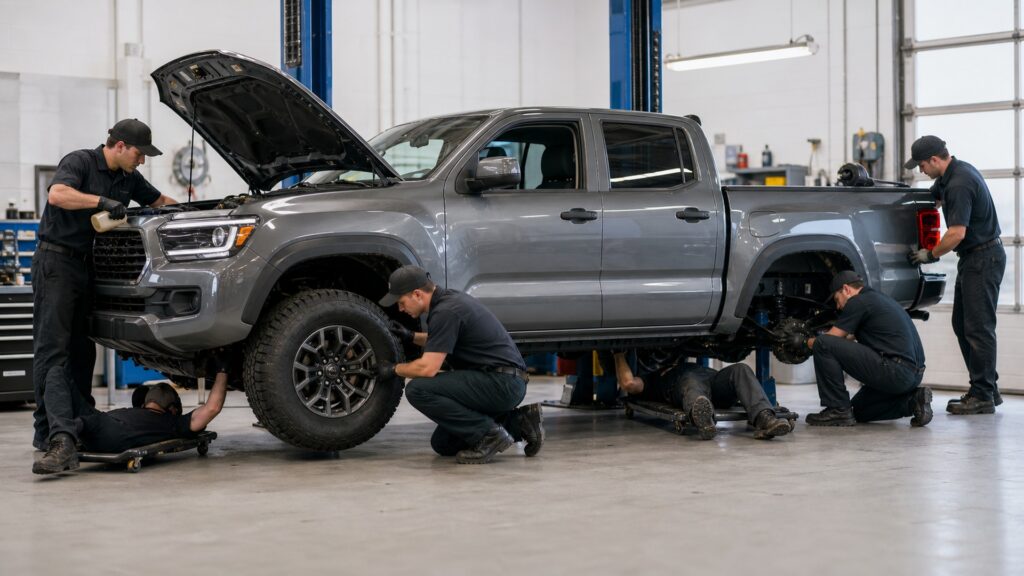
midsize pickup trucks explainer hero image for Review Streets
What You'll Learn

Matching Pickup Care to the Work It Performs

Connect service requirements with load, environment, and observed condition.

  • Select the schedule for the actual vehicle and use.
  • Distinguish fluid service from condition inspection.
  • Pay attention to tires and brakes under changing loads.
  • Include cooling, driveline, and towing equipment.
  • Keep useful records and investigate new symptoms.

Tip: Tell the service provider how the truck is used, including towing, heavy loads, dust, repeated short trips, and extended idling.

Definitions

Six Maintenance Concepts for a Working Pickup

A service reminder is one part of a broader care plan.

Operating conditions

The load, environment, and driving pattern the vehicle regularly experiences.

  • Example: frequent dusty worksite travel rather than only paved commuting
  • Check: compare the use with the owner manual schedule categories
  • Limit: occasional and repeated exposure may be treated differently

Scheduled service

Maintenance specified by time, distance, monitoring, or stated conditions.

  • Example: a fluid replacement due under the applicable schedule
  • Check: use the exact model-year and powertrain instructions
  • Limit: there is no universal interval for every midsize truck

Condition inspection

Checking a component for wear, damage, leakage, or abnormal behavior.

  • Example: examining a tire after a suspected impact
  • Check: combine observation with the required professional checks
  • Limit: an inspection does not automatically replace scheduled service

Cooling performance

The system's ability to manage the vehicle's operating heat.

  • Example: maintaining coolant and airflow components for the actual powertrain
  • Check: follow inspection and fluid specifications
  • Limit: topping up fluid does not diagnose the cause of a loss

Driveline care

Service of the components that transmit power to the wheels.

  • Example: checking the applicable axle and transfer-case service requirements
  • Check: identify which components the truck actually has
  • Limit: not every drivetrain uses the same fluids or schedule

Service record

A dated account of the work and observations on the vehicle.

  • Example: recording the fluid specification, mileage, and repaired fault
  • Check: retain invoices and unresolved findings
  • Limit: a receipt alone does not prove every required task was completed

Tip: Use the schedule to establish what is due, and condition checks to identify what needs attention between scheduled visits.

Use pattern

The Right Schedule Starts With How the Truck Works

A midsize truck may see high loads, low-speed work, dust, or many short trips without accumulating unusually high mileage. Manufacturer schedules can include additional requirements for such conditions. The Ranger owner manual is one example that identifies severe operating conditions. Apply the instructions for the exact truck rather than copying an interval from another model or assuming all pickup use falls into one category.

  • Identify the model year and powertrain.
  • Describe repeated operating conditions accurately.
  • Check time-based requirements as well as distance.

A low-mileage worksite truck can need attention for reasons a highway commuter rarely encounters. The calendar and the working environment belong beside the odometer in the service discussion.

Fluids and filters

Use the Required Materials and Diagnose Changes

Engine oil, coolant, transmission fluid, and other service materials have application-specific requirements. Filters serve different systems and can need attention under different conditions. Follow the prescribed specifications and methods rather than assuming a product labeled heavy duty is automatically appropriate. Unexpected fluid loss, contamination, or a recurring warning needs diagnosis; repeated topping up is not an explanation of the underlying problem.

  • Use the specified fluid and filter applications.
  • Follow the relevant service intervals and methods.
  • Record unusual consumption or leakage.

A service visit is most useful when it resolves both what is due and what has changed. Share the history of a recurring symptom instead of reporting only the latest warning.

Road contact

Tires and Brakes Need Attention Before Loaded Trips

Loads change the demands placed on tires and braking components. Check pressure according to vehicle guidance, look for damage or abnormal wear, and keep scheduled brake inspections current. Tire-pressure monitoring does not replace routine checks. A truck that feels acceptable when empty may reveal a problem under a different load, but a loaded journey should not be used as a diagnostic test.

  • Check tires before the planned trip.
  • Investigate vibration, pulling, or altered braking response.
  • Have wear and damage assessed before carrying the load.

Uneven wear is information to investigate, not simply a reason to fit another tire. Alignment, component condition, loading, and inflation can require separate consideration.

Working systems

Include Cooling, Driveline, and Load Equipment

Towing and hauling involve more than the engine. The applicable cooling, axle, transmission, and four-wheel-drive components need their specified care. Inspect the truck's hitch attachment, electrical connection, and other load-related equipment as directed. Trailer maintenance is a separate responsibility; a serviced tow vehicle does not establish that the trailer brakes, tires, bearings, or connections are ready.

  • Identify all fitted driveline components.
  • Include the relevant hitch and connection checks.
  • Maintain the trailer under its own instructions.

Keep the boundaries clear: the truck, hitch equipment, and trailer have related but distinct maintenance needs. A single oil-service receipt does not cover the complete towing outfit.

Between visits

Records and New Symptoms Help Prevent Repeat Problems

Good records show what was done, which specification was used, and whether a finding still needs follow-up. They are especially useful when work is split between providers or the truck changes hands. Between visits, note new noises, warning messages, leaks, or changes in behavior and seek an appropriate assessment. Severe warnings or impaired control require stopping safely and following the vehicle instructions.

  • Keep dated service documents.
  • Record when and under what conditions a symptom occurs.
  • Close out unresolved inspection findings.

A description such as vibration only while braking after a particular event is more useful than saying the truck feels different. Observations help a technician investigate without substituting for diagnosis.

Quick Reality Check

Maintenance Supports Capacity; It Does Not Add It

Condition and permitted load are separate questions.

What maintenance can support

Dependable operation through appropriate service and early attention to developing faults.

A clearer picture of component condition before towing or hauling.

What still requires separate checks

The vehicle, axle, tire, hitch, and combination ratings for the intended load.

Correct loading, securement, trailer condition, and operation for the journey.

Common Myths

Maintenance Assumptions That Leave Gaps

A working pickup needs more than a familiar oil-change habit.

Low mileage means no service is due

Time, conditions, and inspection findings can matter independently of distance.

An oil reminder covers every maintenance task

Other items can have separate requirements in the vehicle schedule.

Fresh service raises towing capacity

Maintenance does not change the vehicle's approved ratings.

Servicing the truck also covers the trailer

The trailer and its equipment need their own appropriate maintenance.

Tip: Ask for an itemized record tied to the applicable schedule and any specific findings.

FAQ

Questions About Midsize Pickup Maintenance

Use the exact vehicle instructions to turn these principles into a schedule.

How often should a midsize truck be serviced?

Follow its model-specific schedule, monitoring system, time limits, and operating-condition requirements.

Does towing always mean the same shorter interval?

No universal interval applies. Check how the manufacturer treats the actual frequency and conditions of towing.

Should four-wheel-drive parts be included?

Yes, where fitted and required by the schedule. Identify the applicable transfer-case, axle, and related service items.

Can I ignore a warning if service was recent?

No. Recent service does not establish the cause or seriousness of a new warning; follow the vehicle instructions.

What should I retain after a visit?

Keep the date, mileage, work performed, relevant specifications, and any findings that need further attention.

Bottom Line

Midsize pickup maintenance should reflect the actual vehicle, its working conditions, and its current condition.

Use the correct schedule, include the complete working equipment, and follow up on symptoms. Reliable care supports the job without changing the truck's limits.

Next Steps

Go Deeper or Compare Your Options

Use these Review Streets paths to compare related categories and practical next decisions.

Vehicles

Explore vehicle ownership and operation.

Further reading: Ford Ranger maintenance and operating-condition guidance; NHTSA tire maintenance.