Why Midsize Pickup Trucks Safety Factors Matters

A midsize pickup can carry people, loose cargo, and a trailer during the same trip. Each adds a different safety question: how the occupants are protected, whether the load stays in place, whether the vehicle remains within its ratings, and whether the driver can see and control the complete outfit. An empty truck on a familiar road is not the only situation worth evaluating.

Safety depends on the exact vehicle, its condition, the load, the road, and the driver. Assistance features and strong towing specifications can help with particular tasks, but they do not establish that a loaded trip is ready to begin. Start with the physical setup, then understand what the fitted protection and assistance systems actually do.

By: Review Streets Research Lab
Updated: October 5, 2026
Explainer · 8-12 min read
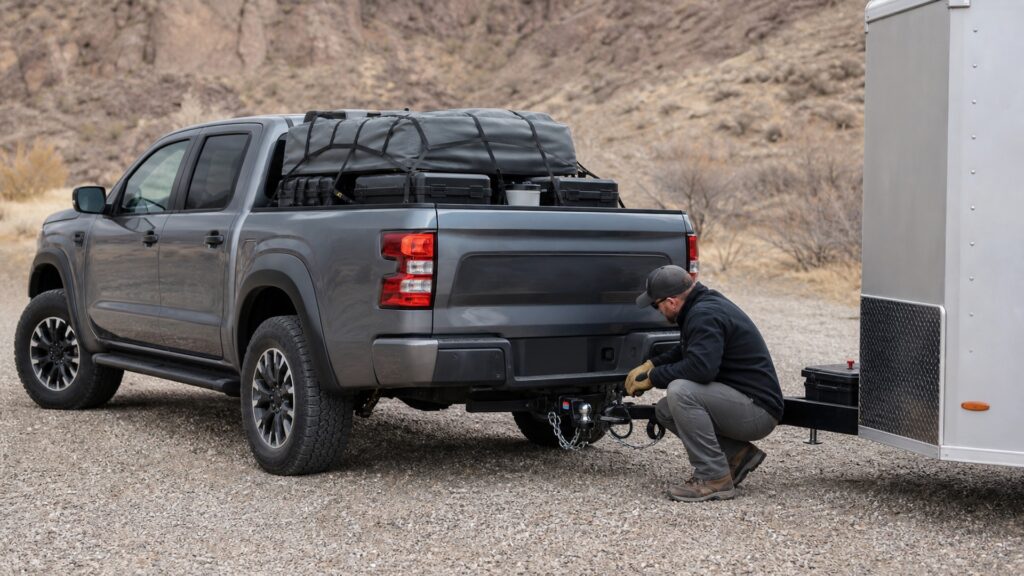
midsize pickup trucks explainer hero image for Review Streets
What You'll Learn

Checking the People, Load, and Complete Trip

Connect pickup-specific risks with checks that matter before departure.

  • Keep loading limits separate from cargo securement.
  • Include the trailer in the safety assessment.
  • Account for visibility around the whole truck.
  • Distinguish driver warnings from automatic intervention.
  • Check occupant protection and the condition of the exact vehicle.

Tip: Inspect the loaded truck, not just the empty bed. Added equipment and passengers belong in the assessment.

Definitions

Six Safety Factors Behind a Loaded Pickup Trip

These factors address different ways a journey can become unsafe.

Load allowance

The permitted load carried by the specific vehicle under its ratings.

  • Example: passengers, bed cargo, accessories, and tongue load using available capacity
  • Check: use the actual truck labels and matching towing instructions
  • Limit: a towing maximum is not an unlimited cargo allowance

Cargo securement

Restraint that keeps cargo from moving or leaving the vehicle.

  • Example: restraining tools and containing loose material in the bed
  • Check: use suitable anchor points and restraints for the load
  • Limit: a load below the weight limit can still be unsecured

Visibility coverage

The areas the driver can assess directly or with the fitted aids.

  • Example: checking beside and behind the truck before reversing
  • Check: account for obstructions from cargo and trailers
  • Limit: cameras and sensors do not show every hazard

Stability

The vehicle's ability to respond predictably without losing control.

  • Example: a changing load affecting response during a turn
  • Check: consider loading, tires, speed, and road conditions together
  • Limit: electronic assistance cannot cancel every physical limit

Driver assistance

Features that warn or intervene for defined driving situations.

  • Example: a collision warning compared with automatic emergency braking
  • Check: learn the actual feature and its restrictions
  • Limit: similar names do not guarantee identical behavior

Occupant protection

The systems and correct seating practices intended to reduce injury.

  • Example: properly worn seat belts and appropriate child restraints
  • Check: check the seating position and restraint instructions
  • Limit: vehicle size alone does not establish protection

Tip: Capacity, securement, visibility, control, and occupant protection need their own checks; success in one area does not cover the others.

Loading

Stay Within Limits and Keep the Load in Place

Weight and restraint are separate problems. A light object can leave an open bed, while a securely attached heavy load can exceed a rating. Use the vehicle loading information and check the complete planned load. Then choose a suitable method to restrain or contain each item. NHTSA emphasizes securing cargo and avoiding excessive loading; neither task can be replaced by simply closing the tailgate.

  • Count occupants and added equipment.
  • Check the applicable load and axle limits.
  • Restrain or contain the actual cargo.

A toolbox permanently mounted in the bed still adds weight. Loose equipment beside it still needs restraint, even when the truck has unused payload capacity.

Towing

Assess the Trailer and Truck as One Outfit

A trailer changes what the driver must accelerate, slow, turn, and position. The towing configuration needs the correct equipment and must satisfy the applicable vehicle, hitch, axle, and combination limits. Trailer condition, connections, brakes where required, and load distribution also matter. Follow the instructions for the truck and trailer rather than treating an advertised towing maximum as a complete preparation checklist.

  • Use the actual loaded trailer information.
  • Confirm the required hitch and braking equipment.
  • Check connections and visibility before moving.

A trailer that is within its own weight rating may still be unsuitable for a particular truck configuration or leave too little truck allowance for passengers and equipment.

Surroundings

Visibility Needs Attention Before the Truck Moves

The bed, body height, cargo, and trailer can obstruct sightlines. Cameras and parking sensors are useful aids, but their coverage and performance are limited. Check the area around the vehicle before maneuvering and use the fitted aids according to their instructions. If the view or situation is unclear, stop and resolve it rather than assuming a quiet sensor means the path is empty.

  • Account for people near the vehicle.
  • Keep relevant lenses and sensors unobstructed.
  • Reassess visibility after changing the load.

Loading tall equipment can alter a view that was clear earlier in the day. A familiar parking maneuver should be reconsidered when the truck's surroundings or setup have changed.

Control

Tires, Speed, and Loading Shape the Response

A truck's behavior depends on its tire contact, loading, and the available road surface. Four-wheel drive can help deliver propulsion in suitable conditions, but it does not guarantee a shorter stop. Stability and braking assistance operate within physical limits. Maintain the tires and brakes, allow appropriate space, and adapt speed to the conditions instead of using the vehicle's capability claims as a target.

  • Use suitable tires in sound condition.
  • Follow vehicle pressure guidance.
  • Allow room for the actual loaded situation.

An empty commute and a loaded trip need not feel the same. New pulling, vibration, warnings, or altered braking response should be assessed before relying on the truck for the job.

Protection

Use Safety Features Within Their Actual Scope

Seat belts, child restraints, airbags, and assistance features address different risks. Correct use remains important even in a truck with an extensive equipment list. Compare safety information for the exact model year and applicable configuration; understand what a rating evaluates before extending it to another vehicle. Learn whether a feature only warns or can intervene, and do not assume it covers trailer operation or every road situation.

  • Use the proper restraints for each occupant.
  • Read the fitted assistance-system instructions.
  • Check the scope of model-specific safety information.

A feature that sounds an alert requires a different response from one that also applies braking. Neither removes the driver's responsibility to observe and control the vehicle.

Quick Reality Check

A Capable Truck Still Needs a Prepared Trip

Capability and readiness answer different questions.

Equipment can provide

Specified carrying and towing ability within the configuration's limits.

Defined protection, visibility aids, warnings, and interventions.

The trip still requires

A suitable, secured load and correctly prepared truck and trailer.

Attentive operation, appropriate speed, and correctly restrained occupants.

Common Myths

Pickup Safety Assumptions to Avoid

Do not let one reassuring feature hide a different unresolved risk.

Below the payload limit means the cargo is safe

Weight compliance does not secure loose items.

Four-wheel drive guarantees better stopping

Stopping still depends on tires, braking, load, surface, and operation.

No sensor warning means nothing is nearby

Sensors have limits and cannot replace checking the surroundings.

A larger vehicle is automatically safer in every situation

Protection, ratings, condition, loading, and circumstances must be considered specifically.

Tip: Review the setup again whenever the cargo, trailer, passengers, or operating conditions change.

FAQ

Questions About Midsize Pickup Safety

Focus on the exact vehicle and the trip being planned.

Does tongue load count against truck capacity?

Yes. It loads the truck and must be included in the relevant payload and axle checks.

Does a bed cover secure everything underneath?

Do not assume so. Cargo needs appropriate restraint or containment independently of a cover's weather protection.

Can I rely on the backup camera alone?

No. Use it as directed alongside observation and other necessary checks of the surroundings.

Do assistance systems behave the same while towing?

Not necessarily. Check trailer-related availability and restrictions in the vehicle instructions.

Where should I check crash-test information?

Use authoritative model-year-specific results and read their applicability and comparison limitations.

Bottom Line

Midsize pickup safety depends on the people, load, equipment, condition, and operation of the complete trip.

Check each separately. Ratings and assistance features support safe use only within their limits.

Next Steps

Go Deeper or Compare Your Options

Use these Review Streets paths to compare related categories and practical next decisions.

Vehicles

Explore vehicle uses and ownership.

Further reading: NHTSA cargo securement; Ford Ranger towing guidance; NHTSA driver assistance; NHTSA seat-belt guidance; NHTSA safety ratings.