
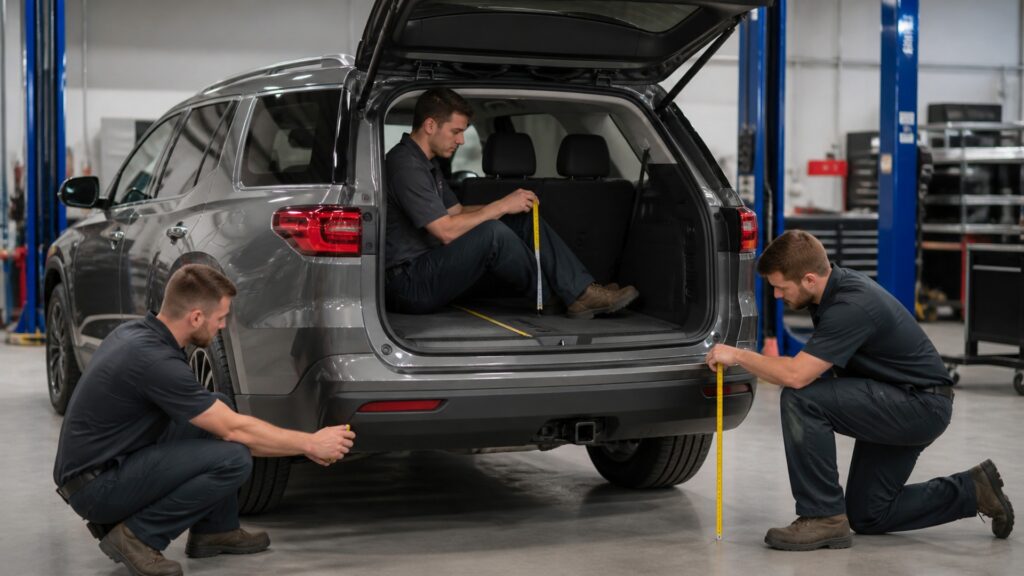
Why Midsize SUVs Fitment Matters

Fitment in a midsize SUV is the practical match between the vehicle, the people and items it carries, and any equipment added to it. A seat, garage bay, roof carrier, or child restraint can appear large enough yet fail when clearances, mounting requirements, or weight limits are checked together.

Good fitment means the complete arrangement works without forcing a seat position, obstructing access, exceeding a limit, or compromising normal vehicle operation. Start with the exact model and configuration: a different row layout, roof, powertrain, or wheel package can change what fits and what is permitted.

By: Review Streets Research Lab
Updated: September 30, 2026
Explainer · 8-12 min read
midsize suvs explainer hero image for Review Streets
What You'll Learn

How to Check Whether a Midsize SUV Really Fits

Replace assumptions based on the size label with measurements and compatibility checks.

  • Test passenger and child-restraint arrangements together.
  • Measure cargo openings as well as floor space.
  • Check garage, door, and liftgate clearances.
  • Match accessories to the exact vehicle and mounting system.
  • Keep physical fit separate from load approval.

Tip: An item fitting into a space does not prove that the arrangement is approved or safe to use.

Definitions

Six Kinds of Fit Worth Checking

Each answers a different compatibility question.

Occupant fit

The relationship between the person, seat, controls, and restraint in a normal seated position.

  • Example: A driver reaches the pedals while keeping a comfortable view of the instruments.
  • Check: Adjust the seat and steering wheel within the vehicle’s instructions.
  • Limit: A spacious cabin does not suit every body equally.

Restraint compatibility

Whether a particular child restraint can be correctly used in a specified vehicle seating position.

  • Example: A rear-facing restraint fits without requiring an unsuitable front-seat arrangement.
  • Check: Follow both manuals and check the intended position.
  • Limit: A visible anchor or a wide seat alone does not establish compatibility.

Loading aperture

The opening through which an object must pass before reaching the cargo floor.

  • Example: A tall crate fits on the floor but cannot pass upright through the hatch.
  • Check: Measure the narrowest useful part of the opening.
  • Limit: Interior volume cannot compensate for an opening that blocks the item.

Operating clearance

Room needed for parts or people to move during normal use.

  • Example: The liftgate clears the garage ceiling through its full opening path.
  • Check: Check doors, hatch movement, and standing space.
  • Limit: A parked vehicle’s static dimensions do not include all movement.

Mounting compatibility

The match between approved attachment points and the equipment intended to use them.

  • Example: A roof carrier requires the correct crossbars for that roof configuration.
  • Check: Confirm the equipment’s vehicle-specific application and instructions.
  • Limit: A close visual match or a universal-fit claim is not enough.

Rated load compatibility

Whether the combined load complies with the applicable vehicle and equipment limits.

  • Example: A roof box, bars, and contents must be considered under the relevant roof instructions.
  • Check: Account for equipment weight as well as what it carries.
  • Limit: Physical clearance does not raise a weight rating.

Tip: Check fit in the arrangement you will actually use, not with inconvenient parts temporarily removed.

People first

Set the Driver’s Position Before Judging Rear Space

Begin with the regular driver’s seat, steering-wheel adjustment, and mirror view. Then assess the passenger positions behind and beside it. This prevents a showroom arrangement from making the rear row look roomy by moving the front seats somewhere their occupants would not use.

  • Have regular occupants sit together where possible.
  • Check headroom, foot space, belt positioning, and entry.
  • Consider the full range of users rather than only the tallest person.

For example, a rear passenger should not gain comfort only by leaving the driver too close to the controls. The complete arrangement is the relevant test.

Child restraints

Verify the Specific Seat and Seating Position

Different restraints and vehicle seats can interact differently. Anchor availability, belt routing, recline requirements, and surrounding seats all matter. Use the restraint and vehicle manuals together, and seek a qualified child-passenger-safety technician when help is needed.

  • Check the restraint for the child’s appropriate size and stage.
  • Confirm the permitted installation method and intended position.
  • Test the family arrangement without blocking required access or forcing contact contrary to instructions.

Three seating positions across a bench do not guarantee room for three particular restraints. An in-person compatibility check is more useful than relying on the bench’s overall width.

Cargo access

Measure the Path into the Vehicle

A cargo item must pass the hatch, clear interior trim, and settle where it can be carried appropriately. Folding a seat may create length while leaving a step or a narrow section. Keep needed passenger seats available during the check.

  • Measure the item in its actual travel configuration.
  • Check opening height, floor width, and usable length.
  • Identify how the load will be secured under the vehicle’s instructions.

A mobility device or large stroller may fit only at an angle. That arrangement must still allow the hatch to close, preserve necessary seating, and respect loading limits.

Home and parking

Include the Room Needed to Open and Unload

Garage fit involves more than overall length. Mirrors, door arcs, ceiling obstructions, and the space behind the liftgate affect whether the vehicle can be used comfortably. Check these with the garage door and surrounding storage in their normal positions.

  • Measure usable width and height rather than the building’s nominal dimensions.
  • Check liftgate opening clearance and any adjustable opening-height feature.
  • Leave practical access for passengers and carried items.

An SUV that fits with folded mirrors may still be inconvenient if the doors cannot open far enough to use a child restraint. Test the repeated task, not just the parked outline.

Added equipment

Verify Compatibility Before Buying Accessories

Roof bars, carriers, hitch equipment, wheels, and tires need their own application checks. Use the exact model year and configuration, then compare the vehicle and equipment instructions. Respect every applicable load limit and consider how the addition affects access or clearance.

  • Confirm attachment requirements and any equipment exclusions.
  • Check the combined accessory and carried load against the relevant ratings.
  • Keep cameras, lights, safety equipment, and required access unobstructed.

Do not make incompatible equipment fit by forcing it into place or improvising an attachment. Choose the correct application and use qualified help where the installation requires it.

Quick Reality Check

What a Successful Fitment Check Establishes

The goal is a usable arrangement within the instructions and limits.

It confirms…

People and luggage can use the required space together.

The parking area and selected equipment work with the actual vehicle configuration.

It does not confirm…

That a physically fitting load is within weight limits without checking them.

That an accessory is suitable merely because it can be attached.

Common Myths

Misconceptions About SUV Fitment

Small compatibility details can decide whether an arrangement works.

Midsize means a child restraint will fit anywhere

Compatibility depends on the restraint, position, vehicle instructions, and other occupants.

Maximum cargo volume proves my item fits

The hatch opening and floor shape may be the limiting factors.

Roof rails make every roof carrier compatible

The roof configuration, bars, attachment system, and ratings must all be checked.

If the doors close, the seating arrangement works

Occupants still need appropriate positioning, restraint fit, and practical access.

Tip: Resolve a mismatch before purchase rather than planning to work around it every day.

FAQ

Questions About Midsize SUV Fitment

Checks to make before committing to a vehicle or accessory.

What should I bring to a viewing?

Regular passengers, relevant restraint details, measurements of bulky items, and garage dimensions. Ask permission before a trial installation or loading check.

Does a different trim affect fit?

It can. Seat layouts, roofs, wheels, and other equipment may change clearances or compatible accessories.

Can I use a roof box to solve a cargo problem?

Possibly, if the vehicle, mounting system, combined load, and clearance requirements permit it. Check those conditions before relying on the extra space.

Where can I get help with a child restraint?

NHTSA provides installation guidance and a locator for inspection assistance. Use the manuals for both products as the starting point.

Bottom Line

Fitment matters because an SUV must accommodate the whole arrangement without forcing clearances, seating positions, or equipment beyond their intended use.

Measure the actual vehicle, test the repeated tasks, and verify compatibility and weight limits separately.

Next Steps

Go Deeper or Compare Your Options

Use these Review Streets paths to compare related categories and practical next decisions.

Vehicles

Compare related vehicle choices against the same carrying needs and driving routine.

SUVs

Compare related vehicle choices against the same carrying needs and driving routine.

Midsize SUVs

Explore Midsize SUVs with your passenger, cargo, and ownership requirements in mind.

Further reading: NHTSA: child-restraint selection and installation; Ford: roof-rack instructions example; NHTSA: tire specifications and care. Use the owner’s manual for the exact vehicle’s instructions and limits.