
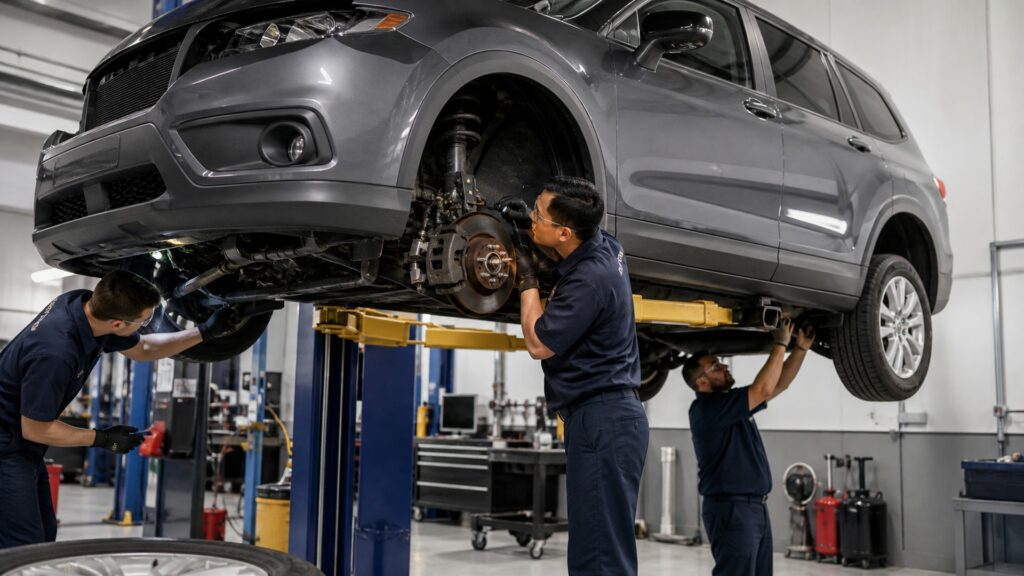
Why Midsize SUVs Maintenance Role Matters

Maintenance keeps a midsize SUV ready for the jobs that make it useful: carrying a family, managing a loaded trip, and sometimes towing. Those jobs place different demands on tires, brakes, fluids, and cooling systems. A vehicle that still starts and drives can have wear or overdue service that only becomes obvious when the trip gets harder.

The right plan comes from the exact vehicle’s maintenance schedule and the way it is used. A gasoline model, a hybrid, and a battery-electric midsize SUV do not need identical service. Neither do a lightly used commuter and an SUV that regularly hauls a trailer through hills.

By: Review Streets Research Lab
Updated: September 30, 2026
Explainer · 8-12 min read
midsize suvs explainer hero image for Review Streets
What You'll Learn

How Maintenance Preserves Everyday SUV Capability

A useful service plan connects what the vehicle does with what needs inspection, replacement, or diagnosis.

  • Match the schedule to the powertrain and driving conditions.
  • Distinguish routine service from an emerging fault.
  • Inspect tires and brakes before demanding trips.
  • Budget for time-based as well as mileage-based work.
  • Use records to evaluate a used SUV.

Tip: A service reminder is a starting point. Check which inspections and time limits it does not cover.

Definitions

Service Terms That Matter for a Working SUV

These distinctions help explain why a single oil-change receipt is not a complete maintenance history.

Scheduled maintenance

Work the manufacturer specifies by time, distance, or a monitoring system to preserve normal operation.

  • Example: Replacing a specified filter when its service interval arrives.
  • Check: Use the schedule for the exact model year and powertrain.
  • Limit: One schedule cannot cover every midsize SUV.

Special operating conditions

Uses that may call for additional or earlier service under the manufacturer’s instructions.

  • Example: Repeated towing or dusty-road use triggers a different inspection schedule.
  • Check: Read the conditions listed in your own manual.
  • Limit: An occasional demanding trip does not automatically require every severe-use service.

Wear inspection

A check of a component’s present condition rather than an assumption based on its age.

  • Example: A technician measures brake-pad thickness and examines the rotors.
  • Check: Ask for findings, measurements, and the reason work is recommended.
  • Limit: Remaining life depends on use and cannot be guaranteed from mileage alone.

Fluid specification

The required properties of a lubricant or other fluid, including the manufacturer’s approval where specified.

  • Example: Using the approved transmission fluid for that transmission.
  • Check: Match the specification as well as the product label.
  • Limit: Similar color or viscosity does not establish interchangeability.

Time-based service

Work that becomes due after an elapsed period even if little distance has been traveled.

  • Example: A low-mileage SUV reaches a calendar deadline in its maintenance schedule.
  • Check: Record the completion date as well as the odometer reading.
  • Limit: Low mileage does not suspend calendar requirements.

Diagnostic work

Investigation of an abnormal symptom or warning to find its cause.

  • Example: Checking the source of a recurring vibration instead of guessing which part to replace.
  • Check: Describe when the symptom occurs and any recent changes.
  • Limit: Routine service alone may not resolve a fault.

Tip: Keep a record of what was inspected as well as what was replaced.

Build the plan

Start with the Vehicle You Actually Own

Identify the engine or electric powertrain, drivetrain, model year, and relevant equipment before pricing service. Different versions can have different fluids, filters, driveline components, and schedules. A maintenance package advertised for “SUVs” may omit necessary work or include work your vehicle does not need.

  • Find the manufacturer’s service schedule and retain a copy.
  • List both calendar and mileage deadlines.
  • Record towing, dusty-road use, and other conditions covered by that schedule.

For example, a low-mileage second vehicle can still reach a time limit. Waiting for the odometer to catch up would miss the reason for that requirement.

Tires and brakes

Check the Parts That Carry and Stop the Load

Passenger and luggage space is useful only when the vehicle remains within its loading limits and its running gear is in good condition. Tire pressure, tread condition, brake wear, and abnormal vibration deserve attention before a fully loaded journey.

  • Use the vehicle’s specified cold tire pressures and inspect for damage or uneven wear.
  • Have new pulling, vibration, or changes in brake feel assessed.
  • Follow the prescribed rotation procedure where applicable.

A fresh oil change does not establish that the tires or brakes are ready for a trip. Each inspection answers a different question.

Demanding use

Let Repeated Towing and Harsh Conditions Shape Service

Long climbs, trailer loads, repeated short journeys, or dusty roads can affect service needs, but the instructions vary. Read the special-operating-conditions section instead of applying a universal shortened interval. Cooling, lubrication, and driveline service are especially important to check against the manufacturer’s guidance.

  • Tell the service provider how often you tow and where you drive.
  • Ask which additional service the manufacturer specifies for that use.
  • Arrange work before a demanding trip rather than relying on a last-minute inspection.

Maintenance preserves the vehicle’s rated capability; it does not raise its towing or loading limits. Up-to-date service cannot make an overloaded combination suitable.

Powertrain differences

A Hybrid or Electric SUV Still Needs a Service Plan

A hybrid retains an engine and its associated service requirements. A battery-electric SUV has no engine-oil change, but still has tires, suspension, brakes, and other systems requiring attention. Follow model-specific instructions for cooling circuits and electrical-system service.

  • Use the schedule appropriate to the actual powertrain.
  • Do not equate fewer scheduled engine tasks with no maintenance.
  • Leave high-voltage work to appropriately qualified personnel.

When comparing ownership costs, price the required work for each candidate instead of counting only oil changes. Tire size, labor, and service access also matter.

Records and faults

Use the History to Make the Next Decision

A dated record helps establish what is due and whether a recurring complaint was resolved. For a used SUV, compare receipts with the schedule and ask about gaps. An independent inspection can reveal present condition that the paperwork cannot.

  • Keep itemized invoices with dates, mileage, and fluid or part specifications.
  • Record recurring symptoms and follow-up repairs.
  • Treat urgent warnings according to the manual; stop safely when instructed.

If a vehicle develops overheating, significant braking changes, or another serious symptom, investigate it directly. Bringing forward an ordinary service appointment is not a substitute for assessing the fault.

Quick Reality Check

What Good Maintenance Can and Cannot Do

Separate preserving condition from promising a trouble-free vehicle.

It can help preserve…

Predictable operation by keeping scheduled work and inspections current.

A clear history that supports service planning and a used-vehicle assessment.

It cannot guarantee…

That every part will last indefinitely or that a warning can be ignored.

More towing capacity, a higher payload allowance, or immunity from an underlying design fault.

Common Myths

Misconceptions About Midsize SUV Maintenance

Common shortcuts can leave important work unaddressed.

An oil change covers the whole vehicle

It addresses one service need on an engine-equipped SUV. Brakes, tires, filters, and other scheduled items still need their own checks.

Low mileage means service can wait

Some requirements depend on elapsed time. Follow whichever timing the manufacturer specifies rather than using distance alone.

Every SUV needs the same fluid changes

Powertrain and driveline designs vary. Use the exact specifications and intervals for the vehicle.

No warning light means nothing is worn

Many wear items are assessed by inspection. A dashboard without warnings is not a complete condition report.

Tip: Ask what evidence supports a recommended repair and how urgent it is.

FAQ

Questions About Keeping a Midsize SUV in Service

Answers for planning upkeep without inventing a universal schedule.

How often should I service it?

Use its manufacturer’s schedule, including time limits and any conditions that apply to your driving. There is no single interval that suits every midsize SUV.

Does towing change the schedule?

It can. Check the vehicle’s special-use instructions and describe your towing frequency to the service provider.

Should I buy a used SUV without complete records?

Missing records leave uncertainty about completed work. Obtain an independent inspection and price any overdue or unverified service before deciding.

Can maintenance improve fuel economy?

Correcting a maintenance-related problem may restore lost efficiency. Routine work does not promise a particular MPG gain or change the vehicle’s basic design.

Bottom Line

Maintenance matters because an SUV’s usefulness depends on its condition, not just its advertised space and capability.

Follow the exact schedule, inspect for wear, and investigate new symptoms. Keep records so the next service decision is based on evidence.

Next Steps

Go Deeper or Compare Your Options

Use these Review Streets paths to compare related categories and practical next decisions.

Midsize SUVs

Explore midsize models with your passenger, cargo, and ownership requirements in mind.

SUVs

Compare the wider SUV category if another size or configuration may suit the task.

Vehicles

Consider other vehicle types when an SUV does not meet the full travel requirement.

Further reading: Ford: special operating conditions example; NHTSA: tire care; DOE: electric-vehicle maintenance. Use the owner’s manual for the exact vehicle’s instructions and limits.