
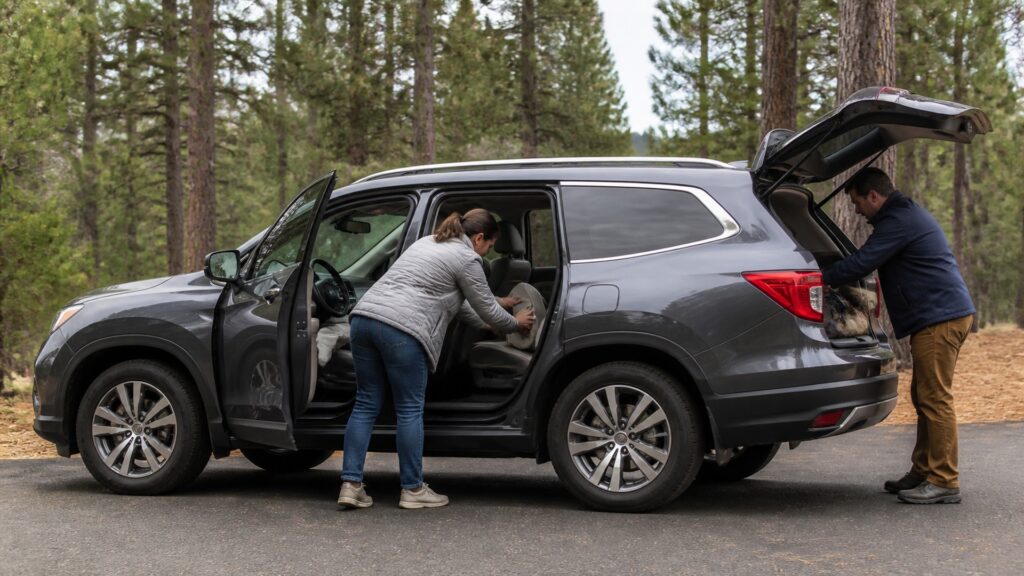
Why Midsize SUVs Safety Factors Matters

Safety in a midsize SUV depends on more than its size or high seating position. Crash structure and restraints protect occupants during an impact; tires, brakes, visibility, and driver-assistance systems help before one occurs. Loading and the way passengers are seated affect how that protection works on the trip you actually take.

Evaluate the exact model year and equipment, then check whether the vehicle supports safe, comfortable use by your household. A strong rating in one test does not answer every question about headlights, rear-seat protection, child restraints, or the driver’s view around the vehicle.

By: Review Streets Research Lab
Updated: September 30, 2026
Explainer · 8-12 min read
midsize suvs explainer hero image for Review Streets
What You'll Learn

How to Evaluate a Midsize SUV’s Safety

Use several kinds of evidence rather than relying on a single badge or feature count.

  • Read crash ratings within their stated comparison limits.
  • Distinguish warning systems from systems that intervene.
  • Check the seating positions your household will use.
  • Include visibility, tires, and correct loading in the assessment.
  • Verify the vehicle’s current condition and recall status.

Tip: Bring your normal driving and seating requirements to the comparison; a demonstration of one feature is not a complete evaluation.

Definitions

Safety Terms That Answer Different Questions

Protection, prevention, and usability are related, but none can substitute for the others.

Crashworthiness

How the vehicle’s structure and restraints help protect occupants during a collision.

  • Example: A crash test measures injury-related forces on restrained test dummies.
  • Check: Read the specific test result for the applicable model year.
  • Limit: A laboratory result describes tested conditions, not every possible crash.

Crash avoidance

Features and vehicle behavior intended to reduce the likelihood or severity of a collision before impact.

  • Example: Automatic emergency braking may intervene when a collision is imminent.
  • Check: Review the system’s documented operating conditions.
  • Limit: It does not remove the driver’s responsibility to respond.

Restraint fit

How a seat belt or appropriate child restraint positions and holds an occupant.

  • Example: An occupant can sit upright with the belt correctly routed.
  • Check: Use the vehicle and restraint instructions for the intended seating position.
  • Limit: An available seat is not proof that a particular child restraint fits it.

Direct visibility

What the driver can see through the windows and mirrors from the normal driving position.

  • Example: A front pillar obscures part of a turn until the driver changes sight line.
  • Check: Check the view while properly seated and during ordinary maneuvers.
  • Limit: A high seat can coexist with blind areas close to the vehicle.

Rollover resistance

The vehicle’s resistance to tipping in the conditions assessed by the rating method.

  • Example: A rollover rating supplies information separate from a frontal impact result.
  • Check: Read the rollover result and follow loading instructions.
  • Limit: A rating is not permission for abrupt maneuvers or excessive speed.

Driver-assistance limits

The circumstances under which a warning or intervention may be unavailable or less effective.

  • Example: A system reports that a sensor is obstructed.
  • Check: Read the manual and recognize unavailable-system indicators.
  • Limit: A familiar feature name does not guarantee identical behavior across vehicles.

Tip: Ask what a feature does, when it operates, and what remains the driver’s job.

Crash evidence

Read Ratings for the Exact Vehicle and Test

Start with the correct year, model, and applicable configuration. NHTSA and IIHS assess different aspects of safety, so their results complement each other. Check individual results and qualifications rather than reducing the choice to a headline award.

  • NHTSA frontal and overall scores should be compared only within the same class and within 250 pounds.
  • Review the individual crash, lighting, or prevention results relevant to your use.
  • Treat an unrated test as missing evidence, not an automatic failure or pass.

A comparison between unlike vehicles can make matching stars look more conclusive than they are. Read each organization’s test explanation before drawing that conclusion.

People aboard

Evaluate the Seats Your Family Will Actually Use

Front-seat comfort does not establish rear-seat suitability. Check belt positioning, head-restraint adjustment, access, and the instructions for any child restraint. If the third row will be used often, evaluate it as a regular seating area rather than an occasional bonus.

  • Have regular passengers try their intended seats.
  • Verify child-restraint compatibility and installation using both manuals.
  • Keep access arrangements consistent with the manufacturer’s instructions.

For example, a family using two child restraints and an adult in the second row should test that combination together. Checking each position separately can miss an access or fit problem.

Assistance features

Know Whether the System Warns or Intervenes

A warning asks the driver to act; an intervention can apply braking or steering within its limits. Similar names may describe different capabilities. Understand what is fitted to the vehicle, how to recognize its status, and which conditions can reduce effectiveness.

  • Read the difference between collision warnings, braking assistance, and lane-support functions.
  • Learn how the vehicle signals that a feature is unavailable.
  • Remain attentive and do not stage a collision scenario to test the system.

A useful demonstration explains controls and alerts during normal driving. It should not create a hazardous situation to see whether the SUV reacts.

Visibility and control

Look Beyond the High Seating Position

A taller view down the road can be comfortable without providing a clear view immediately around the vehicle. Check pillars, mirrors, rear visibility, and parking-camera coverage. Tire condition and appropriate speed remain essential to maintaining control.

  • Adjust the seat and mirrors before evaluating sight lines.
  • Keep camera lenses and relevant sensors clean according to the manual.
  • Inspect tire condition and follow the specified cold pressures.

Cameras and alerts supplement observation. Before moving, account for the areas they do not show, especially around children, pedestrians, and other nearby road users.

Condition and use

Make the Safety Assessment Continue After Purchase

An SUV’s condition and loading can change after it leaves the showroom. Secure luggage, follow roof and vehicle loading limits, and address warnings or new braking and steering symptoms. For a used vehicle, service history and a qualified inspection add information that ratings cannot provide.

  • Check open recalls using the vehicle identification number.
  • Resolve safety-related faults and follow urgent warning instructions.
  • Review the manual before adding roof loads or towing.

The practical goal is a vehicle whose tested protection, fitted equipment, present condition, and everyday use all support the people traveling in it.

Quick Reality Check

What Safety Evidence Does and Does Not Establish

Use each piece of information for the question it can answer.

Useful evidence includes…

Applicable crash-test results and documented assistance capabilities.

Correct restraint fit, clear controls, suitable visibility, and a sound current condition.

It does not establish…

That size alone prevents injury or that assistance can handle every situation.

That a feature demonstrated once will operate in all weather, lighting, or road conditions.

Common Myths

Misconceptions About Midsize SUV Safety

Avoid assumptions that turn helpful features into false reassurance.

More stars settle every safety question

Scores summarize particular tests. Check comparison limits, individual results, and the equipment on the actual vehicle.

All-wheel drive solves slippery-road safety

It can help deliver driving force where traction is available. It does not remove tire-grip limits or justify higher speed.

A camera shows everything around the SUV

Camera coverage and visibility have limits. Use the available views alongside direct observation.

Driver assistance is self-driving

Assistance functions operate within defined limits. The driver must remain responsible for the driving task as specified by the system.

Tip: Learn the limits while parked and through the manual, rather than discovering them during an emergency.

FAQ

Questions About Assessing SUV Safety

A practical starting point for a model-specific comparison.

Should I choose the largest SUV I can afford?

Size and weight influence collisions, but buying on size alone leaves important questions unanswered. Compare crash evidence, visibility, restraint suitability, avoidance features, and your ability to operate the vehicle comfortably.

Does a used SUV keep the same safety rating?

The rating may describe its original design, but present condition, repairs, tires, and unresolved faults require separate assessment.

What should I check for children?

Use the appropriate restraint for each child and verify compatibility with the specific seating position using both manuals. Consider access and the full family seating arrangement.

Where should I start?

Confirm the model year and equipment, read the applicable NHTSA and IIHS results, check recalls, and inspect the vehicle’s condition and seating fit.

Bottom Line

Safety factors matter because a midsize SUV must help avoid a crash, protect its occupants, and remain suitable for the way it is used.

Combine model-specific evidence with correct restraints, good condition, appropriate loading, and attentive driving.

Next Steps

Go Deeper or Compare Your Options

Use these Review Streets paths to compare related categories and practical next decisions.

Midsize SUVs

Explore midsize models with your passenger, cargo, and ownership requirements in mind.

SUVs

Compare the wider SUV category if another size or configuration may suit the task.

Vehicles

Consider other vehicle types when an SUV does not meet the full travel requirement.

Further reading: NHTSA: ratings and comparison rules; IIHS: how tests work; NHTSA: driver-assistance technologies; NHTSA: recall lookup. Use the owner’s manual for the exact vehicle’s instructions and limits.