Why Muscle Cars Fitment Matters

Fitment matters on a muscle car because the parts that support performance must be compatible with the exact car and with one another. A wheel can share the correct bolt pattern yet lack brake clearance. A tire can fit the rim but be unsuitable for the intended axle or load. A suspension change can alter the space available while the car steers, compresses over a bump, or enters a driveway.

Correct fitment is therefore a systems check rather than a visual judgment. Model year, brake package, suspension equipment, wheel dimensions, tire specification, and previous modifications establish the starting point. The goal is a supported combination that operates properly under movement and load, not simply a part that can be attached while the car is parked.

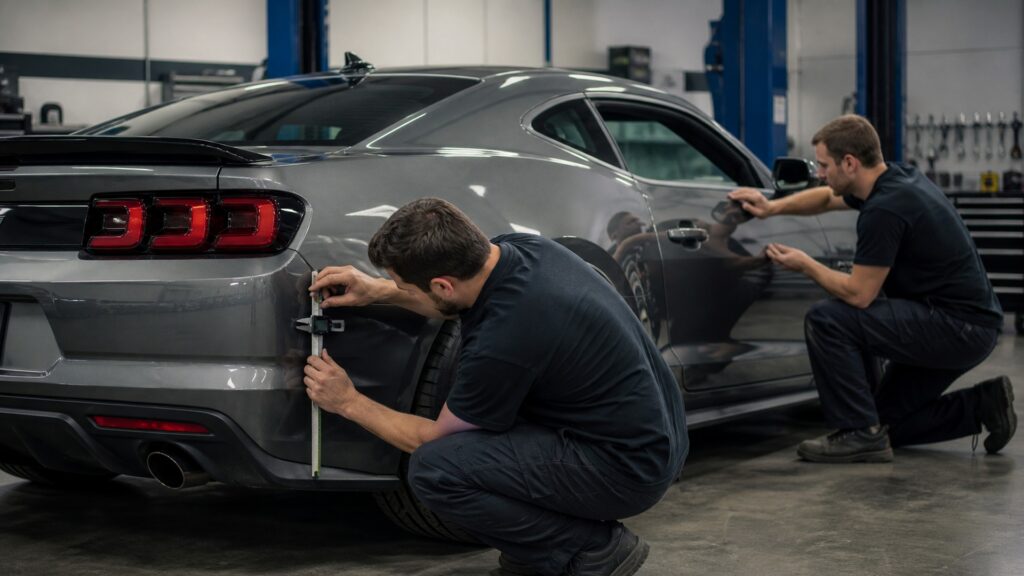
By: Review Streets Research Lab
Updated: October 5, 2026
Explainer · 8-12 min read
muscle cars explainer hero image for Review Streets
What You'll Learn

Making Performance Parts Work as a Complete Combination

Connect exact vehicle specifications with wheel, tire, brake, and suspension compatibility.

  • Identify the configuration details that change fitment.
  • Distinguish wheel attachment from brake and body clearance.
  • Understand axle-specific tire and wheel arrangements.
  • Account for steering movement, suspension travel, and ground clearance.
  • Complete required setup and investigate interference after installation.

Tip: Start with exact part numbers and the vehicle specification. A similar-looking car is not a reliable compatibility record.

Definitions

Six Fitment Relationships to Check

Each relationship addresses a different reason a part can be unsuitable.

Application compatibility

Agreement between a part's supported applications and the actual vehicle configuration.

  • Example: a wheel kit listed for specific years and equipment
  • Check: read the complete application list and exclusions
  • Limit: a shared model name does not establish identical hardware

Wheel offset

The location of the mounting face relative to the wheel's centerline.

  • Example: a change moving the tire nearer the suspension or outer bodywork
  • Check: assess width and tire dimensions along with offset
  • Limit: the bolt pattern alone does not locate the complete assembly

Brake clearance

The space needed between the wheel and brake components.

  • Example: a caliper approaching the inside of a wheel spoke
  • Check: use the approved wheel and brake compatibility information
  • Limit: wheel diameter alone does not describe spoke shape or all clearances

Staggered fitment

A specified arrangement using different wheel or tire dimensions at the front and rear.

  • Example: a vehicle with a wider approved rear assembly
  • Check: verify the correct specification for each axle
  • Limit: front-to-rear interchange or rotation may not be permitted

Dynamic clearance

The space needed as steering, suspension, and tires move through their supported operating range.

  • Example: a tire moving closer to a liner over a bump during a turn
  • Check: assess the relevant movement and loaded condition
  • Limit: a parked gap is not proof of clearance in motion

System setup

Alignment, programming, sensor procedures, or other specified work needed to complete an installation.

  • Example: an alignment following supported suspension work
  • Check: follow the instructions for the exact change
  • Limit: physical installation may not be the final step

Tip: Compatibility, clearance, load capability, and setup are separate requirements. Passing one does not prove the others.

Configuration

Identify the Car Beneath the Model Name

Model year, trim, brake package, suspension options, and existing modifications can alter compatibility. Factory performance packages can make two visually similar cars different applications for the same part. Record the relevant equipment and check the part manufacturer's fitment information before installation. Missing or contradictory information needs resolution rather than an assumption that a part will work because it fits another car in the same family.

  • Confirm the exact vehicle and equipment package.
  • Record existing changes that affect the installation.
  • Check current instructions and application exclusions.

A wheel suitable for one brake package may not clear another. Identifying the brakes before ordering can matter more than matching the car's exterior appearance.

Wheels and brakes

Check the Entire Wheel Geometry, Not Just the Diameter

Wheel diameter, width, offset, hub interface, fasteners, load capability, and internal shape all contribute to fitment. The wheel must also accommodate the brake hardware. A larger diameter does not automatically settle the question because spoke profile and mounting geometry still matter. Ford Performance's Mustang wheel listings illustrate how applications include specific dimensions and vehicle requirements rather than a single universal size.

  • Confirm the hub and fastener requirements.
  • Check brake clearance through the approved method.
  • Assess wheel location relative to suspension and bodywork.

Two wheels can share a diameter and bolt pattern yet have different internal profiles. One may clear a particular caliper while the other does not.

Tires by axle

Treat the Wheel and Tire as a Matched Assembly

The tire must suit the rim dimensions, vehicle requirements, load, and intended conditions. Some muscle-car configurations use different front and rear dimensions, so the correct fitment is axle-specific. Follow the approved combination and any restrictions on rotation or replacement. An apparently small change can also affect rolling dimensions and other system relationships, which should be assessed through vehicle and tire guidance rather than visual comparison.

  • Use approved tire dimensions and suitable ratings.
  • Check front and rear requirements separately.
  • Include the spare or repair arrangement in the plan.

A rear wheel and tire assembly may be intentionally different from the front. Moving it forward because it attaches to the hub does not establish clearance or an approved vehicle configuration.

Movement and ride height

Allow Space for the Car to Move and Carry Its Load

Steering and suspension movement change the position of the tire relative to nearby parts. Load can change available clearance, while ride-height changes can affect access over ramps and uneven pavement. A professional assessment should cover the relevant range of movement and the combined effects of modifications. Do not remove safety-related components or improvise around contact merely to make an unsuitable combination appear to fit.

  • Consider steering and suspension movement together.
  • Include normal passengers and luggage in clearance planning.
  • Check supported alignment and suspension-travel requirements.

A car may show no rubbing while parked with straight wheels yet develop contact during a loaded turn over a bump. That is a failure of operating clearance, not just a cosmetic inconvenience.

Verification

Finish the Required Setup Before Calling the Job Complete

The installation instructions may require alignment, sensor procedures, or other setup, depending on the change. Complete those requirements and follow specified follow-up checks. New rubbing, vibration, warning messages, or changed steering behavior should be investigated. A clean appearance and absence of a warning light are not sufficient evidence that every clearance, rating, and setup requirement has been met.

  • Complete the applicable alignment and system procedures.
  • Use specified hardware and installation requirements.
  • Investigate new symptoms and document the final combination.

An installed suspension component may still require alignment before the vehicle is ready for normal use. The completion standard is the supported operating configuration, not the moment the last visible part is attached.

Quick Reality Check

What Proper Fitment Establishes

The purpose is a compatible operating combination, not an automatic performance claim.

A verified fitment can establish

Supported attachment, appropriate ratings, and required operating clearance.

Completion of the setup and checks specified for the change.

It does not automatically establish

Improved handling, a higher vehicle load rating, or suitability for competition.

Compatibility with every other modification or future accessory.

Common Myths

Misconceptions About Muscle-Car Fitment

A part can look right without meeting the full requirements.

The bolt pattern is the only wheel requirement

Offset, width, hub interface, fasteners, ratings, and brake clearance also matter.

Bigger wheels always clear bigger brakes

Internal shape and mounting geometry matter alongside diameter.

All four wheels can always be interchanged

Staggered or otherwise axle-specific arrangements can restrict interchange.

No rubbing while parked proves the fit

Movement and load can reduce clearance. The operating range needs assessment.

Tip: Check the complete combination and its instructions rather than one matching dimension.

FAQ

Questions About Muscle-Car Parts Compatibility

Useful answers depend on the exact equipment and proposed change.

Why does a factory brake package affect wheel choice?

Caliper and rotor arrangements can change the clearance the wheel must provide.

Can a tire that fits the rim still be unsuitable?

Yes. Vehicle, axle, load, condition-of-use, and clearance requirements still apply.

Does lowering the car only change its appearance?

No. It can affect clearance and suspension relationships, so use supported parts and setup requirements.

Should a new warning be ignored after a modification?

No. Follow the vehicle instructions and have the cause assessed rather than assuming it is harmless.

What information should I keep?

Vehicle configuration, part numbers, approved tire specifications, installation records, alignment results, and any required system setup.

Bottom Line

Muscle-car fitment matters because compatible performance parts must work together under movement and load, not merely attach to the car.

Check the exact configuration, wheel and brake geometry, axle-specific tires, dynamic clearance, and required setup. Verify the completed combination before relying on it.

Next Steps

Go Deeper or Compare Your Options

Use these Review Streets paths to compare related categories and practical next decisions.

Vehicles

Explore vehicle systems and compatibility.

Muscle Cars

Continue with muscle-car operation and care.

Further reading: Ford Performance Mustang wheel-kit example; Ford Mustang equipment configurations; NHTSA tire selection and maintenance.