Why Muscle Cars Maintenance Role Matters

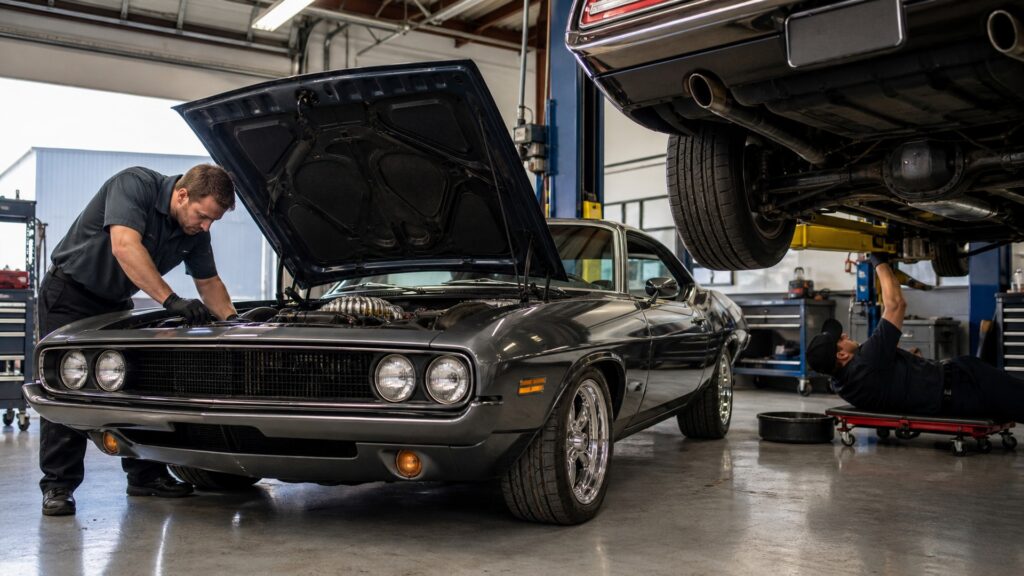
Maintenance keeps a muscle car's performance usable by preserving the tires, brakes, powertrain, and supporting systems that must work together. A powerful engine cannot compensate for neglected tires, an unresolved fluid leak, or abnormal braking. The purpose is dependable response and mechanical condition, whether the car is a daily driver, an occasional weekend vehicle, or used at an approved event.

There is no single muscle-car maintenance schedule. Model year, powertrain, equipment, mileage, elapsed time, and operating conditions determine the applicable work. Modern muscle cars include different propulsion systems, so engine-service advice cannot be applied indiscriminately. Begin with the correct vehicle schedule, then add any inspections or preparation required by actual use.

By: Review Streets Research Lab
Updated: October 5, 2026
Explainer · 8-12 min read
muscle cars explainer hero image for Review Streets
What You'll Learn

Preserving Performance Through Condition and Care

Connect routine service with the systems that make the car dependable in everyday use.

  • Build a schedule around the exact vehicle and its use.
  • Keep tires and brakes in the maintenance plan alongside the powertrain.
  • Understand why cooling and fluid condition matter.
  • Distinguish road maintenance from event preparation.
  • Treat low-mileage storage and new symptoms as separate concerns.

Tip: Record what was serviced, which specification was used, and any symptoms observed. A clear history is more useful than a general claim that the car has been looked after.

Definitions

Six Maintenance Concepts for Muscle Cars

Each concept addresses a different part of maintaining the complete vehicle.

Service interval

A specified time, distance, condition, or monitored threshold for maintenance.

  • Example: a service due by elapsed time even though mileage is low
  • Check: use the correct schedule and its exceptions
  • Limit: an interval from another model may not apply

Fluid specification

The required performance standard and type for a fluid used in a particular system.

  • Example: the specified lubricant for a fitted transmission
  • Check: match the system and exact vehicle instructions
  • Limit: a performance label alone does not establish compatibility

Wear condition

The remaining usable condition of a component that deteriorates with use.

  • Example: brake pads or tire tread requiring inspection
  • Check: use appropriate measurements and stated limits
  • Limit: appearance alone may not reveal the full condition

Thermal management

The handling and release of heat from operating components.

  • Example: coolant and airflow supporting an engine within its operating range
  • Check: investigate warnings, leaks, and damaged cooling parts
  • Limit: a larger output figure does not prove adequate cooling for every use

Duty cycle

The pattern and intensity of vehicle operation over time.

  • Example: short road trips differing from repeated event sessions
  • Check: compare actual use with manufacturer requirements
  • Limit: similar mileage can involve different operating demands

Return-to-use inspection

Checks before a vehicle resumes driving after an extended period parked.

  • Example: checking condition and required servicing before a seasonal car returns to the road
  • Check: follow the storage and return guidance for the vehicle
  • Limit: low accumulated mileage does not establish readiness

Tip: Distance, time, condition, and use all contribute to maintenance decisions. One measure cannot stand in for the others.

The schedule

Use the Exact Vehicle Requirements as the Starting Point

A maintenance plan should identify the model year, powertrain, transmission, and relevant equipment before selecting fluids or intervals. An engine-powered model and an electric model do not share every service item. Even within one model range, instructions can differ. The Ford Mustang schedule, for example, includes inspections and time-based requirements as well as mileage-related work; it should be read for the applicable vehicle rather than copied across the category.

  • Confirm the manual and service schedule match the car.
  • Check time limits and defined operating-condition exceptions.
  • Keep receipts and specification details with the service record.

Two cars driven the same annual distance may need different work because of their age, equipment, and use. A schedule is a vehicle-specific requirement, not a general muscle-car recipe.

Road contact

Give Tires and Brakes the Same Attention as the Powertrain

Tires transmit acceleration, braking, and turning forces, while brake components must remain in suitable condition to produce controlled deceleration. Inspect wear and damage and investigate changed behavior such as vibration, pulling, or abnormal pedal response. Some performance configurations use different front and rear tire sizes or directional tires, which can restrict rotation patterns. Follow the approved arrangement rather than applying a generic rotation routine.

  • Check tire condition and the specified cold inflation.
  • Use the permitted rotation pattern for the fitted tires.
  • Have abnormal braking or persistent vibration assessed.

Replacing engine oil does not resolve a damaged tire or worn brake component. A useful service plan covers the parts that connect performance to the road as well as those that produce it.

Heat and lubrication

Look After the Systems That Support Repeated Operation

Lubrication and cooling protect components during operation, but their requirements depend on the powertrain and use. Use specified fluids and have unexplained loss, leaks, or temperature warnings investigated. A warning is not simply an inconvenience to clear from the display. Sustained demanding use can expose different limits from ordinary road travel, which is why the supported use and relevant preparation instructions matter.

  • Use the correct fluid and service procedure for each system.
  • Investigate unexplained changes in level or temperature.
  • Keep cooling components in the condition required by the manufacturer.

A car that behaves normally on a short journey may reveal a cooling problem during a longer one. Describing when the symptom occurs helps a technician distinguish conditions from causes.

Events

Treat Track Preparation as Additional Work, Not a Badge

A performance model name does not establish readiness for a circuit or high-speed event. Where that use is supported, the manufacturer may specify additional preparation, inspections, or service intervals. Ford includes separate track-use guidance for relevant Mustang applications. The organizer also sets requirements. Confirm both before the event, and arrange any post-event work rather than assuming the ordinary road schedule covers every demand.

  • Verify that the exact vehicle supports the intended event.
  • Follow applicable preparation and inspection requirements.
  • Document event use for later maintenance decisions.

A road service completed recently may still leave event-specific requirements outstanding. The distinction is the intended duty cycle, not whether the car is commonly described as sporty.

Infrequent use

A Parked Car Still Needs a Condition-Based Return

Seasonal ownership changes the maintenance pattern without removing it. Follow the vehicle's storage instructions, including any powertrain-specific requirements, and check its condition before returning to use. Time-based services can become due while the car is parked. Tire condition, electrical readiness, fluid leaks, and unresolved warnings deserve attention before a planned drive rather than after a problem appears on the road.

  • Use the correct storage guidance for the propulsion system.
  • Check overdue time-based maintenance before driving.
  • Investigate new symptoms instead of assuming they will disappear.

A low-mileage car can still have an old tire, a deteriorated component, or a service item due by time. Its odometer does not provide a complete account of its condition.

Quick Reality Check

What Maintenance Preserves

Care supports the designed capability of the whole car.

A sound maintenance plan can

Preserve predictable response and identify wear or faults before later use.

Provide a clear history of service, symptoms, and demanding operation.

It does not automatically provide

Event readiness, increased performance, or suitability for an unsupported use.

A guarantee against failure or permission to ignore new warnings.

Common Myths

Misconceptions About Muscle-Car Maintenance

Performance depends on condition across several systems.

Low mileage means no service is due

Time-based requirements and component condition remain relevant.

The engine is the only important maintenance priority

Tires, brakes, suspension, cooling, and other systems contribute to dependable use.

Any premium fluid is an upgrade

Compatibility depends on the required specification, not the label or price.

A recent road service makes a car track-ready

Supported event use can have additional preparation and inspection requirements.

Tip: Use the schedule as a foundation and actual condition as continuing evidence.

FAQ

Questions About Maintaining a Muscle Car

The correct work depends on the specific vehicle and its history.

Can I use a service schedule from a similar car?

Use the schedule for your exact vehicle. Equipment and powertrain differences can change requirements.

Can every performance tire set be rotated front to rear?

No. Staggered sizes and tire construction or direction can restrict rotation. Follow the approved pattern.

Should new vibration wait until the next routine service?

Have persistent or significant changes assessed, especially if accompanied by steering, braking, or tire concerns.

Do electric muscle cars need maintenance?

Yes, but their propulsion-related requirements differ. Tires, brakes, chassis, and other systems still need the specified care.

What records are most useful?

Dates, mileage, work completed, fluid or part specifications, observed symptoms, and relevant demanding use.

Bottom Line

Muscle-car maintenance matters because usable performance depends on the condition of the whole vehicle, not just its output.

Follow the exact schedule, include tires and brakes, account for time and duty cycle, and investigate changed behavior. Preparation should match the next intended use.

Next Steps

Go Deeper or Compare Your Options

Use these Review Streets paths to compare related categories and practical next decisions.

Vehicles

Explore vehicle systems and ownership needs.

Muscle Cars

Continue with muscle-car operation and safety.

Further reading: Ford Mustang scheduled-maintenance example; Ford Mustang owner manual and track-use requirements; NHTSA tire care; Dodge muscle-car powertrain examples.