Why Muscle Cars Safety Factors Matters

Safety factors matter in a muscle car because strong acceleration does not guarantee enough grip, stopping space, visibility, or protection for the situation ahead. Power can change speed quickly, while the driver still needs time to recognize a hazard and respond. Suitable tires, sound brakes, appropriate speed, restraints, and correctly understood assistance systems all contribute to managing that gap.

The muscle-car label does not establish a vehicle's safety rating or its behavior in every condition. Model year, equipment, maintenance, tire choice, and driving decisions matter. Assess the exact car and the journey instead of assuming that performance hardware either makes it automatically safe or automatically dangerous.

By: Review Streets Research Lab
Updated: October 5, 2026
Explainer · 8-12 min read
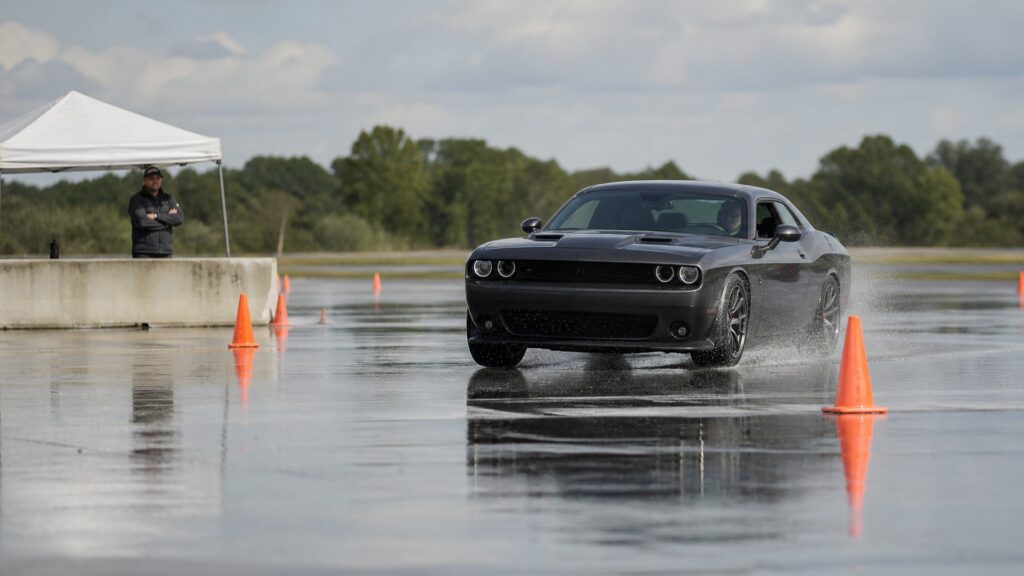
muscle cars explainer hero image for Review Streets
What You'll Learn

Keeping Performance Within Real Conditions

Understand how grip, speed, protection, and driver decisions work together.

  • Separate acceleration capability from safe operating speed.
  • Match tires to temperature, surface, and vehicle requirements.
  • Understand the limits of traction and stability assistance.
  • Keep occupant protection and visibility in the assessment.
  • Recognize the difference between road use and organized performance activity.

Tip: Available acceleration is a capability; the appropriate speed is a decision based on visibility, traffic, surface, and conditions.

Definitions

Six Safety Concepts for Muscle-Car Drivers

Each concept addresses a different part of avoiding or reducing harm.

Stopping distance

The distance covered during driver response and the subsequent slowing of the vehicle.

  • Example: more road being used before stopping from a higher speed
  • Check: allow space appropriate to conditions
  • Limit: strong brakes do not remove the distance traveled before braking begins

Available grip

The tire-to-surface forces available for acceleration, braking, and turning.

  • Example: a wet or cold surface changing the car's response
  • Check: consider tire type, condition, and the surface
  • Limit: engine output cannot establish the amount of grip

Traction control

A system that manages excessive driven-wheel slip through supported interventions.

  • Example: reduced drive when a driven wheel begins to spin excessively
  • Check: learn the normal behavior and warning indicators
  • Limit: it cannot guarantee traction in every condition

Electronic stability control

A system that compares intended direction with vehicle motion and can intervene to counter instability.

  • Example: selective braking helping correct a developing deviation
  • Check: keep the appropriate road-use configuration active
  • Limit: intervention cannot defeat physical limits

Occupant protection

Vehicle systems and correct use practices intended to reduce injury in a crash.

  • Example: properly worn seat belts and appropriate child restraints
  • Check: use the designated seating and restraint arrangements
  • Limit: airbags do not replace seat belts

Condition-appropriate use

Driving and equipment choices matched to the actual environment and supported vehicle operation.

  • Example: using suitable tires for the prevailing weather
  • Check: assess the journey rather than a capability claim
  • Limit: a performance mode does not make every environment suitable

Tip: Avoidance, control, and occupant protection are connected layers. No single feature performs every job.

Speed and space

Strong Acceleration Does Not Shorten the Driver's Response Time

A fast-accelerating car can reach a speed that leaves little margin for an emerging hazard. The driver still needs to notice the problem, decide what to do, and act, during which time the vehicle continues moving. NHTSA identifies increased stopping distance and reduced ability to negotiate hazards among the consequences of speeding. Brake hardware cannot remove the need for suitable speed and following distance.

  • Obey limits and reduce speed when conditions require it.
  • Keep usable space and visibility ahead.
  • Avoid treating an acceleration claim as a road-use target.

A clear-looking road can still contain a concealed junction or changing traffic. The relevant question is whether the available view and space support the chosen pace, not how easily the engine reaches it.

Tires

Performance Tires Must Suit the Actual Conditions

A tire selected for strong response in one temperature range or surface condition may be unsuitable elsewhere. Michelin explains that summer-tire behavior changes in cold conditions; a dry-looking road does not remove that issue. Use the exact tire manufacturer's guidance along with the vehicle requirements. Inspect condition and inflation, and do not assume that a wide or expensive tire provides a universal safety advantage.

  • Identify the fitted tire type and its intended conditions.
  • Check wear, damage, and specified cold inflation.
  • Plan for weather changes over the full journey.

A car on suitable warm-weather tires can require a different arrangement for a cold trip. All-wheel drive does not change the compound of the tires fitted to it.

Electronic assistance

Understand Intervention Without Treating It as a Guarantee

Traction control and stability control perform related but different tasks. Bosch describes stability control as comparing the intended path with vehicle motion and intervening through braking and drive management. Such assistance can help within available grip. It cannot guarantee recovery after every input or surface change. Learn the normal indications and retain the settings recommended for public-road use rather than assuming a reduced-intervention mode is a general upgrade.

  • Distinguish normal intervention from a fault warning.
  • Read the restrictions attached to selectable settings.
  • Do not use assistance as a reason to increase risk.

An intervention during ordinary use is information about the demand placed on the vehicle and surface. Repeatedly relying on it is not the same as maintaining a comfortable operating margin.

Occupants and awareness

Protection Starts With Correct Seating and a Clear View

Seat belts, appropriate child restraints, and correctly used seating are basic requirements regardless of the car's performance. Airbags provide additional protection rather than replacing belts. Visibility and attention matter before a crash occurs: adjust seating and mirrors appropriately, keep the view clear, and understand the limits of fitted cameras or alerts. Loose equipment should not interfere with the driver or move freely around occupants.

  • Use the correct restraints for every occupant.
  • Keep controls and sightlines unobstructed.
  • Treat driver-assistance alerts as support for attentive driving.

A car's appearance or power package says little about how well its seating arrangement fits a particular passenger. Check the actual seating and restraint instructions rather than improvising around an inconvenient layout.

Use and condition

Separate Public-Road Driving From Performance Events

Public roads contain other users and uncontrolled hazards. An organized closed-course event has its own rules, preparation, and instruction requirements, and the exact car must support the intended use. Neither context excuses unresolved faults. Have abnormal tire, steering, or braking behavior investigated and follow safety recalls and manufacturer guidance for the vehicle. A track-related feature name is not evidence that preparation is complete.

  • Resolve safety-related faults before further demanding use.
  • Confirm event suitability and required preparation separately.
  • Use model-specific safety information and current recall checks.

A road-legal performance car can still need additional work before an event. Conversely, equipment suited to a particular event does not automatically make a different public-road configuration appropriate.

Quick Reality Check

What Performance Hardware Can and Cannot Do

Useful safety equipment works within the conditions and the complete vehicle.

A well-maintained, suitable setup can

Support predictable braking, steering, and drive within available grip.

Combine assistance systems and occupant protection with attentive driving.

It cannot

Remove reaction time, guarantee recovery, or make every speed suitable.

Replace correct restraints, tire suitability, maintenance, or sound judgment.

Common Myths

Misconceptions About Muscle-Car Safety

More performance does not remove the ordinary requirements of safe driving.

Bigger brakes make speed irrelevant

Stopping still involves response time, tire grip, surface conditions, and distance.

All-wheel drive solves every slippery-road problem

It affects drive distribution, not every aspect of braking, steering, or tire suitability.

A track mode is the safest setting everywhere

Settings have specific intended uses and limits. Follow the recommended public-road configuration.

A muscle-car label tells me the crash rating

Safety information applies to particular vehicles and test conditions, not an entire informal category.

Tip: Evaluate the car, equipment, condition, and driver decisions separately instead of treating a badge as a safety assessment.

FAQ

Questions About Muscle-Car Safety Factors

The practical answers depend on the exact vehicle and conditions.

Do summer tires remain suitable just because the road is dry?

Not necessarily. Temperature matters too. Follow the tire maker's guidance for the exact tire.

Can stability control prevent every slide?

No. It can help within its operating limits and available grip, but cannot guarantee recovery.

Should I ignore a warning if the car still feels normal?

Follow the manual's warning instructions and have unresolved faults assessed. Normal feel does not establish that a system is functioning correctly.

Do passengers need belts on a short trip?

Yes. Use the appropriate restraints and seating arrangements on every journey.

Does high engine output automatically make a car unsafe?

Output alone is not a complete safety assessment. Equipment, condition, environment, and how the vehicle is driven all matter.

Bottom Line

Muscle-car safety depends on appropriate speed, suitable tires, sound systems, protected occupants, and decisions matched to the conditions.

Use performance capability within those requirements. Neither electronic assistance nor powerful brakes removes the need for space, attention, and a suitable operating margin.

Next Steps

Go Deeper or Compare Your Options

Use these Review Streets paths to compare related categories and practical next decisions.

Vehicles

Explore vehicle features and their roles.

Muscle Cars

Continue with muscle-car maintenance and operation.

Further reading: NHTSA speeding guidance; Michelin seasonal tire guidance; Bosch stability-control explanation; NHTSA occupant restraint guidance; NHTSA tire care.