
Water Content
Amount of water held within the nail plate at a given moment.
- Use: understand flexibility
- Variable: environment and exposure
- Tradeoff: Changes continuously
Nail hydration matters because water content changes how the nail plate bends, swells, and resists splitting. Too little surface conditioning can leave nails and surrounding skin brittle-feeling, while repeated long wetting and drying cycles can increase stress between plate layers and contribute to peeling.
The goal is not to keep nails continuously wet. It is to reduce extreme cycling and support flexibility with sensible handwashing, thorough drying, gloves for wet work, and oil, cream, or petrolatum around the nail folds and plate surface. Polish and enhancements alter exposure but do not prove the nail underneath is hydrated or healthy.
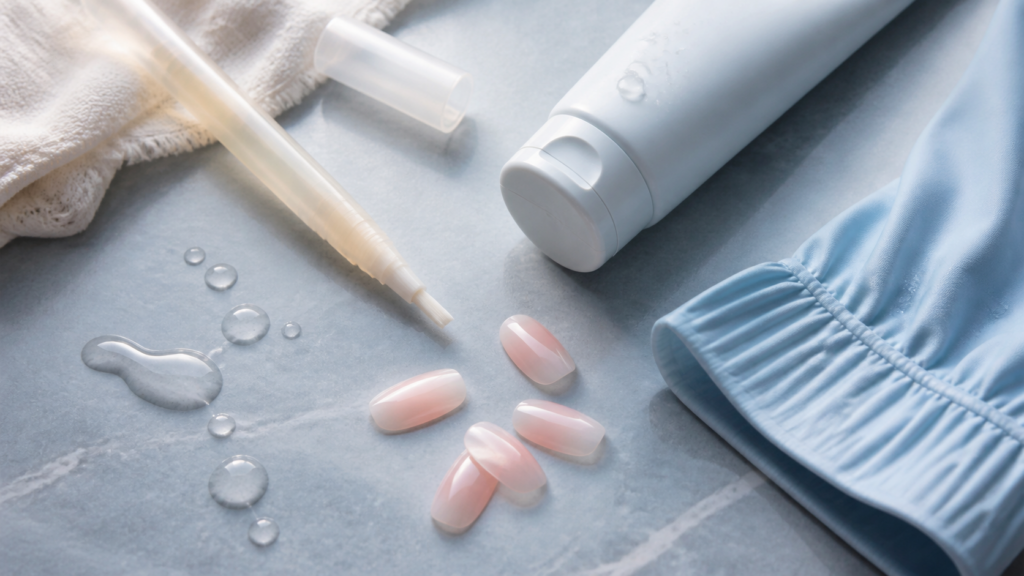
Explain nail water content as a dynamic balance shaped by washing, soaking, solvents, humidity, occlusion, oils, creams, plate damage, and repeated swelling-drying cycles, distinguishing flexible conditioning from permanent moisture claims.
Tip: Hydration is managed through the cycle, not a single soak.
These nail hydration concepts separate mechanism, application, limits, and purchasing consequences.
Amount of water held within the nail plate at a given moment.
Expansion during wetting followed by contraction during drying.
Surface layer slowing water loss.
Movement of water through plate layers and edges.
Subjective stiffness, roughness, or tendency to snap.
Cumulative washing, soaking, cleaning, and glove-trapped moisture.
Tip: Use these terms to test nail hydration instead of relying on a front-label promise.
Normal washing is necessary, but long immersion, repeated detergent exposure, and strong solvent cycles can increase roughness. Dry hands thoroughly without abrasive rubbing.
Hydration is managed through the cycle, not a single soak.
Wear suitable lined gloves for cleaning or dishes, remove them after the task, and let damp hands dry. Replace leaking or contaminated gloves.
Protection should reduce exposure without creating prolonged dampness.
Oil spreads easily around each nail; cream or balm can cover hands and folds. These films reduce friction and water loss but do not rebuild delaminated plate.
A surface film supports flexibility while it remains.
Residue can weaken adhesion, while aggressive dehydration can irritate skin and plate. Condition routinely, then prepare only the nail surface as the coating directions require.
Good adhesion should not require desiccating the entire fingertip.
Compare breakage and lamellar peeling over similar weeks while noting wet work, climate, remover, manicure type, and nail length.
The best hydration signal is improved behavior during ordinary use.
Hydration management can improve flexibility and surface comfort; it cannot permanently store water in the nail or reverse severe structural damage.
Nails bend enough for ordinary tasks without excessive peeling or snapping.
Surrounding folds remain comfortable through washing and climate changes.
Water exposure can temporarily soften nails while repeated cycles increase damage.
A glossy oil film is not a direct measurement of nail water content.
These claims flatten the variables that determine how nail hydration performs in a real routine.
Soaking temporarily increases water content but repeated swelling and drying can contribute to peeling. Use shorter water exposure plus a conditioning film.
Oil generally contains no water. It lubricates and can slow water loss, which may improve flexibility and feel without directly hydrating like an aqueous cream.
A heavy film can feel greasy, trap irritants, interfere with polish, or be impractical. Use the smallest persistent dose that fits the routine.
Coatings alter water exchange but can chip, lift, and require removal. The plate continues to grow and weather underneath.
White marks can have many causes including minor trauma and surface change. Persistent, widespread, painful, or changing marks should not be self-diagnosed as dryness.
Tip: Test the exact nail hydration tool, setting, and routine before generalizing from its category.
The remaining decisions about nail hydration concern technique, compatibility, safety, upkeep, and value.
After handwashing, solvent removal, and at bedtime are useful opportunities. Frequency should match wet work and product persistence.
Oil offers precise slip; cream adds water-related ingredients and broader coverage; balm provides stronger occlusion. Choose the format used consistently.
Occlusive gloves can trap sweat when worn too long. Use task-appropriate gloves, keep interiors dry, and remove them after work.
It can cause temporary dryness of nail and skin. Use the shortest effective directed removal and condition afterward rather than peeling coatings.
Surface feel can change quickly, but damaged plate must grow out over months. Reduction in new peeling at the grow-out boundary is more meaningful.
Pain, inflammation, nail lifting, thickening, unusual color, or persistent change warrants professional assessment.
Nail hydration matters because changing water content affects flexibility, swelling, friction, and peeling. Healthy management reduces extreme wet-dry cycles rather than keeping nails continuously wet.
Limit prolonged soaking and solvents, use appropriate gloves, dry folds, and apply a practical oil, cream, or balm film. Judge success by behavior and grow-out, not surface shine or permanent-moisture claims.
These Review Streets paths narrow the next nail hydration decision by format, goal, and routine fit.
Browse nail treatments, polish, removal, and care categories.
Compare cuticle oils by vehicle, applicator, feel, and routine fit.
Choose a retailer
Prices checked regularly. We may earn a commission at no cost to you.