
Lamellar Peeling
Separation of thin layers from the nail plate edge.
- Use: identify a common failure
- Variable: water cycles and trauma
- Tradeoff: Can resemble surface damage
Nail strengtheners matter when a weak, peeling, or flexible nail plate needs temporary support while damaged material grows out. Some products leave a reinforcing coating; others emphasize conditioning; some hardeners use ingredients that interact with nail keratin. These mechanisms can change feel and breakage without changing the biology of new growth.
Stronger is not always harder. A very rigid nail can become brittle and snap, while thick coatings can hide lifting or discoloration. FDA notes that frequent use of some formaldehyde-containing hardeners may make nails brittle and more likely to break or peel, and may cause irritation or allergy. Choose by the failure pattern, use the least frequent effective schedule, and inspect bare nails between cycles.
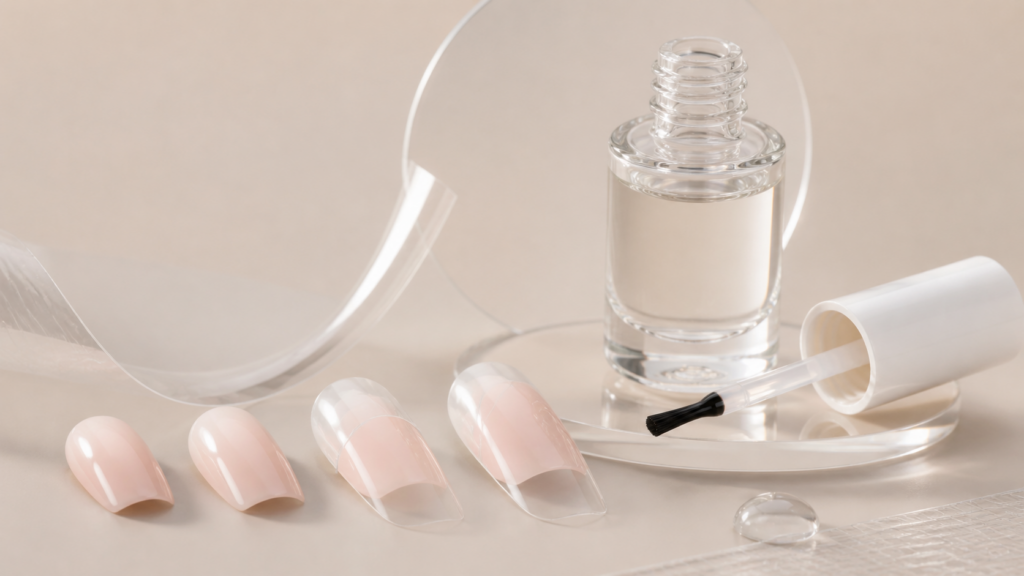
Separate coating-based reinforcement, conditioning and formaldehyde-related hardening from healthy growth, then show how flexibility, peeling pattern, exposure, frequency, allergy risk, removal, and grow-out determine whether a strengthener helps.
Tip: The product category follows the failure pattern.
These nail strengtheners concepts separate mechanism, application, limits, and purchasing consequences.
Separation of thin layers from the nail plate edge.
Polymer film adding temporary thickness and load distribution.
Chemical interaction that increases plate hardness.
Ability to tolerate bending without failure.
Directed period of application, removal, and reassessment.
Visible transition between older damaged plate and newer growth.
Tip: Use these terms to test nail strengtheners instead of relying on a front-label promise.
A peeling free edge, longitudinal split, thin flexible plate, and lifting nail need different responses. Photograph bare nails and note water, chemical, and trauma exposure.
The product category follows the failure pattern.
A coating can reduce bending; conditioners can reduce brittleness related to dryness; hardeners can increase rigidity. Ingredient names do not guarantee the right balance.
Strength is resistance with enough flexibility.
Follow labeled application and removal, then compare breakage during similar tasks. Reduce or stop after increasing brittleness, peeling, or irritation.
A treatment should earn every repeat application.
Gloves for wet work, careful filing, gentle removal, and shorter nails can reduce the load a strengthener must resist.
A coating cannot outrun repeated new trauma.
Look for a named mechanism, clear directions, controlled brush, ingredient list, and practical return terms. Price the remover and treatment interval too.
Value is fewer failures without escalating rigidity.
A strengthener can improve temporary resistance or flexibility; it cannot permanently repair the existing plate or treat unexplained nail disease.
Comparable daily tasks produce fewer splits or peeling layers.
The nail remains flexible, comfortable, and visible between treatment cycles.
Hardening and coating benefits can plateau or reverse with overuse.
Persistent nail changes require assessment beyond cosmetic strengthening.
These claims flatten the variables that determine how nail strengtheners performs in a real routine.
Flexible, peeling, chemically damaged, and dry nails do not share one solution. Excess hardness can increase snapping.
They can support or condition existing plate temporarily. Damaged nail must grow out from the matrix over time.
Thick buildup can crack, peel, obscure the nail, and require harsher removal. Follow the product cycle rather than layering indefinitely.
It removes one ingredient concern, not all possible irritants or allergens. The complete formula, dose, and user history matter.
Pain, lifting, thickening, unusual color, or surrounding inflammation may signal a problem that cosmetics should not conceal.
Tip: Test the exact nail strengtheners tool, setting, and routine before generalizing from its category.
The remaining decisions about nail strengtheners concern technique, compatibility, safety, upkeep, and value.
Surface support may be immediate, but replacement of damaged fingernail plate takes months. Track the grow-out boundary rather than expecting overnight repair.
Only when the directions allow it and the coating system remains compatible. Too many layers can reduce adhesion and complicate removal.
Increasing rigidity, snapping, peeling, dryness, irritation, yellowing, or difficult removal suggests reducing or stopping the product.
No. A cosmetic strengthener cannot make antifungal claims. Persistent thickening, lifting, odor, or discoloration needs professional evaluation.
Only if directed, and gently. Repeated buffing thins the plate and can worsen the weakness being treated.
A repeatable reduction in breakage at a controlled schedule, without irritation, brittleness, heavy removal, or concealment of nail changes.
Nail strengtheners matter when their coating, conditioning, or hardening mechanism reduces a defined failure while older damage grows out. Strength must include flexibility, not hardness alone.
Choose by the breakage pattern, follow treatment cycles, reduce water and mechanical trauma, inspect bare nails, and stop after brittleness or reaction. Persistent abnormal changes need more than cosmetics.
These Review Streets paths narrow the next nail strengtheners decision by format, goal, and routine fit.
Browse nail treatments, polish, removal, and care categories.
Compare cuticle oils by vehicle, applicator, feel, and routine fit.
Choose a retailer
Prices checked regularly. We may earn a commission at no cost to you.