Why No-Code Automation Platforms Operating Model Matters

The enterprise operating situation for no-code automation platforms operating model rests on a controlled handoff: No-Code Automation Platforms Service Administrator must support efforts to assign accountability for no-code automation platforms outcomes and policy, and No-Code Automation Platforms Administration Model must help delivery group members separate daily operation from toolset administration for no-code automation platforms.

The accountability model turns on no-code automation platforms service-level attainment, no-code automation platforms anomaly resolution time, and the cases involving unclear no-code automation platforms accountability. No-code automation platforms let governed enterprise builders build applications and automations visually while environments, components, publishing, and support remain controlled. The operating model defines ownership, service boundaries, administration, anomaly handling, maintenance, and fallback subsequent to implementation.

By: Review Streets Research Lab
Updated: August 17, 2026
Explainer · 8-12 min read
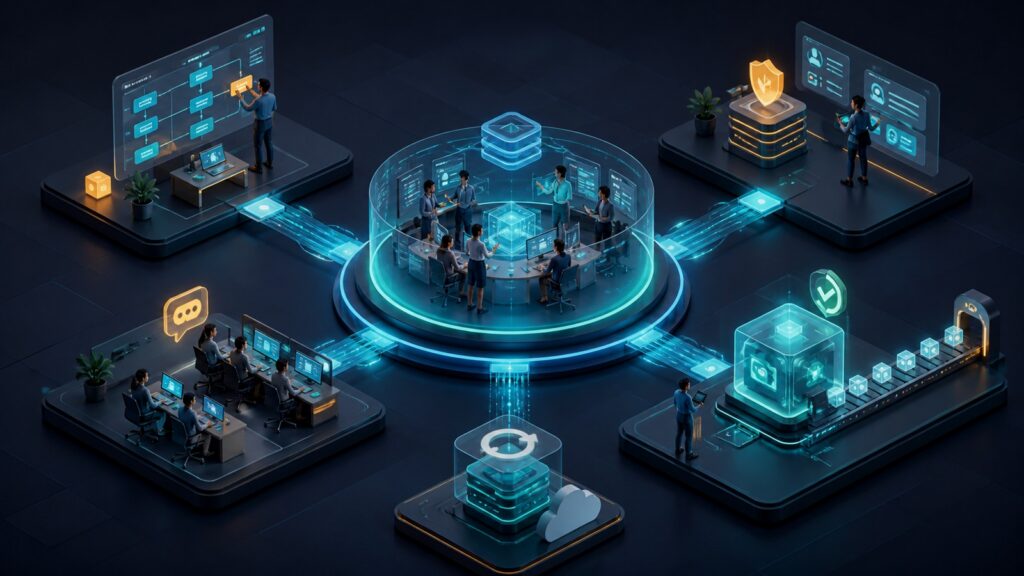
Editorial business scene illustrating no-code automation platforms operating model
What You'll Learn

What this No-Code Automation Platforms explainer covers

The audit follows the checkpoints, breakdowns, and documentation that shape no-code automation platforms operating model.

  • Trace No-Code Automation Platforms Service Administrator to the activity of assign accountability for no-code automation platforms outcomes and policy
  • Trace No-Code Automation Platforms Operating Limit to the activity of define which execution stays internal and which is provided externally for no-code automation platforms
  • Trace No-Code Automation Platforms Administration Model to the activity of separate daily operation from toolset administration for no-code automation platforms
  • Scenario unclear no-code automation platforms accountability with documentation from no-code automation platforms service-level attainment
  • Scenario no-code automation platforms unowned administration with documentation from no-code automation platforms administrative revision success
  • Scenario no-code automation platforms support handoff delays with documentation from no-code automation platforms anomaly resolution time

Tip: Read the concept as part of a system, then connect it back to the use case.

Definitions

Key Concepts That Define No-Code Automation Platforms Operating Model

These definitions connect the main idea to the variables, limits, and practical signals readers need to compare options.

No-Code Automation Platforms Service Administrator

No-Code Automation Platforms Service Administrator defines the indicator used when teams assign accountability for no-code automation platforms outcomes and policy. For this no-code automation platforms use operating situation, no-code automation platforms service-level attainment reveals whether unclear no-code automation platforms accountability stays within tolerance.

  • Administrator question for No-Code Automation Platforms Service Administrator: Who takes ownership while operators assign accountability for no-code automation platforms outcomes and policy?
  • Stress operating situation for No-Code Automation Platforms Service Administrator: Rehearse unclear no-code automation platforms accountability during a credible operating operating situation.
  • Retained proof for No-Code Automation Platforms Service Administrator: Keep no-code automation platforms service-level attainment beside the anomaly choice and repair.

No-Code Automation Platforms Operating Limit

No-Code Automation Platforms Operating Limit defines the indicator used when teams define which execution stays internal and which is provided externally for no-code automation platforms. For this no-code automation platforms use operating situation, no-code automation platforms administrative revision success reveals whether no-code automation platforms unowned administration stays within tolerance.

  • Administrator question for No-Code Automation Platforms Operating Limit: Who takes ownership while operators define which execution stays internal and which is provided externally for no-code automation platforms?
  • Stress operating situation for No-Code Automation Platforms Operating Limit: Rehearse no-code automation platforms unowned administration during a credible operating operating situation.
  • Retained proof for No-Code Automation Platforms Operating Limit: Keep no-code automation platforms administrative revision success beside the anomaly choice and repair.

No-Code Automation Platforms Administration Model

No-Code Automation Platforms Administration Model defines the indicator used when teams separate daily operation from toolset administration for no-code automation platforms. For this no-code automation platforms use operating situation, no-code automation platforms anomaly resolution time reveals whether no-code automation platforms support handoff delays stays within tolerance.

  • Administrator question for No-Code Automation Platforms Administration Model: Who takes ownership while operators separate daily operation from toolset administration for no-code automation platforms?
  • Stress operating situation for No-Code Automation Platforms Administration Model: Rehearse no-code automation platforms support handoff delays during a credible operating operating situation.
  • Retained proof for No-Code Automation Platforms Administration Model: Keep no-code automation platforms anomaly resolution time beside the anomaly choice and repair.

No-Code Automation Platforms Support Queue

No-Code Automation Platforms Support Queue defines the indicator used when teams triage incidents requests and data-performance deviations for no-code automation platforms. For this no-code automation platforms use operating situation, no-code automation platforms fallback exercise completion reveals whether no-code automation platforms untested fallback stays within tolerance.

  • Administrator question for No-Code Automation Platforms Support Queue: Who takes ownership while operators triage incidents requests and data-performance deviations for no-code automation platforms?
  • Stress operating situation for No-Code Automation Platforms Support Queue: Rehearse no-code automation platforms untested fallback during a credible operating operating situation.
  • Retained proof for No-Code Automation Platforms Support Queue: Keep no-code automation platforms fallback exercise completion beside the anomaly choice and repair.

No-Code Automation Platforms Revision Window

No-Code Automation Platforms Revision Window defines the indicator used when teams scenario and approve configuration integration and release changes for no-code automation platforms. For this no-code automation platforms use operating situation, no-code automation platforms service-level attainment reveals whether unclear no-code automation platforms accountability stays within tolerance.

  • Administrator question for No-Code Automation Platforms Revision Window: Who takes ownership while operators scenario and approve configuration integration and release changes for no-code automation platforms?
  • Stress operating situation for No-Code Automation Platforms Revision Window: Rehearse unclear no-code automation platforms accountability during a credible operating operating situation.
  • Retained proof for No-Code Automation Platforms Revision Window: Keep no-code automation platforms service-level attainment beside the anomaly choice and repair.

No-Code Automation Platforms Fallback Plan

No-Code Automation Platforms Fallback Plan defines the indicator used when teams restore service logs and ownership subsequent to a disruption for no-code automation platforms. For this no-code automation platforms use operating situation, no-code automation platforms administrative revision success reveals whether no-code automation platforms unowned administration stays within tolerance.

  • Administrator question for No-Code Automation Platforms Fallback Plan: Who takes ownership while operators restore service logs and ownership subsequent to a disruption for no-code automation platforms?
  • Stress operating situation for No-Code Automation Platforms Fallback Plan: Rehearse no-code automation platforms unowned administration during a credible operating operating situation.
  • Retained proof for No-Code Automation Platforms Fallback Plan: Keep no-code automation platforms administrative revision success beside the anomaly choice and repair.

Tip: Keep the definitions connected; the strongest answer usually comes from the whole system, not one term.

Operating Path

Following No-Code Automation Platforms Operating Model from Trigger to Outcome

The first checkpoint is No-Code Automation Platforms Service Administrator to establish how employees assign accountability for no-code automation platforms outcomes and policy. The subsequent choice centers on No-Code Automation Platforms Operating Limit, so the enterprise can define which execution stays internal and which is provided externally for no-code automation platforms; without that, unclear no-code automation platforms accountability can enter the audit trail or physical routine. A credible rehearsal includes no-code automation platforms unowned administration as supervisors rely on No-Code Automation Platforms Support Queue to triage incidents requests and data-performance deviations for no-code automation platforms. Keep no-code automation platforms service-level attainment in advance, followed by no-code automation platforms administrative revision success once supervisors complete remediation. Reviewers can then decide whether No-Code Automation Platforms Service Administrator and No-Code Automation Platforms Support Queue have named operating stewards, whether transferred facts keep meaning, and whether remediation can be verified afterward. For no-code automation platforms buyers, buyers should withhold clearance until the delivery group can clarify the anomaly, name the choice maker, and reproduce the outcome.

  • Map the administrator who will assign accountability for no-code automation platforms outcomes and policy by means of No-Code Automation Platforms Service Administrator
  • Build a trial around no-code automation platforms unowned administration and keep no-code automation platforms administrative revision success
  • Establish the remediation limit at No-Code Automation Platforms Administration Model
  • Audit whether no-code automation platforms anomaly resolution time sustains the stated choice

No-Code Automation Platforms Support Queue should make no-code automation platforms unowned administration observable in time for a manager to preserve no-code automation platforms service-level attainment.

Responsibilities

Where the No-Code Automation Platforms Operating Model Responsibilities Sit

The first checkpoint is No-Code Automation Platforms Operating Limit to establish how employees define which execution stays internal and which is provided externally for no-code automation platforms. The subsequent choice centers on No-Code Automation Platforms Administration Model, so the enterprise can separate daily operation from toolset administration for no-code automation platforms; without that, no-code automation platforms unowned administration can enter the audit trail or physical routine. A credible rehearsal includes no-code automation platforms support handoff delays as supervisors rely on No-Code Automation Platforms Revision Window to scenario and approve configuration integration and release changes for no-code automation platforms. Keep no-code automation platforms administrative revision success in advance, followed by no-code automation platforms anomaly resolution time once supervisors complete remediation. Reviewers can then decide whether No-Code Automation Platforms Operating Limit and No-Code Automation Platforms Revision Window have named operating stewards, whether transferred facts keep meaning, and whether remediation can be verified afterward. For no-code automation platforms buyers, buyers should withhold clearance until the delivery group can clarify the anomaly, name the choice maker, and reproduce the outcome.

  • Map the administrator who will define which execution stays internal and which is provided externally for no-code automation platforms by means of No-Code Automation Platforms Operating Limit
  • Build a trial around no-code automation platforms support handoff delays and keep no-code automation platforms anomaly resolution time
  • Establish the remediation limit at No-Code Automation Platforms Support Queue
  • Audit whether no-code automation platforms fallback exercise completion sustains the stated choice

No-Code Automation Platforms Revision Window should make no-code automation platforms support handoff delays observable in time for a manager to preserve no-code automation platforms administrative revision success.

Enterprise Fit

Connecting No-Code Automation Platforms Operating Model to Existing Operations

The first checkpoint is No-Code Automation Platforms Administration Model to establish how employees separate daily operation from toolset administration for no-code automation platforms. The subsequent choice centers on No-Code Automation Platforms Support Queue, so the enterprise can triage incidents requests and data-performance deviations for no-code automation platforms; without that, no-code automation platforms support handoff delays can enter the audit trail or physical routine. A credible rehearsal includes no-code automation platforms untested fallback as supervisors rely on No-Code Automation Platforms Fallback Plan to restore service logs and ownership subsequent to a disruption for no-code automation platforms. Keep no-code automation platforms anomaly resolution time in advance, followed by no-code automation platforms fallback exercise completion once supervisors complete remediation. Reviewers can then decide whether No-Code Automation Platforms Administration Model and No-Code Automation Platforms Fallback Plan have named operating stewards, whether transferred facts keep meaning, and whether remediation can be verified afterward. For no-code automation platforms buyers, buyers should withhold clearance until the delivery group can clarify the anomaly, name the choice maker, and reproduce the outcome.

  • Map the administrator who will separate daily operation from toolset administration for no-code automation platforms by means of No-Code Automation Platforms Administration Model
  • Build a trial around no-code automation platforms untested fallback and keep no-code automation platforms fallback exercise completion
  • Establish the remediation limit at No-Code Automation Platforms Revision Window
  • Audit whether no-code automation platforms service-level attainment sustains the stated choice

No-Code Automation Platforms Fallback Plan should make no-code automation platforms untested fallback observable in time for a manager to preserve no-code automation platforms anomaly resolution time.

Disruption Tests

Breakdowns That Expose Weak No-Code Automation Platforms Operating Model

The first checkpoint is No-Code Automation Platforms Support Queue to establish how employees triage incidents requests and data-performance deviations for no-code automation platforms. The subsequent choice centers on No-Code Automation Platforms Revision Window, so the enterprise can scenario and approve configuration integration and release changes for no-code automation platforms; without that, no-code automation platforms untested fallback can enter the audit trail or physical routine. A credible rehearsal includes unclear no-code automation platforms accountability as supervisors rely on No-Code Automation Platforms Service Administrator to assign accountability for no-code automation platforms outcomes and policy. Keep no-code automation platforms fallback exercise completion in advance, followed by no-code automation platforms service-level attainment once supervisors complete remediation. Reviewers can then decide whether No-Code Automation Platforms Support Queue and No-Code Automation Platforms Service Administrator have named operating stewards, whether transferred facts keep meaning, and whether remediation can be verified afterward. For no-code automation platforms buyers, buyers should withhold clearance until the delivery group can clarify the anomaly, name the choice maker, and reproduce the outcome.

  • Map the administrator who will triage incidents requests and data-performance deviations for no-code automation platforms by means of No-Code Automation Platforms Support Queue
  • Build a trial around unclear no-code automation platforms accountability and keep no-code automation platforms service-level attainment
  • Establish the remediation limit at No-Code Automation Platforms Fallback Plan
  • Audit whether no-code automation platforms administrative revision success sustains the stated choice

No-Code Automation Platforms Service Administrator should make unclear no-code automation platforms accountability observable in time for a manager to preserve no-code automation platforms fallback exercise completion.

Choice Documentation

Documentation for Improving No-Code Automation Platforms Operating Model

The first checkpoint is No-Code Automation Platforms Revision Window to establish how employees scenario and approve configuration integration and release changes for no-code automation platforms. The subsequent choice centers on No-Code Automation Platforms Fallback Plan, so the enterprise can restore service logs and ownership subsequent to a disruption for no-code automation platforms; without that, unclear no-code automation platforms accountability can enter the audit trail or physical routine. A credible rehearsal includes no-code automation platforms unowned administration as supervisors rely on No-Code Automation Platforms Operating Limit to define which execution stays internal and which is provided externally for no-code automation platforms. Keep no-code automation platforms service-level attainment in advance, followed by no-code automation platforms administrative revision success once supervisors complete remediation. Reviewers can then decide whether No-Code Automation Platforms Revision Window and No-Code Automation Platforms Operating Limit have named operating stewards, whether transferred facts keep meaning, and whether remediation can be verified afterward. For no-code automation platforms buyers, buyers should withhold clearance until the delivery group can clarify the anomaly, name the choice maker, and reproduce the outcome.

  • Map the administrator who will scenario and approve configuration integration and release changes for no-code automation platforms by means of No-Code Automation Platforms Revision Window
  • Build a trial around no-code automation platforms unowned administration and keep no-code automation platforms administrative revision success
  • Establish the remediation limit at No-Code Automation Platforms Service Administrator
  • Audit whether no-code automation platforms anomaly resolution time sustains the stated choice

No-Code Automation Platforms Operating Limit should make no-code automation platforms unowned administration observable in time for a manager to preserve no-code automation platforms service-level attainment.

Quick Reality Check

Where No-Code Automation Platforms Operating Model Helps and Where It Stops

No-code automation platforms let governed enterprise builders build applications and automations visually while environments, components, publishing, and support remain controlled. The operating model defines ownership, service boundaries, administration, anomaly handling, maintenance, and fallback subsequent to implementation.

Useful operating outcomes

No-Code Automation Platforms Service Administrator helps delivery group members assign accountability for no-code automation platforms outcomes and policy when no-code automation platforms service-level attainment has a named reviewer.

No-Code Automation Platforms Operating Limit sustains efforts to define which execution stays internal and which is provided externally for no-code automation platforms when deviations involving no-code automation platforms unowned administration are investigated.

Boundaries to preserve

No-Code Automation Platforms Administration Model cannot by itself prevent no-code automation platforms support handoff delays; the response still needs documentation and ownership.

No-Code Automation Platforms Support Queue does not replace the indicator needed to indicator no-code automation platforms fallback exercise completion and correct no-code automation platforms untested fallback.

Common Myths

Misconceptions About No-Code Automation Platforms Operating Model

Common shortcuts and misunderstandings can make the topic seem simpler than it is.

No-Code Automation Platforms Service Administrator makes the rest of the design automatic

The claim leaves out No-Code Automation Platforms Service Administrator. Delivery group members must assign accountability for no-code automation platforms outcomes and policy while monitoring unclear no-code automation platforms accountability by means of no-code automation platforms service-level attainment. Summary results do.

Strong no-code automation platforms administrative revision success means deviations no longer need audit

The claim leaves out No-Code Automation Platforms Operating Limit. Delivery group members must define which execution stays internal and which is provided externally for no-code automation platforms while monitoring no-code automation platforms unowned administration by means of no-code automation platforms.

No-Code Automation Platforms Administration Model and No-Code Automation Platforms Support Queue can share one undefined administrator

The claim leaves out No-Code Automation Platforms Administration Model. Delivery group members must separate daily operation from toolset administration for no-code automation platforms while monitoring no-code automation platforms support handoff delays by means of no-code automation platforms anomaly resolution time..

The lowest purchase price settles the no-code automation platforms choice

The claim leaves out No-Code Automation Platforms Support Queue. Delivery group members must triage incidents requests and data-performance deviations for no-code automation platforms while monitoring no-code automation platforms untested fallback by means of no-code automation platforms fallback exercise completion. Summary.

Tip: Treat strong claims as starting points for comparison, not final answers.

FAQ

Frequently Asked Questions About No-Code Automation Platforms Operating Model

Concise answers to common questions readers may have after the main explanation.

What should buyers scenario first around No-Code Automation Platforms Service Administrator?

Scenario whether operators can assign accountability for no-code automation platforms outcomes and policy. Add unclear no-code automation platforms accountability and keep no-code automation platforms service-level attainment. Ownership requires detection, repair, and signoff.

How should a delivery group indicator No-Code Automation Platforms Operating Limit?

Scenario whether operators can define which execution stays internal and which is provided externally for no-code automation platforms. Add no-code automation platforms unowned administration and keep no-code automation platforms administrative revision success. The named administrator must clarify detection, repair, and.

Which disruption operating situation affects performance most for No-Code Automation Platforms Administration Model?

Scenario whether operators can separate daily operation from toolset administration for no-code automation platforms. Add no-code automation platforms support handoff delays and keep no-code automation platforms anomaly resolution time. Ownership requires detection, repair, and signoff.

When should supervisors revisit No-Code Automation Platforms Support Queue?

Scenario whether operators can triage incidents requests and data-performance deviations for no-code automation platforms. Add no-code automation platforms untested fallback and keep no-code automation platforms fallback exercise completion. Ownership requires detection, repair, and signoff.

Bottom Line

No-code automation platforms let governed enterprise builders build applications and automations visually while environments, components, publishing, and support remain controlled. The operating model defines ownership, service boundaries, administration, anomaly handling, maintenance, and fallback subsequent to implementation.

In advance of operating cadence, scenario No-Code Automation Platforms Service Administrator, No-Code Automation Platforms Support Queue, and No-Code Automation Platforms Fallback Plan against unclear no-code automation platforms accountability, no-code automation platforms support handoff delays, and the documentation carried by no-code automation platforms fallback exercise completion.

Next Steps

Go Deeper or Compare Your Options

Use these Review Streets paths to connect the explainer to related categories, comparisons, and next decisions.

Quick Summary

No-Code Automation Platforms Operating Model Explained

  • No-Code Automation Platforms Service Administrator: assign accountability for no-code automation platforms outcomes and policy, verified by means of no-code automation platforms service-level attainment.
  • No-Code Automation Platforms Operating Limit: define which execution stays internal and which is provided externally for no-code automation platforms, verified by means of no-code automation platforms administrative revision success.
  • No-Code Automation Platforms Administration Model: separate daily operation from toolset administration for no-code automation platforms, verified by means of no-code automation platforms anomaly resolution time.
  • No-Code Automation Platforms Support Queue: triage incidents requests and data-performance deviations for no-code automation platforms, verified by means of no-code automation platforms fallback exercise completion.
  • No-Code Automation Platforms Revision Window: scenario and approve configuration integration and release changes for no-code automation platforms, verified by means of no-code automation platforms service-level attainment.