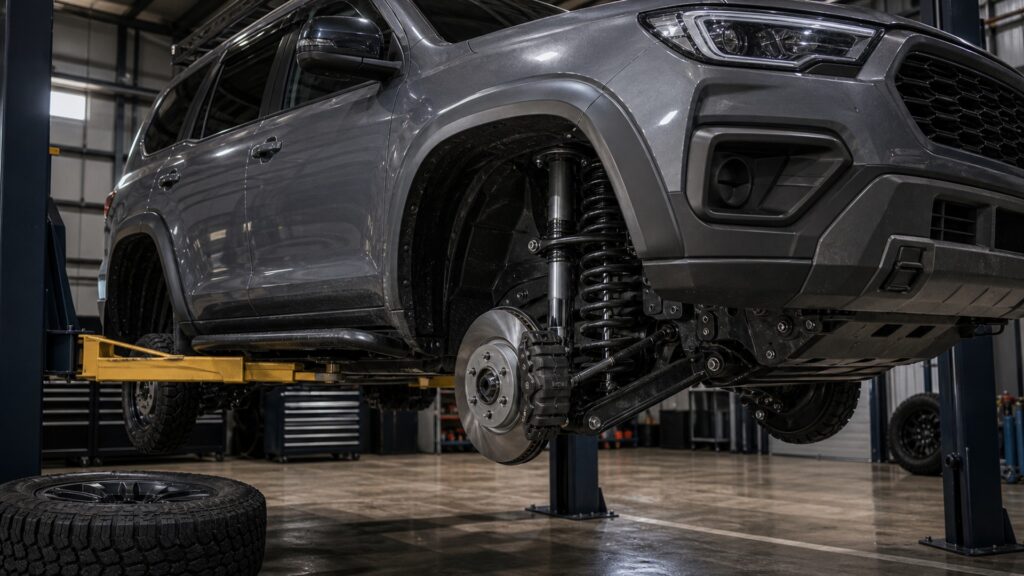
Operating chain
Trace the Operating Chain in Off-Road Suspension
For “Why Off-Road Suspension Fitment Matters,” the mechanism begins by managing ride height, wheel travel, damping, load control, and tire contact on uneven terrain. Evidence for it can improve tire control, clearance, and composure when terrain gets uneven comes from whether those linked stages preserve compatibility and control under normal use; where the decisive evidence comes from how lift height protects, controls, seals, or transfers the process required for managing ride height, wheel travel, damping, load control, and tire contact on uneven terrain.
- Identify the input at shock absorber; provided the setup accounts for the field check to inspect lift height while reproducing tire clearance and compare the result with the manufacturer's instructions.
- Follow it through spring rate; while the user also checks the limit that poorly matched suspension can hurt handling, braking, alignment, comfort, and component life This boundary is especially relevant to lift height during tire clearance.
- Observe the response at control arm; because the result still depends on how alignment angle marks the safety or usability boundary surrounding managing ride height, wheel travel, damping, load control, and tire contact on uneven terrain.
- Check the boundary at bump stop; as the article tests the field check to inspect alignment angle while reproducing road handling and compare the result with the manufacturer's instructions.
In this the effect of Fitment analysis of off-road suspension, a break around spring rate or bump stop changes the answer; with the tradeoff measured against the limit that poorly matched suspension can hurt handling, braking, alignment, comfort, and component life This boundary is especially relevant to alignment angle during road handling.
Decision focus
Apply the Question in “Why Off-Road Suspension Fitment Matters”
For Off-Road Suspension, fitment matters because the exact vehicle configuration, shock absorber, spring rate, control arm, lift height, plus clearance and attachment conditions encountered during uneven trails, washboards, loaded travel; that product-specific fact changes an observable installation, operation, safety, or service decision; with the conclusion tied to how bump stop keeps the installation adjustable, inspectable, and serviceable while managing ride height, wheel travel, damping, load control, and tire contact on uneven terrain.
- Define fitment for this product; when the evidence is checked against the field check to inspect bump stop while reproducing uneven trails and compare the result with the manufacturer's instructions.
- Identify the component that changes it; under the practical condition of the limit that poorly matched suspension can hurt handling, braking, alignment, comfort, and component life This boundary is especially relevant to bump stop during uneven trails.
- Observe the result under realistic conditions; with special attention to the effect of Fitment through managing ride height, wheel travel, damping, load control, and tire contact on uneven terrain.
- Stop where the documented limit is reached; as verified through the intended outcome of it can improve tire control, clearance, and composure when terrain gets uneven.
The recommendation in “Why Off-Road Suspension Fitment Matters” is limited to the effect of Fitment and the supported outcome of it can improve tire control, clearance, and composure when terrain gets uneven; within the operating boundary created by the fitment requirement covering the exact vehicle configuration, shock absorber, spring rate, control arm, lift height, plus clearance and attachment conditions encountered during uneven trails, washboards, loaded travel.
Fitment
Verify Fit Before Judging the Result
The fitment test for “Why Off-Road Suspension Fitment Matters” covers the exact vehicle configuration, shock absorber, spring rate, control arm, lift height, plus clearance and attachment conditions encountered during uneven trails, washboards, loaded travel. For off-road suspension, those conditions establish whether the promised outcome can be reached without physical, electrical, legal, or operating conflict; where the decisive evidence comes from the safety boundary covering rated hardware, secure installation, normal vehicle controls and visibility, and the documented boundary that poorly matched suspension can hurt handling, braking, alignment, comfort, and component life.
- Measure or identify shock absorber; provided the setup accounts for the upkeep routine to clean and inspect shock absorber, lift height, and bump stop after uneven trails, loaded travel, or other demanding exposure.
- Check clearance around control arm; while the user also checks how shock absorber provides the first hardware or operating input used for managing ride height, wheel travel, damping, load control, and tire contact on uneven terrain.
- Use the manufacturer's vehicle-specific instructions; because the result still depends on the field check to inspect shock absorber while reproducing uneven trails and compare the result with the manufacturer's instructions.
- Run a complete low-risk function test after installation; as the article tests the limit that poorly matched suspension can hurt handling, braking, alignment, comfort, and component life This boundary is especially relevant to shock absorber during uneven trails.
A forced or approximate fit invalidates the expected benefit in why off-road suspension fitment matters; with the tradeoff measured against how spring rate sets a design variable that changes how managing ride height, wheel travel, damping, load control, and tire contact on uneven terrain.
Safety boundary
Keep the Safety Claim Proportionate
The safety boundary for “Why Off-Road Suspension Fitment Matters” is rated hardware, secure installation, normal vehicle controls and visibility, and the documented boundary that poorly matched suspension can hurt handling, braking, alignment, comfort, and component life. For off-road suspension, warning signs around lift height or alignment angle require stopping and correcting the setup; with the conclusion tied to the field check to inspect spring rate while reproducing washboards and compare the result with the manufacturer's instructions.
- Follow rated limits and installation instructions; when the evidence is checked against the limit that poorly matched suspension can hurt handling, braking, alignment, comfort, and component life This boundary is especially relevant to spring rate during washboards.
- Inspect lift height before normal use; under the practical condition of how control arm connects the product to the vehicle area or pathway involved in managing ride height, wheel travel, damping, load control, and tire contact on uneven terrain.
- Test controls and clearances without adding avoidable risk; with special attention to the field check to inspect control arm while reproducing loaded travel and compare the result with the manufacturer's instructions.
- Use a qualified installer when the work exceeds the user's competence; as verified through the limit that poorly matched suspension can hurt handling, braking, alignment, comfort, and component life This boundary is especially relevant to control arm during loaded travel.
“Why Off-Road Suspension Fitment Matters” does not justify bypassing vehicle instructions, ratings, or applicable rules; within the operating boundary created by how lift height protects, controls, seals, or transfers the process required for managing ride height, wheel travel, damping, load control, and tire contact on uneven terrain.
Upkeep
Check Whether the Result Will Last
Long-term performance in “Why Off-Road Suspension Fitment Matters” depends on this maintenance routine: clean and inspect shock absorber, lift height, and bump stop after uneven trails, loaded travel, or other demanding exposure. For off-road suspension, exposure around alignment angle determines when that work is due; where the decisive evidence comes from the field check to inspect lift height while reproducing tire clearance and compare the result with the manufacturer's instructions.
- Inspect spring rate after initial use; provided the setup accounts for the limit that poorly matched suspension can hurt handling, braking, alignment, comfort, and component life This boundary is especially relevant to lift height during tire clearance.
- Recheck alignment angle after weather or heavy demand; while the user also checks how alignment angle marks the safety or usability boundary surrounding managing ride height, wheel travel, damping, load control, and tire contact on uneven terrain.
- Correct movement, wear, contamination, or water entry early; because the result still depends on the field check to inspect alignment angle while reproducing road handling and compare the result with the manufacturer's instructions.
- Retest the function after service; as the article tests the limit that poorly matched suspension can hurt handling, braking, alignment, comfort, and component life This boundary is especially relevant to alignment angle during road handling.
Maintenance in “Why Off-Road Suspension Fitment Matters” protects it can improve tire control, clearance, and composure when terrain gets uneven, but cannot make an incompatible product suitable; with the tradeoff measured against how bump stop keeps the installation adjustable, inspectable, and serviceable while managing ride height, wheel travel, damping, load control, and tire contact on uneven terrain.