Why Off-Road Vehicles Safety Factors Matters

Off-road vehicle safety depends on more than whether the vehicle can keep moving. Uneven ground, limited visibility, changing traction, and distance from help can turn a manageable mechanical problem into a serious situation. Clearance and traction aids address particular demands; they do not establish a safe route, protect an unrestrained occupant, or make floodwater passable.

A useful safety assessment considers the vehicle, its occupants and load, the route, and the driver's ability to recognize a reason to stop. This applies to terrain-capable passenger vehicles; ATVs and other recreational machines have different requirements. For any passenger vehicle, the exact manufacturer instructions and current local conditions remain essential.

By: Review Streets Research Lab
Updated: October 1, 2026
Explainer · 8-12 min read
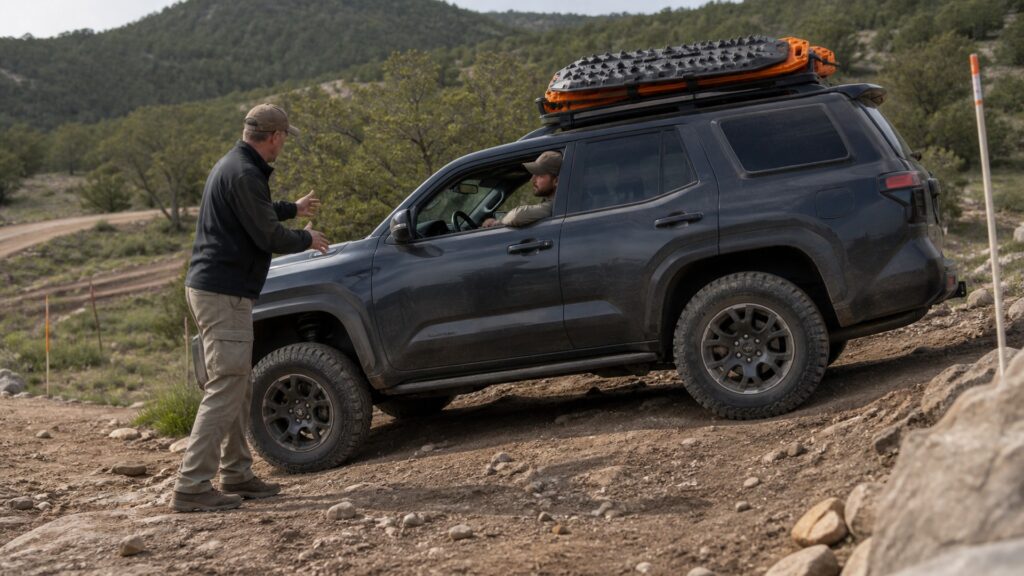
off-road vehicles explainer hero image for Review Streets
What You'll Learn

Assessing Risk Beyond Traction

Connect vehicle capability with restraint use, stability, route decisions, and trip preparation.

  • Distinguish making progress from remaining within safe limits.
  • Understand why loading and uneven ground affect stability.
  • Keep occupants and equipment properly secured.
  • Treat weather, visibility, and water as route decisions.
  • Prepare for delays and avoid improvising dangerous recoveries.

Tip: The ability to move forward is not evidence that continuing is the right decision.

Definitions

Six Factors in an Off-Road Safety Assessment

Each factor addresses a different way a trip can become unsafe.

Traction limit

The available tire-to-surface force for driving, turning, and braking under the current conditions.

  • Example: a loose surface offering less dependable grip than expected
  • Check: consider stopping and steering as well as propulsion
  • Limit: four-wheel drive cannot guarantee grip

Stability

The vehicle's resistance to uncontrolled changes in motion or attitude, including rollover.

  • Example: uneven ground changing the loads carried by individual wheels
  • Check: account for terrain, loading, and vehicle characteristics
  • Limit: a clearance rating is not a safe side-slope rating

Occupant restraint

The seating and restraint equipment intended to keep occupants properly positioned during vehicle movement and a crash.

  • Example: a correctly worn seat belt in an approved seating position
  • Check: use the restraints as designed on every trip
  • Limit: low speed does not remove the need for restraint

Secured load

Cargo held by suitable restraints within the vehicle's applicable limits.

  • Example: recovery equipment stored so it cannot move freely in the cabin
  • Check: check rated mounting and restraint points
  • Limit: fitting into the available space does not make a load secure

Route assessment

A current judgment about the suitability and permitted use of the intended path.

  • Example: changing plans when weather alters a backcountry road
  • Check: consult local conditions and closures
  • Limit: a previous successful trip does not establish today's conditions

Contingency planning

Preparation for delays, breakdowns, or a need to turn back.

  • Example: carrying suitable supplies and leaving a trip plan with a contact
  • Check: match preparation to remoteness and conditions
  • Limit: equipment cannot replace sound decisions or appropriate training

Tip: Safety measures overlap, but they do not substitute for one another. Good tires cannot secure loose equipment or reveal a washed-out road.

Control

Traction Aids Do Not Define a Safe Speed or Route

A drivetrain can help distribute drive to wheels that can use it. That is different from guaranteeing stopping distance, steering control, or stability. Loose material, changes in slope, and hidden obstacles can alter the situation quickly. Select a pace and route appropriate to visibility, conditions, and the manufacturer's guidance, and stop when the path cannot be assessed. A mode setting is not permission to continue.

  • Learn the purpose and limits of fitted systems.
  • Keep attention on the ground ahead and available stopping space.
  • Treat unexpected loss of control or warnings as reasons to reassess.

A vehicle may climb a loose section yet still face a difficult descent or turn. Evaluate the entire intended path rather than using successful forward movement as the only test.

Stability

Load and Terrain Matter Alongside Vehicle Height

Rollover risk involves the relationship between vehicle geometry, mass distribution, motion, and the surface. Ground clearance serves an obstacle-clearance purpose; it is not a measure of resistance to overturning. Added load, especially high-mounted load, changes the vehicle's mass arrangement. Follow the manufacturer's load and roof limits and seek suitable training for terrain judgment rather than relying on an advertised angle as a universal operating threshold.

  • Keep within vehicle, axle, and roof-system limits.
  • Consider how accessories change the loaded vehicle.
  • Avoid treating a single specification as a stability guarantee.

The same vehicle can behave differently when loaded for a trip. A setup assessed empty should not be assumed to retain identical margins with substantial cargo mounted high on the body.

Occupants

Use Proper Seating, Restraints, and Cargo Retention

Everyone needs an approved seating position and the correct restraint, including the appropriate child restraint where required. NHTSA emphasizes that airbags supplement seat belts rather than replace them. Loose tools and other equipment also need suitable restraint. A cabin organized for convenience must still protect occupants from objects moving during sudden vehicle motion. Follow the vehicle instructions for seating and cargo anchoring.

  • Wear seat belts correctly throughout the journey.
  • Use approved child restraints and installation guidance.
  • Secure equipment with suitable restraints and attachment points.

A heavy tool placed within easy reach but left loose can move when the vehicle jolts or stops. Its storage location and restraint deserve attention before the journey begins.

Conditions

Let Weather and Water Change the Plan

Conditions can invalidate a route that was suitable earlier. Floodwater is especially dangerous because its depth, flow, and the condition of the road beneath it may be unknown. The National Weather Service advises against driving into floodwater or around barriers. A manufacturer's wading specification describes limited conditions for a particular vehicle; it does not make a flooded road safe. Turn back or choose an appropriate alternative.

  • Check current route information and weather.
  • Respect closures and barriers.
  • Do not use vehicle height as a test of flood safety.

A familiar low crossing after heavy rain is a new situation. Previous successful passage, a high air intake, or a terrain mode does not establish the condition of the submerged surface.

Remoteness

Plan for a Delay Without Creating a Second Emergency

Remote travel increases the consequences of an ordinary problem. Big Bend National Park advises backcountry motorists to prepare for breakdowns and carry suitable supplies. Match communication plans, water, and other essentials to the location and weather. Recovery equipment also introduces forces and hazards that require suitable rated equipment and knowledge. If a recovery exceeds your training or equipment, seek qualified help instead of improvising.

  • Leave a realistic trip plan with a reliable contact.
  • Carry supplies appropriate to a possible delay.
  • Use trained assistance for situations beyond your capability.

A minor tire problem near town and the same problem far from services have different consequences. Preparation should reflect the time and means available to get help, not just the expected driving time.

Quick Reality Check

Capability Is Only Part of Safety

Useful equipment works within a larger set of decisions and constraints.

A prepared driver can

Match the vehicle and load to suitable conditions and recognize when to stop.

Protect occupants and reduce the consequences of a delay with appropriate preparation.

No equipment package can

Guarantee grip, prevent every rollover, or turn floodwater into a safe route.

Replace restraints, local information, sound judgment, and suitable training.

Common Myths

Misconceptions About Off-Road Vehicle Safety

Capability claims should not become assumptions about protection.

Four-wheel drive makes every slippery route safe

It addresses drive distribution, while steering, braking, stability, and surface conditions remain limiting factors.

Slow travel means seat belts are unnecessary

Uneven ground and sudden movement still expose occupants to injury. Use the proper restraints.

A wading figure makes a flooded road acceptable

A controlled vehicle specification does not reveal flow, depth, debris, or road damage in floodwater.

Recovery gear makes every stuck vehicle easy to retrieve

Recovery introduces serious loads and hazards. Appropriate training, rated equipment, and qualified help matter.

Tip: Treat uncertain conditions as a reason to gather information or change plans, not as a challenge to the vehicle's reputation.

FAQ

Questions About Safer Off-Road Travel

These principles support planning; vehicle instructions and local conditions determine the details.

Does high clearance mean low rollover risk?

No. Clearance and stability describe different properties. Loading, terrain, motion, and vehicle geometry all matter.

Can I rely on a camera to judge every obstacle?

No. Cameras and sensors have limitations in view and interpretation. Stop when the route cannot be assessed adequately.

Should passengers remain unbelted for easier movement?

No. Use approved seating positions and restraints as designed whenever the vehicle is moving.

What if the route has changed since my last visit?

Reassess it using current information. A previous trip does not establish present access, surface condition, or safety.

When should I get help with recovery?

When the situation exceeds your training, suitable equipment, or ability to assess the hazards. Avoid improvised recovery arrangements.

Bottom Line

Off-road safety depends on suitable conditions, controlled vehicle use, protected occupants, secure loading, and preparation for problems.

Traction and clearance are useful capabilities, but they do not remove physical limits or uncertainty. A decision to stop or change the route is part of competent vehicle use.

Next Steps

Go Deeper or Compare Your Options

Use these Review Streets paths to compare related categories and practical next decisions.

Vehicles

Explore vehicle features and their intended roles.

Further reading: NHTSA seat belt guidance; NHTSA cargo restraint guidance; NHTSA rollover resistance background; National Weather Service flood guidance; Big Bend National Park backcountry preparation.