
Dental Plaque
Structured microbial biofilm attached to oral surfaces.
- Use: define the target
- Variable: adhesion and maturation
- Tradeoff: Often colorless
Plaque removal matters because dental plaque is an organized biofilm that adheres to teeth, restorations, appliances, and the gumline. It is not simply visible food. Microbes within the film metabolize fermentable carbohydrates, alter the local environment, and can contribute to tooth decay and gum inflammation when the film remains undisturbed.
Plaque begins forming again after cleaning, so the goal is regular disruption rather than a permanently sterile mouth. Brushing covers broad surfaces; an interdental tool reaches spaces bristles often miss; fluoride toothpaste supports enamel resistance during that mechanical routine. Plaque can mineralize into tartar, which home tools cannot safely remove.
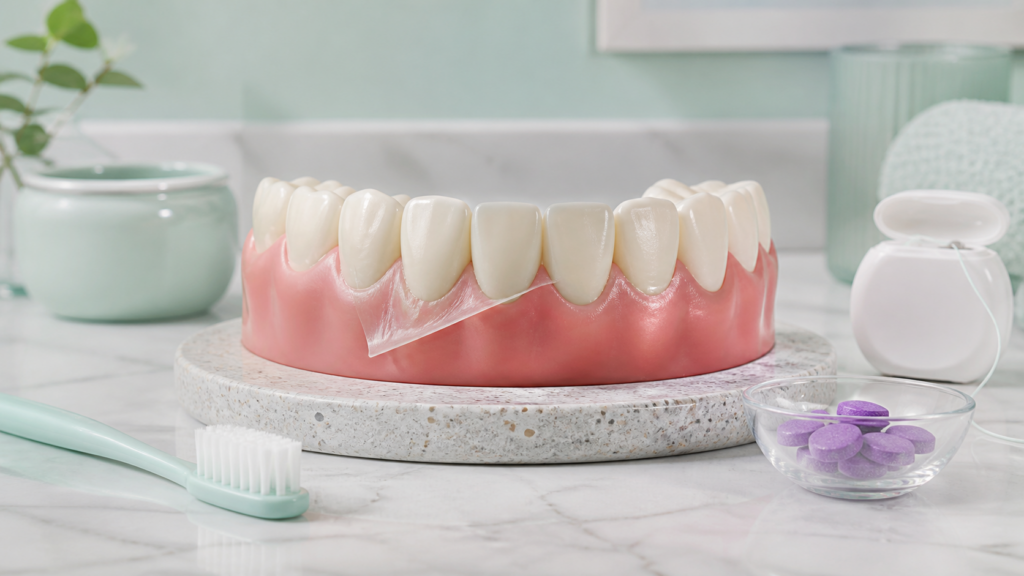
Explain plaque as a living adhesive biofilm whose location, maturity, acid production, and inflammatory effects make regular mechanical disruption essential; distinguish it from food debris and tartar and connect tools, fluoride, disclosing, and professional limits.
Tip: A timed routine can still miss the same places every day.
These plaque removal concepts separate mechanism, application, limits, and purchasing consequences.
Structured microbial biofilm attached to oral surfaces.
Sticky framework that helps microbes adhere and organize.
Period when microbial acids lower plaque pH after fermentable carbohydrate exposure.
Physical breakup and removal of biofilm by contact.
Dye that temporarily colors remaining plaque.
Mineralized deposit formed from plaque, also called tartar.
Tip: Use these terms to test plaque removal instead of relying on a front-label promise.
Divide the mouth into zones and include outer, inner, chewing, gumline, back molar, and interdental surfaces. Two minutes is useful only when distributed.
A timed routine can still miss the same places every day.
Plaque responds to gentle repeated contact. Choose floss, interdental brush, water flosser, or special aid by anatomy and dexterity.
Mechanical access matters more than a harsh sensation.
Fluoride toothpaste supports enamel during repeated acid challenges. Use it as directed; whitening, foam, or strong flavor is not the central anticaries mechanism.
Removal and enamel support are complementary jobs.
A disclosing tablet or solution can turn invisible residual plaque into a technique lesson. Check suitability around restorations and follow staining and cleanup directions.
The dye is feedback, not a treatment.
Do not scrape hardened deposits with household tools. Professional cleaning and examination can address tartar and determine why bleeding, odor, pain, or localized buildup continues.
The boundary between plaque and calculus is a safety boundary.
Daily care disrupts removable plaque and delivers fluoride; it does not sterilize the mouth or remove hardened calculus.
Outer, inner, chewing, gumline, and interdental surfaces receive deliberate attention.
Technique improves before product intensity is increased.
A clean feeling or foamy paste does not prove complete coverage.
Persistent deposits, bleeding, pain, or lesions require professional assessment.
These claims flatten the variables that determine how plaque removal performs in a real routine.
Food debris may be trapped, but plaque is an adherent organized microbial film that can remain after visible food is gone.
Rinse can deliver actives or affect microbes, but it does not replace mechanical disruption of attached biofilm.
Hard bristles and force can injure gums and wear tooth surfaces. Soft bristles with complete access are recommended.
A healthy mouth contains microbes and plaque reforms. The practical goal is regular control, not sterilization.
Such formulas may help limit new deposit formation for some users but do not safely detach hardened calculus already present.
Tip: Test the exact plaque removal tool, setting, and routine before generalizing from its category.
The remaining decisions about plaque removal concern technique, compatibility, safety, upkeep, and value.
Biofilm begins reorganizing after cleaning, which is why regular daily disruption matters more than occasional intensive cleaning.
Heavy plaque may be visible, but much is pale or hidden. Disclosing products can reveal missed areas when used correctly.
Toothbrush bristles do not reliably enter every tight contact and interdental surface.
Twice-daily fluoride brushing and daily interdental cleaning are the foundation. Dietary frequency and individual risk should be discussed with a dentist.
Continue gentle cleaning and seek assessment if bleeding persists; do not respond with more force or avoid the area indefinitely.
No. Improvised scaling can damage enamel, roots, restorations, and gums; hardened deposits need professional removal.
Plaque removal matters because an adherent living biofilm can drive acid challenges and gum inflammation. Since it reforms, consistent mechanical disruption across all surfaces is more useful than occasional aggressive cleaning.
Brush gently twice daily with fluoride toothpaste, clean between teeth every day, and audit missed zones when helpful. Keep tartar removal and persistent bleeding, pain, or localized buildup in professional care.
These Review Streets paths narrow the next plaque removal decision by format, goal, and routine fit.
Browse toothbrushes, interdental cleaners, whitening, and daily oral-care categories.
Compare manual, electric, sonic, and specialty toothbrush formats.
Choose a retailer
Prices checked regularly. We may earn a commission at no cost to you.