
Molecular Sieve
Material separating nitrogen from room air.
- Role: For this decision, molecular sieve defines the input.
- Check: For molecular sieve, locate this concept in the official directions.
- Boundary: It cannot correct a category mismatch.
For portable oxygen concentrators, a sound approach must verify the prescription and delivery mode, measured oxygenation and symptoms under rest sleep and activity as directed, pulse-trigger performance, flow setting, battery duration, recharge access, cannula and tubing condition, alarms, filters, altitude limits, and backup supply.
The analysis gives priority to the interpretation of results. It uses molecular sieve, pulse dose, and continuous flow to explain what changes the outcome, where uncertainty enters, and which response is proportionate.
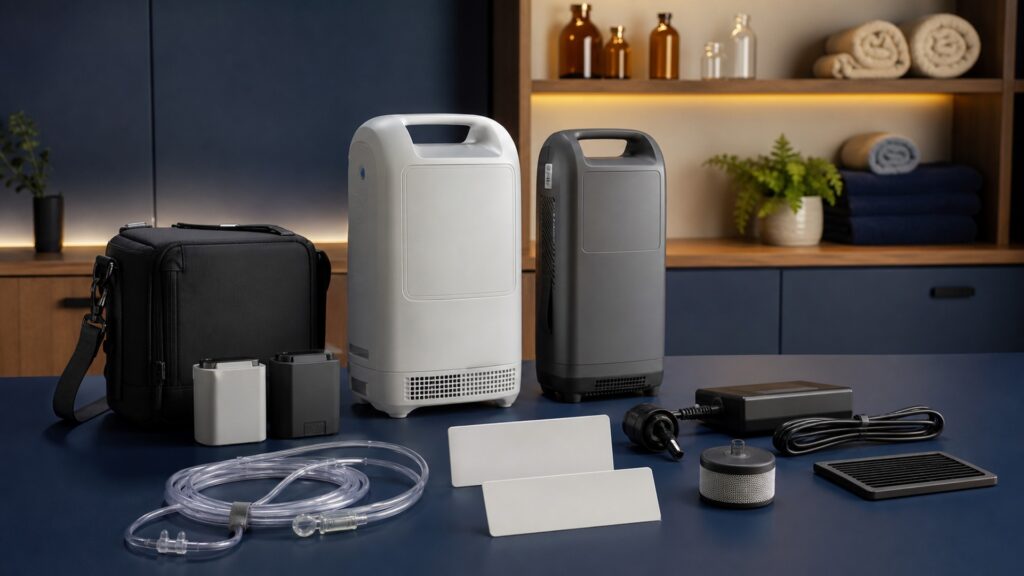
Consider molecular sieve, continuous flow, conditions of use, foreseeable problems, and a proportionate response instead of assuming products in one category work alike.
Tip: Read the concept as part of a system, then connect it back to the use case.
These definitions connect the main idea to the variables, limits, and practical signals readers need to compare options.
Material separating nitrogen from room air.
Oxygen bolus triggered by an inhalation.
Oxygen delivered at a steady prescribed rate.
Ability to detect an inhalation and release a pulse.
Power margin beyond expected travel time.
Alternate oxygen and power arrangement for failure.
Tip: Keep the definitions connected; the strongest answer usually comes from the whole system, not one term.
For the interpretation of results, the intended user and direct result need to be explicit before secondary features are considered. Molecular Sieve defines the starting point, while pulse dose helps show whether the product is being judged for the job it was designed to perform.
Molecular Sieve is useful only when it answers the stated purpose.
Molecular Sieve means material separating nitrogen from room air. Pulse Dose affects the next part of the process: oxygen bolus triggered by an inhalation. The pathway then reaches continuous flow, meaning oxygen delivered at a steady prescribed rate.
Looking at operation identifies where trigger sensitivity can change the result.
A sound assessment makes these conditions explicit: verify the prescription and delivery mode; measured oxygenation and symptoms under rest sleep and activity as directed; pulse-trigger performance; flow setting; and battery duration. Multiple changes at one time cloud whether whether trigger sensitivity or conditions around it accounted for the outcome.
Comparable conditions make the interpretation of results easier to interpret without pretending uncertainty disappears.
Safe planning calls for the following: protect children and private information; maintain a working alternative; oxygen supports combustion: prohibit smoking flames sparks oil and grease; maintain ventilation and clear intakes; and protect tubing from damage and trips. If the step associated with battery reserve breaks down or the user's condition changes, a seemingly normal output should not delay a suitable response.
The safety boundary for the interpretation of results includes failure, misuse, and warning signs.
A sustainable routine brings together these actions: document problems for the supplier; check condition before use; prepare compatible supplies; confirm settings and power; inspect the device and cannula; and confirm the prescribed setting and battery. The user must also account for: position the intake openly; and test travel duration with reserve. Do not omit review responsibilities assigned to a caregiver or professional.
The best routine for the interpretation of results is the most manageable routine that still works safely.
Use molecular sieve and trigger sensitivity to separate a careful inference from a broader claim ordinary operation cannot establish independently.
A good task match can make clear how molecular sieve affects pulse dose in the product's intended setting.
Careful attention to continuous flow and trigger sensitivity can reveal whether the first-order function remains practical over time.
No product can turn battery reserve into proof of a diagnosis or negate individual contraindications.
A failure involving backup plan needs the response established for the user instead of repeated trial and error.
Common shortcuts and misunderstandings can make the topic seem simpler than it is.
Pulse Dose contributes one input to the interpretation of results. That definition is too narrow to support the claim. The answer also depends upon altitude limits. A safe-use plan should also maintain a working alternative.
Continuous Flow describes a control within the interpretation of results. The description does not justify that conclusion. Interpretation still requires backup supply. The user may also need to oxygen supports combustion: prohibit smoking flames sparks oil and grease.
Trigger Sensitivity marks an intermediate step in the interpretation of results. Its role in the pathway is more limited than the myth suggests. The finding also turns on current intended use. The applicable precaution is to maintain ventilation and clear intakes.
Battery Reserve sets one boundary around the interpretation of results. Even correct preparation leaves unresolved variables. A sound conclusion also considers verify the prescription and delivery mode. Responsible follow-through should protect tubing from damage and trips.
Tip: Treat strong claims as starting points for comparison, not final answers.
Concise answers to common questions readers may have after the main explanation.
Trigger Sensitivity enters at the start of the interpretation of results. Start by reviewing measured oxygenation and symptoms under rest sleep and activity as directed. The daily routine should also check condition before use. The applicable precaution is to protect tubing from damage and trips.
Battery Reserve changes a control point in the interpretation of results. Interpret the observation alongside pulse-trigger performance. The daily routine should also prepare compatible supplies. The backup procedure should also use approved batteries and chargers.
Backup Plan affects the observable output from the interpretation of results. Compare performance only after recording flow setting. The daily routine should also confirm settings and power. Before continuing, remember to never change the prescribed setting independently.
Molecular Sieve helps define the stopping point for the interpretation of results. Before continuing use, confirm battery duration. The daily routine should also inspect the device and cannula. This boundary requires users to maintain an emergency power and oxygen plan.
Judge the interpretation of results through molecular sieve, continuous flow, and the real conditions surrounding battery reserve.
A sound decision keeps pulse dose visible, builds trigger sensitivity into the user's workflow, and responds promptly when backup plan or another defined warning condition appears.
Use these Review Streets paths to connect the explainer to related categories, comparisons, and next decisions.
Continue with a focused guide to the outcome, context, safety, or routine named in this related topic.
Continue with a focused guide to the outcome, context, safety, or routine named in this related topic.
Compare the categories by primary job, mechanism, user fit, maintenance burden, and practical limitations.
Choose a retailer
Prices checked regularly. We may earn a commission at no cost to you.