Why Power Racks & Squat Racks Safety Factors Matters

Safety factors matter in power racks and squat racks because the equipment supports loaded barbell movements that can become difficult quickly. A rack can make home barbell training more manageable, but only when the frame is stable, hooks are set correctly, safeties are positioned for the lift, and the area is clear.

A good rack safety setup is not just a high weight rating. It includes stable construction, compatible safeties, secure J-hooks, enough working space, careful plate loading, and habits that account for missed reps before they happen.

By: Review Streets Research Lab
Updated: September 25, 2026
Explainer · 8-12 min read
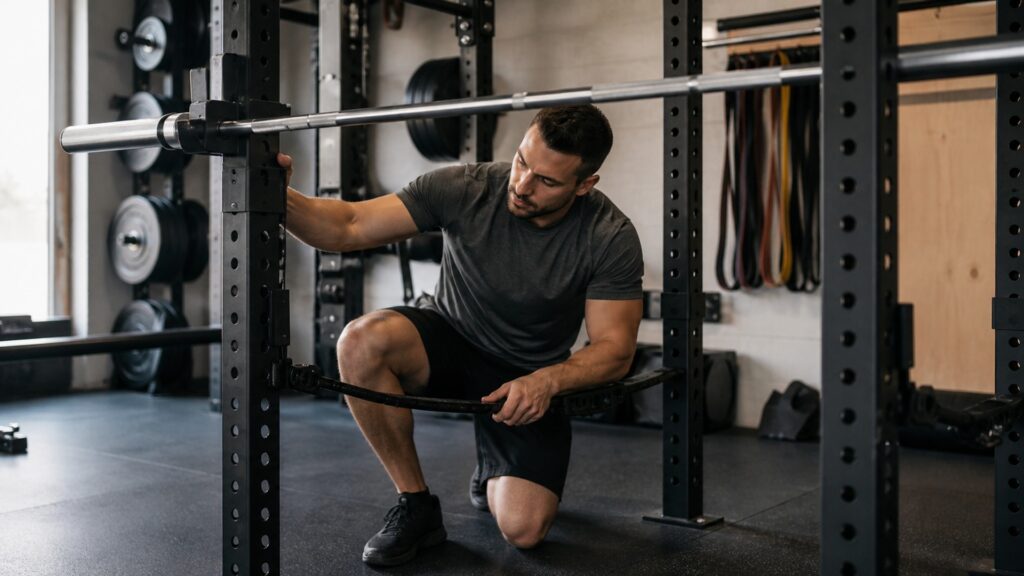
power racks & squat racks safety factors explainer hero image for Review Streets
What You'll Learn

How Safety Factors Affect Rack-Based Training

A practical look at frame stability, safeties, hooks, loading, and room setup.

  • Why rack stability comes before heavy loading
  • How safeties should match each lift
  • Where hook height and re-racking affect risk
  • Why room clearance and plate loading matter
  • What to inspect before using a rack at home

Tip: Judge the rack by the lifts it supports safely and repeatedly, not by the largest number on the spec sheet.

Definitions

Key Concepts Behind Power Racks & Squat Racks Safety Factors Matters

These concepts clarify how rack design affects barbell training in a home gym.

Frame Stability

Frame stability is how well the rack resists shifting, tipping, or wobbling during use.

  • Example: a rack staying steady during pull-ups and re-racking
  • Check: review footprint, assembly, and anchoring needs
  • Limit: light racks may need extra caution

J-Hook Security

J-hook security is whether the bar supports are seated, level, and rated for the load.

  • Example: hooks locked at the same height before squats
  • Check: confirm both hooks are fully seated
  • Limit: wrong height can make re-racking harder

Safety Placement

Safety placement is how pins, straps, or arms are positioned to catch a failed lift.

  • Example: bench safeties set below normal bar path but above the chest
  • Check: test with an empty bar
  • Limit: incorrect placement can block the rep or miss the bar

Load Management

Load management is how plates, collars, and bar balance are handled.

  • Example: loading both sides evenly and using collars
  • Check: keep plates secure and balanced
  • Limit: careless loading can destabilize the bar

Working Area

Working area is the space around the rack needed for movement, spotting, loading, and exit.

  • Example: enough room to load plates on both sides
  • Check: clear the floor and bar path
  • Limit: tight spaces can trap poor positions

Missed-Rep Plan

A missed-rep plan is knowing where the bar goes if the lift fails.

  • Example: setting squat safeties before heavy sets
  • Check: practice with light weight
  • Limit: planning does not replace appropriate load choices

Tip: A rack is most useful when its frame, safeties, spacing, and room fit match the user's main lifts.

Stability

The Rack Has To Stay Put

Safety starts with a rack that stays stable under the forces the user will apply. Pull-ups, re-racking, heavy walkouts, and band work can all test the frame.

  • Assemble the rack correctly.
  • Check bolts and floor contact.
  • Anchor or weight the rack when needed.

A stable rack makes the other safety features more reliable.

Safeties

Safeties Need Lift-Specific Setup

Safeties should be set for the lift being performed. Squats, bench presses, rack pulls, and overhead work all need different positions.

  • Test safety height with an empty bar.
  • Keep the normal bar path clear.
  • Use safeties every time they are appropriate.

Safeties are strongest when they are adjusted intentionally.

Hooks

Re-Racking Should Be Predictable

J-hooks hold the bar before and after the lift. If they are uneven, too high, too low, or poorly seated, the start and finish of the set become less controlled.

  • Set hooks evenly.
  • Choose a comfortable unrack height.
  • Check hook condition and fit.

A clean re-rack is part of safe lifting.

Loading

The Bar And Plates Need Control

Rack safety includes how the bar is loaded. Uneven plates, missing collars, and cluttered plate storage can create avoidable problems.

  • Load plates evenly.
  • Use collars when appropriate.
  • Keep plates stored away from foot paths.

Good loading habits keep the rack area predictable.

Space

Clearance Reduces Setup Mistakes

A rack needs room for the lifter, bar, plates, bench, and safe exit. Crowded rooms can make good technique harder to maintain.

  • Measure the full bar width.
  • Leave room to load both sides.
  • Keep the floor clear around the rack.

Safety improves when the lifter is not fighting the room.

Quick Reality Check

Where Rack Safety Checks Help And Where They Have Limits

Safety checks reduce avoidable rack problems before heavy sets.

Where They Help

They catch poor safety height, unstable frames, loose hooks, and cluttered work areas.

They make missed-rep planning part of setup.

Where They Fall Short

They cannot make excessive loads appropriate.

They cannot replace sound technique or judgment.

Common Myths

Misconceptions About Rack Safety

A rack helps only when it is set up for the lift.

A rack makes every lift safe automatically

Hooks, safeties, load, and technique still need attention.

Weight capacity is the only safety spec

Stability, safeties, spacing, and room fit matter too.

Safeties can stay in one position

Different lifts need different safety settings.

Small rooms are fine if the rack fits

The bar path and plate loading space matter too.

Tip: Treat rack claims as setup questions: what lift, what height, what safety, and what room?

FAQ

Frequently Asked Questions About Rack Safety

Short answers for choosing and using rack-based home strength equipment.

What should I check before lifting?

Check rack stability, hook height, safeties, collars, plate balance, bench position, and floor clearance.

Do I need safeties for every lift?

Use safeties whenever a missed rep could put the bar in an unsafe position.

Are squat racks safe for home use?

They can be, if they are stable and have appropriate safety options for the lifts.

When should I stop using a rack?

Stop if the frame shifts, hooks are damaged, safeties do not seat correctly, or the work area is too crowded.

What is the practical takeaway?

A rack is safest when stability, safeties, hooks, load, and clearance are all set before the lift.

Bottom Line

Safety factors matter because rack-based training puts loaded barbells in positions where setup decisions matter.

The safest rack setup is stable, correctly adjusted, clear, and planned for both successful reps and missed reps.

Next Steps

Go Deeper or Compare Your Options

Use these Review Streets paths to compare related categories and practical next decisions.

Home Gym Systems

Compare rack-based training with broader all-in-one stations.

Cable Machines

Review cable-focused equipment for accessory and angle-based work.