
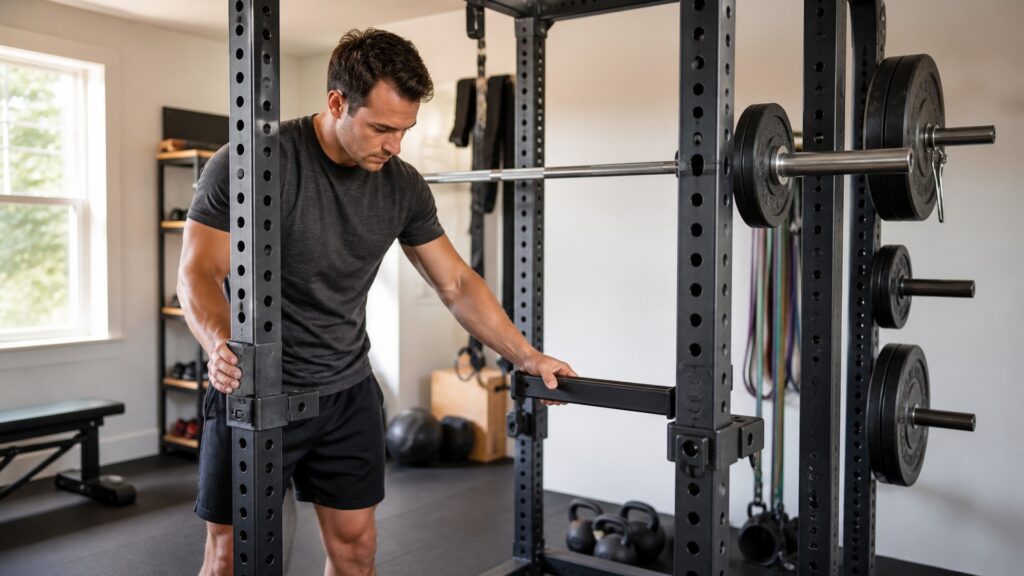
Why Power Racks & Squat Racks Training Function Matters

Training function matters in power racks and squat racks because the rack must support the lifts the user actually performs. A rack can look strong, but the useful question is whether it sets up squats, presses, bench work, pull-ups, and rack pulls safely and comfortably.

A good rack makes barbell training easier to repeat. It has stable uprights, useful hole spacing, reliable safeties, strong J-hooks, enough working room, and accessory options that match the user's routine.

By: Review Streets Research Lab
Updated: September 25, 2026
Explainer · 8-12 min read
power racks & squat racks training function explainer hero image for Review Streets
What You'll Learn

How Training Function Changes Rack Value

A practical look at rack stability, setup precision, safeties, attachments, and workout fit.

  • Why the rack must match the user's main lifts
  • How safeties and J-hooks affect training quality
  • Where hole spacing changes setup comfort
  • Why pull-up bars and attachments matter only when used
  • How to spot a rack that looks strong but trains poorly

Tip: Start with the exercises that define the routine. Equipment value comes from supporting those movements safely and repeatedly.

Definitions

Key Concepts Behind Power Racks & Squat Racks Training Function Matters

These concepts clarify the practical differences between home strength setups.

Training Function

Training function is how well the rack supports useful, repeatable workouts.

  • Example: a rack that handles squats, bench, presses, and pull-ups cleanly
  • Check: test the main lifts the user plans to repeat
  • Limit: a high capacity rating does not guarantee good fit

Setup Precision

Setup precision is the ability to place hooks and safeties at useful heights.

  • Example: setting bench press safeties just below chest level
  • Check: review hole spacing around key positions
  • Limit: wide spacing can force compromises

Safety Coverage

Safety coverage is how well the rack can manage missed reps for the intended lifts.

  • Example: straps or pins catching a failed squat
  • Check: confirm safety length and attachment style
  • Limit: coverage depends on correct placement

Rack Stability

Rack stability is how well the rack resists shifting during use.

  • Example: a rack that stays steady during pull-ups
  • Check: review footprint, anchoring, and construction
  • Limit: light racks may need careful loading or anchoring

Accessory Fit

Accessory fit is compatibility with attachments such as dip bars, landmines, plate storage, and cable add-ons.

  • Example: adding plate storage to improve stability and organization
  • Check: confirm attachment compatibility before buying
  • Limit: unused attachments add cost

Lift Fit

Lift fit is how well the rack supports the specific lifts in the program.

  • Example: enough inside depth for squats and enough height for overhead press setup
  • Check: map each main lift to the rack
  • Limit: some lifts need more space than expected

Tip: The better choice is the one that supports the user's repeated workouts with the clearest setup and fewest compromises.

Lift Fit

The Rack Should Match The Main Lifts

A rack is valuable only when it supports the user's actual lifts. Squats, bench presses, overhead presses, and pull-ups each place different demands on height, depth, safeties, and clearance.

  • List the main lifts first.
  • Check hook and safety positions for each one.
  • Make sure the bar path has enough room.

Training function begins with the lifts the rack must handle.

Safety

Safeties Need To Fit The Movement

Safeties are not one-size-fits-all. Squats, bench presses, and rack pulls need different heights and sometimes different safety styles.

  • Set safeties before loading heavy.
  • Test positions with an empty bar.
  • Choose straps, pins, or arms that fit the rack and lift.

Good safety setup makes hard training more manageable.

Precision

Hole Spacing Changes Setup Quality

Small adjustments matter. Better spacing lets users place hooks and safeties closer to the right position, especially for bench press and shorter lifters.

  • Check spacing near bench height.
  • Avoid hook heights that force tiptoe unracking.
  • Record repeatable settings.

Precise setup helps the rack disappear into the workout.

Stability

The Rack Has To Stay Put

Training function depends on a rack that feels stable under normal use. Pull-ups, re-racking, band work, and heavy loading can all test the frame.

  • Review rack weight and footprint.
  • Use plate storage or anchoring when needed.
  • Keep the rack level and assembled correctly.

A stable rack gives the lifter confidence to focus on the lift.

Expansion

Attachments Should Support The Program

Accessories can make a rack more useful, but only when they serve the user's routine. Plate storage, dip bars, landmines, and cable add-ons should solve real needs.

  • Buy attachments for repeated exercises.
  • Confirm compatibility before ordering.
  • Leave room for the attachment's movement path.

Good expansion improves training function without cluttering the setup.

Quick Reality Check

Where Training Function Helps And Where It Can Fall Short

Training function separates a useful rack from a frame that only looks strong.

Where It Helps

It shows whether the rack supports the user's main lifts cleanly.

It highlights safety, spacing, and stability before purchase.

Where It Falls Short

It cannot replace technique, load selection, or space planning.

Some programs still need benches, plates, bars, or machines outside the rack.

Common Myths

Misconceptions About Rack Training Function

A strong-looking rack still needs a lift-by-lift fit check.

Higher capacity means better training

Capacity matters, but spacing, safeties, and stability shape daily use.

Any rack works for every lift

Rack height, depth, and safety style can limit certain movements.

Attachments always add value

They add value only when used often.

A rack solves safety by itself

Safeties must be set correctly and the lift still needs control.

Tip: Judge equipment by the workout it makes more repeatable, not by how complete it sounds.

FAQ

Frequently Asked Questions About Rack Training Function

Short answers for comparing home gym equipment.

What rack feature matters most?

Useful safeties and precise setup for the user's main lifts matter most.

Is hole spacing important?

Yes. Closer spacing can make hook and safety placement more comfortable.

Do I need a full power rack?

Choose a full rack when safety coverage and internal lifting space matter. A simpler squat rack may work for lighter or space-limited setups.

Are attachments worth it?

They are worth it when they support repeated exercises in the user's plan.

What is the practical takeaway?

Choose the rack that supports your actual lifts, not just the one with the biggest spec sheet.

Bottom Line

Training function matters because a rack has to support real barbell workouts, not just hold weight.

The best racks combine stability, useful safeties, precise setup, and enough room for the lifts the user repeats.

Next Steps

Go Deeper or Compare Your Options

Use these Review Streets paths to compare related categories and practical next decisions.

Home Gym Systems

Compare broader all-in-one stations with rack-based training.

Cable Machines

Review cable-focused equipment for accessory and angle-based work.