
Treatment Endpoint
Observable sign used to stop or adjust a procedure.
- Use: control intensity
- Variable: modality and skin response
- Tradeoff: Requires training
Professional skincare treatments matter when a goal requires controlled exfoliation, light, heat, needles, suction, energy, or prescription-level judgment beyond routine cosmetics. A trained provider can examine the skin, distinguish conditions that look similar, choose an appropriate modality and intensity, protect sensitive structures, monitor endpoints, and manage aftercare.
The setting alone does not make a service safe. Chemical peels, lasers, microneedling, radiofrequency, injections, and aggressive extraction have different regulatory status, training requirements, risks, downtime, and evidence. FDA warns against high-concentration chemical peel products without professional supervision because depth depends on acid, concentration, layers, and contact time and serious burns can occur.
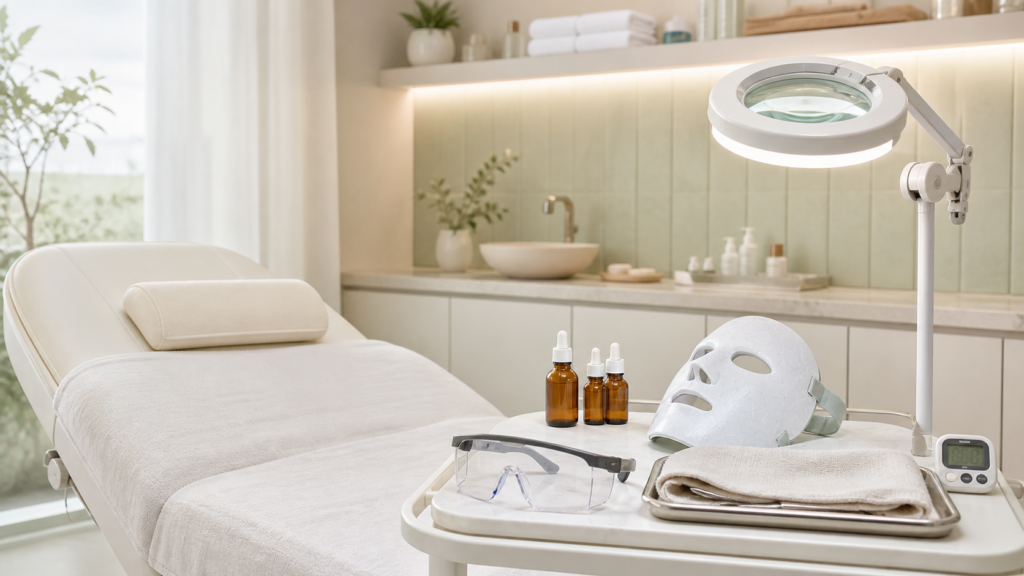
Explain professional treatments as diagnosis-guided, energy- or concentration-controlled interventions requiring provider selection, skin and pigment-risk assessment, device or formula parameters, preparation, endpoints, downtime, aftercare, complication planning, and realistic purchasing decisions.
Tip: A precise problem statement prevents technology-first treatment.
These professional skincare treatments concepts separate mechanism, application, limits, and purchasing consequences.
Observable sign used to stop or adjust a procedure.
Period of visible change, discomfort, restrictions, or healing after treatment.
Darkening or lightening following skin inflammation or injury.
Small-area exposure used to observe response before broader treatment.
Outcome strongly influenced by provider assessment and technique.
Written or understood process for recognizing and managing adverse outcomes.
Tip: Use these terms to test professional skincare treatments instead of relying on a front-label promise.
Texture, pigment, redness, acne, scars, laxity, and lesions require different assessment. A provider should identify what the treatment can and cannot address.
A precise problem statement prevents technology-first treatment.
History of pigment change, cold sores, keloids, isotretinoin or other medicines, pregnancy, immune issues, recent tanning, and active irritation can alter timing or modality.
The consultation is a risk-control step, not a sales formality.
A light facial, superficial peel, medium or deep peel, laser, needling, or energy device is not interchangeable. Verify the professional scope, experience, device, and protocol.
The same service name can conceal different intensities.
Sun protection, gentle cleansing, prescribed ointment or moisturizer, activity limits, and avoiding picking can influence healing. Follow the specific provider’s plan.
Results are partly built during recovery.
Compare total series cost, time off, travel, required products, touch-ups, refund policy, follow-up access, and who manages complications.
The treatment price is not the full cost of treatment.
Professional treatment can increase control and access to effective modalities; it cannot guarantee results, erase biological variation, or make every provider equally qualified.
The diagnosis and goal justify the selected modality rather than a trend.
Skin tone, medications, healing history, infection risk, and sun exposure inform parameters.
Downtime, aftercare, total sessions, and maintenance are part of the purchase.
The provider has a clear plan for burns, pigment change, infection, scarring, or poor response.
These claims flatten the variables that determine how professional skincare treatments performs in a real routine.
Training and controls reduce risk but burns, infection, pigment change, scarring, and disappointing outcomes can still occur.
Greater depth or energy can increase downtime and complications. The safest effective intensity depends on the target and skin.
Diagnosis, operator technique, settings, maintenance, consumables, and aftercare are as important as the device name.
Visible peeling is not a universal endpoint. Formula, depth, skin response, and treatment goal determine expected changes.
Many cosmetic effects are temporary or cumulative, and aging and exposure continue. Maintenance and realistic timelines matter.
Tip: Test the exact professional skincare treatments tool, setting, and routine before generalizing from its category.
The remaining decisions about professional skincare treatments concern technique, compatibility, safety, upkeep, and value.
FDA advises professional supervision for high-concentration peel products, and AAD recommends a dermatologist or appropriately licensed trained provider, especially for deeper peels or medical concerns.
Inflammation can produce pigment changes in any skin, with risk and treatment choices varying; ask about experience with your skin tone.
Similar lighting, angle, expression, time point, skin characteristics, and treatment course, without filters; individual images do not guarantee results.
Identify the supervising clinician, actual operator, licenses, training, device, emergency plan, follow-up access, sanitation, and informed-consent process.
Active infection, open skin, sunburn, uncontrolled irritation, recent conflicting procedures, or unresolved medical questions may require delay.
Worsening pain, extensive blistering, pus, fever, eye symptoms, spreading redness, or unexpected darkening or lightening should be reported promptly.
Professional skincare treatments matter because they combine diagnosis, adjustable intensity, trained endpoint recognition, and complication management. Those controls become more important as a procedure penetrates deeper or delivers more energy.
Choose the provider before the device: verify scope, experience with your skin and concern, exact protocol, downtime, total cost, aftercare, and emergency access. Stronger is not inherently better, and professional treatment never guarantees a universal result.
These Review Streets paths narrow the next professional skincare treatments decision by format, goal, and routine fit.
Browse professional products, equipment, and salon-focused beauty categories.
Compare professional-inspired skincare and beauty device technologies.
Choose a retailer
Prices checked regularly. We may earn a commission at no cost to you.