
Carry Stability
Carry stability is how well an accessory holds items without bouncing or shifting.
- Example: a running belt that keeps a phone steady
- Check: test movement at the intended pace
- Limit: stable walking fit may fail while running
Training function matters because running accessories should solve practical problems during a run, not just add gear. A belt, vest, bottle, light, phone holder, hat, or reflective item is useful only if it supports the way the runner trains.
The best running accessories make pace, comfort, hydration, visibility, storage, or weather management easier without adding bounce, rubbing, distraction, or unnecessary weight.
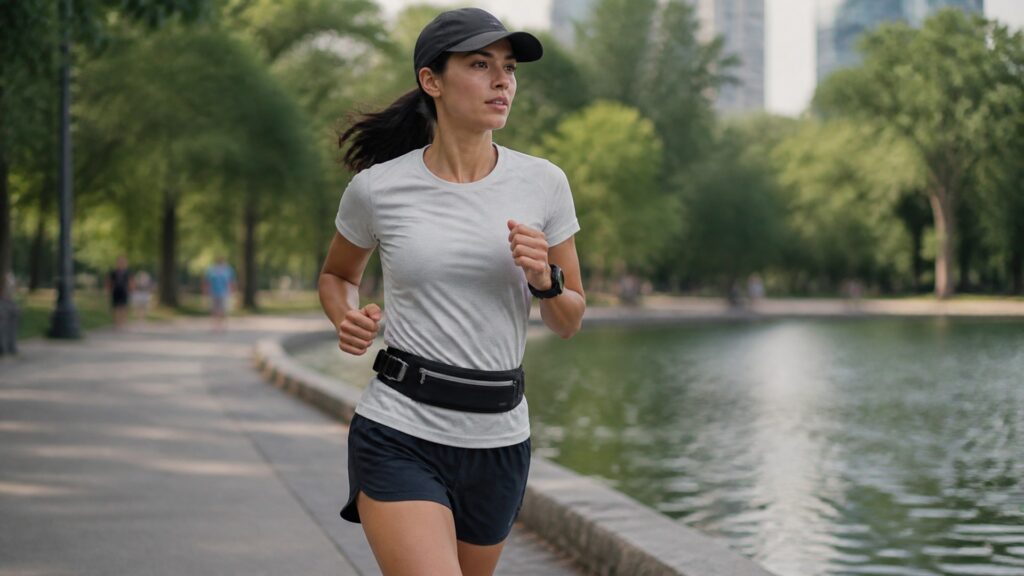
A practical look at fit, storage, hydration, visibility, weather, and comfort during training.
Tip: A running accessory earns its place only if it makes the run easier to complete well.
These concepts explain how accessories affect real training conditions.
Carry stability is how well an accessory holds items without bouncing or shifting.
Hydration access is how easily the runner can drink without stopping or disrupting form.
Visibility support helps the runner see or be seen in low-light conditions.
Weather management is how accessories help with sun, rain, cold, heat, or wind.
Friction control is how well gear avoids rubbing, chafing, or pressure during repeated motion.
Training role is the reason the accessory belongs in a specific run.
Tip: Choose accessories by the problem they solve during movement.
Running exposes weak fit quickly. A belt, vest, phone holder, or bottle may feel fine standing still and become irritating once pace, sweat, and arm swing enter the picture.
Stable fit is the foundation of useful running gear.
Hydration gear helps when it lets the runner drink without breaking rhythm. It hurts when the bottle, vest, or belt changes form or feels heavier than the run requires.
Hydration support should reduce friction, not add it.
Running before sunrise, after dark, or near traffic changes what gear needs to do. Reflective pieces and lights can become training tools because they make consistent routes more practical.
Visibility can affect whether the run is practical and safe enough to repeat.
Hats, gloves, sleeves, sunglasses, and light shells can help a runner handle changing conditions. The wrong choice can trap heat, hold sweat, or become something to carry.
Weather accessories work best when they disappear into the run.
The strongest accessory setup changes by workout. A short speed session, long run, trail route, commute, and evening jog can require different gear.
Training function is about fit for the run, not owning more items.
Accessories improve training when they solve a real run condition.
They make hydration, storage, visibility, weather, or comfort easier to manage.
They can make longer, darker, hotter, colder, or more complex routes more practical.
They can bounce, rub, trap heat, add weight, or distract from the workout.
They can become unnecessary gear on simple runs.
More gear does not automatically make a run better.
Needs change with distance, route, weather, pace, and personal comfort.
Extra capacity can add bounce and weight when the run does not need it.
Low light, shade, weather, and traffic can make visibility useful at other times too.
Rubbing, bounce, and pressure can change form or shorten the run.
Tip: The best accessory is the one that solves the run in front of you.
Short answers for choosing gear that helps during runs.
The most useful accessory depends on the run. Hydration, visibility, storage, or weather protection may matter most in different conditions.
It should stay stable at running pace without bouncing, sliding, rubbing, or forcing a change in stride.
No. Hydration gear matters more as distance, heat, route access, or workout duration increases.
Use visibility gear when light, traffic, weather, or route conditions make seeing or being seen harder.
Choose running accessories for the specific training problem they solve while the body is moving.
Running accessory training function matters because gear must work during motion, weather, fatigue, and changing routes.
Good accessories support the run without adding bounce, rubbing, weight, or distraction.
Use these Review Streets paths to compare related categories and practical next decisions.
Review the running accessory category when an exact post is available.
Explore running accessories by use case.
Compare related running gear categories.
Choose a retailer
Prices checked regularly. We may earn a commission at no cost to you.