
Visibility
Visibility is how easily others can notice the runner.
- Reflective pieces need external light to work.
- Active lights create their own signal.
- Visibility does not control driver behavior.
Running safety matters because a run happens in an environment the runner does not fully control. Traffic, low light, weather, uneven ground, dogs, headphones, route isolation, and fatigue can all change the risk picture.
Safety gear helps only when it matches the specific risk. A reflective vest, headlamp, ID tag, open-ear headphones, phone, route plan, or weather layer can support awareness and visibility, but none of them guarantees protection.
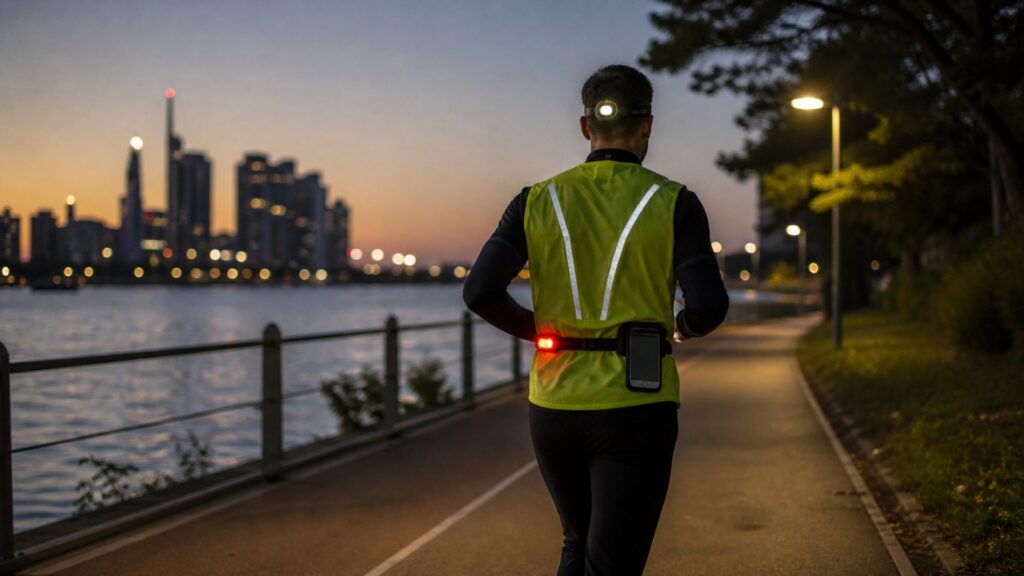
Running safety matters when visibility, route planning, traffic awareness, weather, communication, terrain, and fatigue change the conditions around a run.
Tip: Name the condition the gear changes before trusting a feature list.
Visibility is how easily others can notice the runner. The remaining concepts explain the variables that change real training use.
Visibility is how easily others can notice the runner.
Situational awareness is noticing traffic, people, animals, terrain, and weather while running.
Route planning is choosing where, when, and how the run will happen.
Communication is the ability to contact help or let someone know the plan.
Weather margin is extra preparation for heat, cold, wind, rain, snow, or sun.
Surface risk is the chance that footing, obstacles, ice, mud, roots, or traffic edges will create a problem.
Tip: Situational awareness is noticing traffic, people, animals, terrain, and weather while running.
A runner may see cars or bikes before those people notice the runner. Visibility gear is designed to make the runner easier to detect.
Running safety starts with being detectable.
Situational awareness is a limited resource. Music, podcasts, hard efforts, darkness, or fatigue can narrow attention.
Safety gear supports awareness but cannot create attention.
A busy road, lit path, treadmill, remote trail, and dark neighborhood require different decisions.
Route planning is safety equipment too.
Heat, cold, storms, smoke, wind, and darkness can change the safety profile faster than fitness changes.
Safety decisions follow conditions.
The right lights, ID, phone, shoes, and route plan reduce some risks, but they do not control drivers, weather, terrain, health events, or other people.
Running safety matters because judgment and gear work together.
The useful explanation is practical: what the gear or concept changes, when that change matters, and where claims need restraint.
It shows which real running or lifting condition running safety changes.
It helps readers judge claims by mechanism, setup, conditions, and user context.
It cannot guarantee performance, safety, injury prevention, recovery, or health outcomes.
It cannot replace qualified coaching or medical guidance for pain, symptoms, or individualized training decisions.
Common shortcuts and misunderstandings can make the topic seem simpler than it is.
The useful answer changes with body, route, terrain, weather, session length, training age, and tolerance.
Extra data, storage, cushion, traction, or adjustment only helps when it solves the actual workout problem.
Gear can support better decisions, but it cannot control traffic, fatigue, technique, recovery, weather, or individual response.
A single run gives feedback, while repeated use across conditions reveals fit, durability, and limits.
Good explanations need the actual mechanism: contact, carry, sensing, visibility, load path, resistance, or setup.
Tip: For running safety, keep the explanation tied to the route, movement, load, setup, or condition being changed.
Concise answers to common questions readers may have after the main explanation.
Start with the condition being changed: ground contact, carry stability, route feedback, awareness, weather, resistance path, or setup margin.
No. It can support better choices, but general fitness content cannot guarantee safety, recovery, injury prevention, or results.
Compare the mechanism and use context before comparing price, brand language, or feature count.
Test one variable during ordinary training before relying on it for long runs, hard sessions, races, or heavy lifts.
Qualified help matters for pain, symptoms, medical concerns, complex programming, major form changes, or heavy lifting technique.
Running Safety matters when it changes a specific running or strength-training condition.
The better decision follows mechanism, fit, setup, environment, and evidence limits instead of treating gear as a shortcut around training judgment.
Use these related explainers to continue the Review Streets fitness decision path around running safety.
Use it when route length, heat, and drinking access are part of the running decision.
Read it to separate useful form feedback from generic running-equipment claims.
Use it after gear decisions to understand what happens between runs.
Choose a retailer
Prices checked regularly. We may earn a commission at no cost to you.