Why Sedans Safety Factors Matters

Sedan safety depends on the protection designed into the particular car, the condition of its tires and control systems, and how people and luggage are carried. A familiar four-door shape does not establish crash performance or guarantee that every occupant and child restraint fits correctly.

Evaluate the exact model year and equipment, then build safe habits around its actual use. Correct restraints, clear visibility, secured belongings, appropriate speed, and an attentive driver remain necessary even when the car has advanced assistance features. Safety ratings provide useful evidence within their test conditions, rather than a promise about every possible collision.

By: Review Streets Research Lab
Updated: October 5, 2026
Explainer · 8-12 min read
sedans explainer hero image for Review Streets
What You'll Learn

Safety Checks for Everyday Sedan Travel

Consider the vehicle, its occupants, and the conditions of the trip together.

  • Check model-specific safety information and fitted equipment
  • Use appropriate restraints in approved seating positions
  • Keep luggage and cabin items secure
  • Maintain tires, brakes, visibility, and unobstructed controls
  • Learn the limits of collision warnings and driving assistance

Tip: A safety feature is useful when its function and limits are understood. Learn the actual system before depending on it in traffic.

Definitions

Six Concepts Behind Sedan Safety

Each addresses a different part of preventing or managing harm.

Crashworthiness

How a vehicle protects occupants in the tested crash conditions.

  • Example: A model-year crash test evaluates occupant protection in a specified impact.
  • Check: Read the actual results and the program's comparison rules.
  • Limit: A rating is not a guarantee for every crash.

Occupant Fit

The relationship between seating position, restraint use, and the person traveling.

  • Example: A passenger adjusts the seat and belt according to the vehicle instructions.
  • Check: Confirm proper seating and required restraint use.
  • Limit: Nominal seat count does not establish comfort or correct fit for everyone.

Child-Restraint Compatibility

Suitability of the child seat, seating position, and installation method.

  • Example: A caregiver checks the restraint and vehicle manuals before installation.
  • Check: Verify the actual seat in the actual car.
  • Limit: Four doors do not prove every restraint will fit correctly.

Cargo Restraint

Preventing belongings from moving dangerously during driving or braking.

  • Example: A heavy bag is secured rather than left loose on the rear seat.
  • Check: Follow vehicle instructions and keep restraint systems clear.
  • Limit: A folded rear seat can connect luggage space with occupants.

Road Grip

The tire-road interaction used to accelerate, steer, and stop.

  • Example: Worn or unsuitable tires reduce the margin available on a wet road.
  • Check: Check condition, specifications, and cold pressure.
  • Limit: Electronic aids cannot remove the limits of the surface and tires.

Assistance Capability

The specific warning or control task a fitted system can perform.

  • Example: A collision warning may alert without braking for the driver.
  • Check: Read feature behavior and operating restrictions.
  • Limit: Assistance does not remove the driver's responsibility.

Tip: Assess these factors separately; a strong result in one area does not excuse a problem in another.

Vehicle Evidence

Use Ratings for the Exact Car and the Intended Comparison

Find safety information for the model year and relevant configuration rather than assuming a familiar name has identical results across years. Read which tests were performed and any stated comparison limits. For example, NHTSA restricts comparisons of frontal ratings and overall scores by vehicle class and weight. Do not turn a star count into a universal ranking across unlike vehicles.

  • Confirm the year and tested version.
  • Read individual findings and program guidance.
  • Check fitted safety equipment rather than brochure availability alone.

Ratings help inform a purchase, while the actual car's condition and the way it is used continue to matter after purchase.

People and Restraints

Make the Cabin Work for Its Actual Occupants

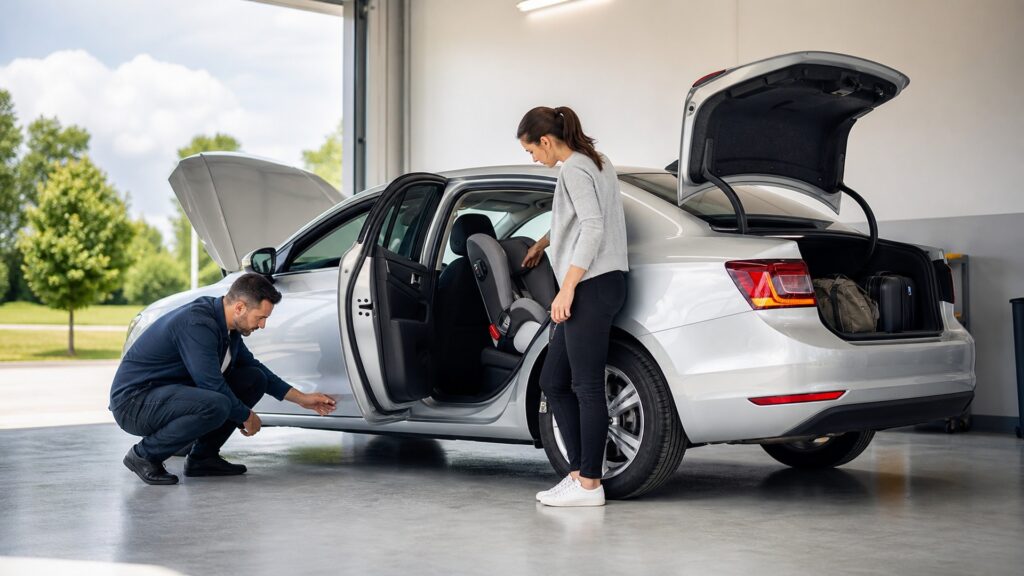
Use designated seating positions and appropriate restraints for every occupant. Child seats need the installation method permitted by both the restraint and vehicle manufacturers. Check access, belt routing, and the space needed by other passengers without improvising an arrangement. Adjust seating and mirrors before moving so the driver can see and reach the controls properly.

  • Check the actual child seat rather than relying on a cabin photograph.
  • Keep belt paths and occupant areas unobstructed.
  • Use the manual for seat and restraint instructions.

A sedan that looks roomy may still require careful selection of seating positions for a particular family arrangement.

Luggage and Controls

Keep Belongings Out of the Driver's Working Space

Secure luggage and cabin items so a sudden stop does not send them toward occupants or controls. When rear seats fold, follow loading guidance for items extending into the cabin and relock seatbacks as instructed afterward. Keep the driver's footwell clear, and use correctly fitted, retained floor mats. A trunk is useful storage, but its presence is not permission to ignore load limits or securement.

  • Check occupied seating and cargo together.
  • Keep pedals and seat movement unobstructed.
  • Follow the vehicle's loading and restraint instructions.

Small everyday objects can become a control problem if they slide into the driver's footwell.

Condition and Visibility

Preserve the Ability to See, Steer, and Stop

Tires, brakes, steering, suspension, lights, glass, and wipers support ordinary safety on every trip. Respond to changes in braking feel, vibration, pulling, warning messages, or visibility. A comfortable cabin can hide developing wear. Adjust speed and following distance to the road, weather, and vehicle load rather than relying on the sedan's familiar feel.

  • Inspect tires and follow maintenance requirements.
  • Keep glass, lights, and required camera areas clear.
  • Address control or braking symptoms promptly.

A car ready for a clear daytime commute may still need attention before travel in rain or darkness.

Driver Assistance

Know Whether the Car Warns, Assists, or Intervenes

Similar feature names can describe different functions. Learn which equipment is installed, when it can operate, and what it expects from the driver. Weather, visibility, obscured sensors, and road conditions can affect performance. Set up navigation and relevant preferences before driving, remain attentive, and do not delay a necessary response while waiting for an aid to act.

  • Read the actual system's conditions and warnings.
  • Keep sensors and cameras in the required condition.
  • Remain ready to steer and brake appropriately.

A feature's useful contribution is bounded by its design; attentive driving remains part of the system.

Quick Reality Check

Safety Evidence and Daily Safety Habits

Both matter, and neither replaces the other.

Useful Evidence and Preparation

Model-specific ratings interpreted correctly, suitable restraints, and known assistance features.

A maintained car with clear controls, good visibility, and secured occupants and luggage.

Assumptions to Avoid

That sedan body style or a high rating guarantees protection in every event.

That driver aids compensate for distraction, unsuitable tires, or unsecured belongings.

Common Myths

Misconceptions About Sedan Safety

Avoid treating one feature as a complete safety assessment.

All sedans have similar crash performance.

Evaluate the exact model year and test information.

Four doors guarantee a child seat fits.

The actual restraint, seating position, and installation must be checked.

Automatic braking removes the need to watch traffic.

It assists within limits while the driver remains responsible.

Items in the rear seat cannot affect the driver.

Loose objects can move during braking or a collision and need suitable storage.

Tip: Use the vehicle's instructions to turn general safety ideas into the correct setup for the actual car.

FAQ

Questions About Sedan Safety Factors

Practical answers for assessing and using a passenger car.

What should I check before buying?

The exact model's safety evidence, fitted equipment, occupant and restraint fit, condition, and visibility.

Can I compare any two star ratings directly?

Follow the rating program's rules; some results are only comparable across similar vehicle classes and weights.

Where should I check child-seat installation?

Use both the vehicle and child-restraint manuals and obtain qualified inspection help when needed.

Do luggage loads affect safety?

Yes. Respect vehicle limits, secure items, and keep occupant restraints and controls clear.

What remains my job with assistance enabled?

Stay attentive and operate the car safely within the system's stated requirements and conditions.

Bottom Line

Sedan safety combines model-specific protection with correct restraints, sound vehicle condition, secured belongings, and attentive operation.

Read ratings and assistance claims in context, then prepare the actual car for the people and journey involved.

Next Steps

Go Deeper or Compare Your Options

Use these Review Streets paths to compare related categories and practical next decisions.

Technical references: NHTSA safety-rating interpretation; NHTSA child-restraint guidance; NHTSA tire specifications and care; NHTSA driver-assistance guidance; Toyota floor-mat fitment guidance. Use the manual and ratings for your own model year and configuration.