
Atomization
Breaking liquid into droplets at the nozzle.
- Use: create even coverage
- Variable: pump and formula
- Tradeoff: Poor mist creates spots
Setting sprays matter when a fine, even mist improves how makeup layers settle together or leaves a flexible film that reduces transfer and visible breakup. Water, alcohol or other volatile carriers, humectants, emollients, powders, and polymers can change the finish and wear, but formulas vary widely.
The bottle and nozzle are part of the technology. Droplet size, spray pattern, distance, number of passes, dry time, and whether the user touches the face before set can decide the result. Some products mainly refresh or reduce a powdery appearance; others emphasize film formation. Neither function makes makeup waterproof, friction-proof, or universally suitable for sensitive skin.
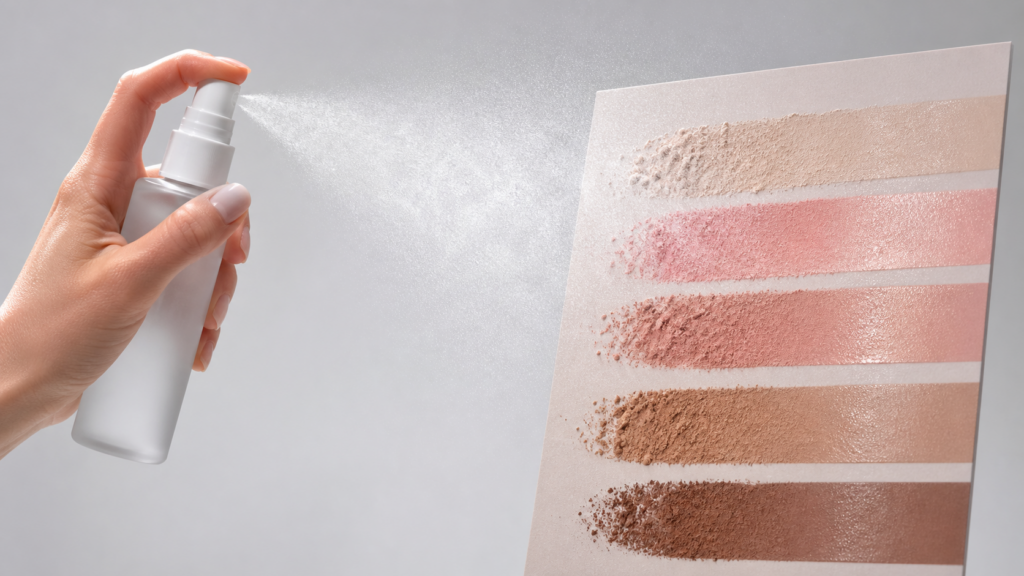
Explain setting spray as controlled liquid deposition that can re-wet powders, alter finish, and leave a polymer or humectant-containing film after evaporation, with nozzle quality, dose, compatibility, comfort, and removal determining value.
Tip: The right spray solves one defined failure.
These setting sprays concepts separate mechanism, application, limits, and purchasing consequences.
Breaking liquid into droplets at the nozzle.
Shape and distribution of droplets across distance.
Organization of deposited polymers and other residues as carriers leave.
Temporary wetting that changes how loose particles sit and reflect light.
Interval before the mist sets enough to resist disturbance.
Degree to which the final layer limits water movement or feels sealing.
Tip: Use these terms to test setting sprays instead of relying on a front-label promise.
A hydrating mist, powder-melding finish spray, and transfer-resistant setting spray may share packaging but serve different goals. Read the stated function and ingredient context.
The right spray solves one defined failure.
A fine continuous cloud promotes even deposition; sputtering can dissolve powder locally and mark foundation. Test away from the face and keep the nozzle clean as directed.
Packaging controls the dose map.
Apply after the intended makeup step, keep the bottle moving, and allow full drying without fanning aggressively or pressing the surface.
A setting film needs an undisturbed drying interval.
Spray can improve powder integration yet cause spotting, pilling, or tack over certain films. Test it with the actual sunscreen, primer, foundation, and powder.
Compatibility is visible after drying, not in the bottle.
Repeated aerosol-like exposure near eyes, fragrance sensitivity, clogged pumps, and cleansing burden affect ownership. Use only as directed and stop after burning, swelling, or persistent irritation.
Longer wear is worthwhile only when the skin and routine tolerate it.
A setting spray can modify the final surface and improve selected wear failures; it cannot lock every product through unlimited oil, sweat, rubbing, or tears.
The mist lands evenly without spots or disturbing the base.
The dried result improves the target failure without tightness or difficult removal.
Spray language does not disclose film strength, droplet quality, or compatibility.
More passes can increase shine, stiffness, irritation, or breakup.
These claims flatten the variables that determine how setting sprays performs in a real routine.
Water-resistant or transfer-resistant claims are limited and product-specific. Tears, immersion, sweat, oil, rubbing, and time can still disrupt the film.
Once coverage is adequate, extra liquid can re-dissolve layers, create droplets, increase tack or tightness, and extend drying without improving wear.
Some mists mainly refresh or add humectancy and may not contain a strong film-forming system. Judge the stated claim and comparative wear.
Alcohol can support quick evaporation and film formation but may feel drying or sting some users. Formula, dose, ventilation, skin state, and tolerance determine fit.
Spray and powder can address different failures: powder manages oil and surface slip; spray can meld particles or leave a film. Either, both, or neither may fit.
Tip: Test the exact setting sprays tool, setting, and routine before generalizing from its category.
The remaining decisions about setting sprays concern technique, compatibility, safety, upkeep, and value.
Follow the product directions. Many are used after makeup, while some routines apply a compatible mist between layers; adding steps should be justified by improved wear.
Use the labeled distance because nozzle designs differ. The goal is a fine even mist rather than visible large droplets or a soaked surface.
A clogged or coarse nozzle, holding too close, too much product, heavy powder, or incompatible layers can concentrate liquid. Test the pattern and reduce dose.
Keep eyes closed and follow the intended-use directions. Do not use a product near eyes unless it is suitable for that area; stop after irritation.
Compare matched half-face applications or equivalent days, recording transfer, creasing, separation, shine, comfort, touch-ups, and removal under the same routine.
Skip it when makeup already wears acceptably or when the spray adds tightness, irritation, unwanted shine, spotting, cost, or cleansing work without a measured benefit.
Setting sprays matter when their mist pattern and residual film solve a specific problem: powder integration, finish adjustment, or improved resistance to transfer and breakup.
Choose by function, nozzle, dose, compatibility, comfort, and removal—not the promise to lock makeup indefinitely. Apply an even minimal mist and let the film form undisturbed.
These Review Streets paths narrow the next setting sprays decision by format, goal, and routine fit.
Browse face, eye, lip, brow, primer, and setting categories.
Compare liquid foundation coverage, finish, shade, and wear.
Choose a retailer
Prices checked regularly. We may earn a commission at no cost to you.