
Wet Traction
Grip available when water and soap are present.
- Role: In practical terms, wet traction defines the input.
- Check: For wet traction, locate this concept in the operating guidance.
- Boundary: It cannot correct a category mismatch.
For shower safety mats, a sound approach must check tub or shower compatibility, mat dimensions and coverage, dry and wet traction, suction-cup engagement or adhesive condition, edge lift, drainage holes, soap residue, mildew, floor slope, grab-bar reach, entry and exit route, lighting, and user stability.
The sections below investigate the interpretation of results. It uses wet traction, surface compatibility, and edge lift to explain what changes the outcome, where uncertainty enters, and which response is proportionate.
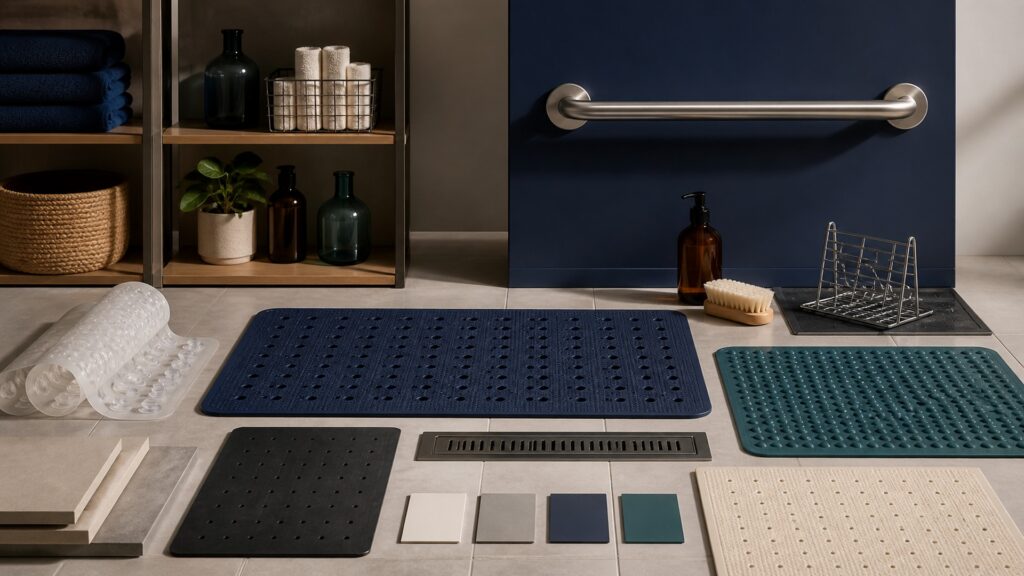
Consider wet traction, edge lift, the actual setting, places where reliability can slip, and the appropriate response rather than assuming the category name settles the issue.
Tip: Read the concept as part of a system, then connect it back to the use case.
These definitions connect the main idea to the variables, limits, and practical signals readers need to compare options.
Grip available when water and soap are present.
Floor finish that permits secure attachment.
Raised border that can catch a foot.
Open route preventing pooled water.
Structural support designed for body weight.
Combined personal and environmental hazards.
Tip: Keep the definitions connected; the strongest answer usually comes from the whole system, not one term.
For the interpretation of results, the intended user and direct result need to be explicit before secondary features are considered. Wet Traction defines the starting point, while surface compatibility helps show whether the product is being judged for the job it was designed to perform.
Wet Traction is useful only when it answers the stated purpose.
Wet Traction means grip available when water and soap are present. Surface Compatibility affects the next part of the process: floor finish that permits secure attachment. The pathway then reaches edge lift, meaning raised border that can catch a foot.
Looking at operation identifies where drainage path can change the result.
A defensible review accounts for these conditions: mat dimensions and coverage; dry and wet traction; suction-cup engagement or adhesive condition; edge lift; and drainage holes. Simultaneous changes make it harder to isolate whether drainage path or conditions around it accounted for the outcome.
Comparable conditions make the interpretation of results easier to interpret without pretending uncertainty disappears.
Safe planning calls for the following: stop if the user responds unexpectedly; protect children and private information; use only on a compatible clean surface; press every attachment point firmly; and keep edges flat and drains clear. If the step associated with grab bar breaks down or the user's condition changes, a seemingly normal output should not delay a response suited to the risk.
The safety boundary for the interpretation of results includes failure, misuse, and warning signs.
A workable routine includes these actions: check condition before use; prepare compatible supplies; confirm settings and power; perform the task the product performs directly in sequence; inspect edges and attachment before bathing; and seat the mat on a clean surface. Follow-through also requires: test stability without stepping fully onto it; and keep grab bars accessible. The user's plan may also call for caregiver or professional review.
The best routine for the interpretation of results is the easiest sustainable process that preserves safety.
Use wet traction and drainage path to separate a measured conclusion from a broader claim ordinary operation cannot establish independently.
Correctly matched use may indicate how wet traction affects surface compatibility in the conditions specified for use.
Continued monitoring of edge lift and drainage path can reveal whether the immediate job remains practical over time.
Consumer use cannot convert grab bar into proof of causation or remove restrictions unique to the user.
A failure involving multifactor fall risk needs the response established for the user instead of continuing an unreviewed trial.
Common shortcuts and misunderstandings can make the topic seem simpler than it is.
Surface Compatibility contributes one input to the interpretation of results. That definition is too narrow to support the claim. The finding also turns on lighting. A safe-use plan should also protect children and private information.
Edge Lift describes a control within the interpretation of results. The description does not justify that conclusion. Interpretation still requires user stability. The user may also need to use only on a compatible clean surface.
Drainage Path marks an intermediate step in the interpretation of results. Its role in the pathway is more limited than the myth suggests. A sound conclusion also considers tub or shower compatibility. The applicable precaution is to press every attachment point firmly.
Grab Bar sets one boundary around the interpretation of results. Proper setup leaves additional sources of variation and failure. A careful reading incorporates mat dimensions and coverage. Responsible follow-through should keep edges flat and drains clear.
Tip: Treat strong claims as starting points for comparison, not final answers.
Concise answers to common questions readers may have after the main explanation.
Drainage Path enters at the start of the interpretation of results. Start by reviewing dry and wet traction. The daily routine should also prepare compatible supplies. The applicable precaution is to keep edges flat and drains clear.
Grab Bar changes a control point in the interpretation of results. Interpret the observation alongside suction-cup engagement or adhesive condition. The daily routine should also confirm settings and power. The documented response should also remove soap buildup.
Multifactor Fall Risk affects the observable output from the interpretation of results. Compare performance only after recording edge lift. The daily routine should also perform the first-order function in sequence. Before continuing, remember to replace curled cracked or hardened mats.
Wet Traction helps define the stopping point for the interpretation of results. Before continuing use, confirm drainage holes. The daily routine should also inspect edges and attachment before bathing. This boundary requires users to never treat a mat as a substitute for properly installed grab bars or assistance.
Judge the interpretation of results through wet traction, edge lift, and the real conditions surrounding grab bar.
A sound decision keeps surface compatibility visible, builds drainage path into day-to-day use, and responds promptly when multifactor fall risk or another defined warning condition appears.
Use these Review Streets paths to connect the explainer to related categories, comparisons, and next decisions.
See the related mechanism guide for the product's inputs, operating sequence, variables, and limits.
Continue with a focused guide to the outcome, context, safety, or routine named in this related topic.
Compare the categories by primary job, mechanism, user fit, maintenance burden, and practical limitations.
Choose a retailer
Prices checked regularly. We may earn a commission at no cost to you.