
Stratum Corneum
Outermost epidermal layer made of corneocytes embedded in organized lipids.
- Use: locate the barrier
- Variable: cells and lipid matrix
- Tradeoff: Thin does not mean inactive
Skin barrier health matters because the outermost epidermal layer limits water loss and helps keep irritants, allergens, and microbes from entering too freely. It is often compared with bricks and mortar: corneocytes provide resilient cells, while organized lipids—including ceramides, cholesterol, and fatty acids—fill the spaces. Natural moisturizing factors, surface pH, enzymes, and ongoing cell turnover also help the system function.
When that barrier is stressed by harsh cleansing, hot water, dry air, friction, over-exfoliation, retinoids, allergy, or skin disease, water escapes more readily and products penetrate differently. Skin may feel tight, rough, itchy, sting with ordinary products, or develop redness and cracks. Those signs are not specific to one diagnosis, so persistent or severe symptoms need assessment.
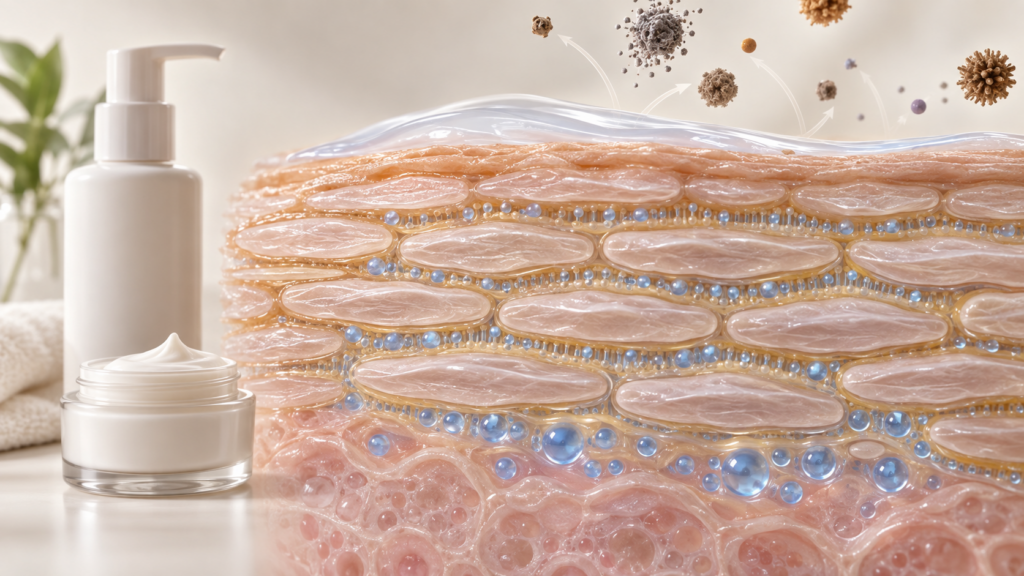
Explain the stratum corneum as a living-interface system of corneocytes, lipids, water balance, pH, enzymes, and microbiome interactions, then connect cleansing, climate, friction, actives, moisturizers, irritation, tolerance, and disease boundaries without turning barrier health into a catch-all diagnosis.
Tip: Recovery starts by removing the repeated stressor.
These skin barrier health concepts separate mechanism, application, limits, and purchasing consequences.
Outermost epidermal layer made of corneocytes embedded in organized lipids.
Flattened protein-rich cell forming the structural surface layer.
Ceramides, cholesterol, and fatty acids arranged between corneocytes.
Water vapor moving from the body through the epidermis to the environment.
Small water-binding compounds within corneocytes.
Restoration of surface structure and function after disruption.
Tip: Use these terms to test skin barrier health instead of relying on a front-label promise.
Use lukewarm water, a gentle fragrance-free cleanser where needed, shorter washing, less friction, and fewer exfoliants or active treatments while skin is irritated.
Recovery starts by removing the repeated stressor.
Lotions, gels, creams, and ointments trade weight for water retention. Apply a tolerable product, often while skin is damp, and target drier areas more heavily.
The richest product is not necessary everywhere.
Cold dry air, indoor heat, wind, UV, tight clothing, masks, shaving, frequent handwashing, and cleaning chemicals can repeatedly challenge the surface.
A product cannot compensate for every exposure.
When skin feels calm and ordinary moisturizer no longer stings, add necessary treatments slowly and keep a stable baseline so reactions can be identified.
Tolerance is an outcome worth measuring.
Eczema, contact dermatitis, psoriasis, infection, acne, rosacea, and medicine reactions can include barrier dysfunction but require different diagnosis and treatment.
Barrier language should not delay appropriate care.
A healthy barrier improves water control and tolerance; it is not a marketing state that explains every breakout, rash, or sensitivity.
Cleansing removes needed soil without repeatedly stripping the surface.
Moisturizer format matches dryness, climate, area, and acne tendency.
Active products are reduced during irritation and reintroduced one at a time after recovery.
Pain, bleeding, infection, widespread rash, or persistent itch is not managed solely with a barrier cream.
These claims flatten the variables that determine how skin barrier health performs in a real routine.
The epidermis continually renews and can recover when the trigger is removed, though chronic disease may need ongoing treatment.
Ceramides are important lipids, but formulation, ratios, delivery, other ingredients, and the cause of symptoms determine benefit.
Sebum and barrier permeability are different. Oily or acne-prone skin can still become irritated and dehydrated.
Aggressive exfoliation can worsen water loss and inflammation rather than reset skin.
Stinging can reflect irritation, barrier disruption, pH, solvent, or allergy; persistent reactions need evaluation.
Tip: Test the exact skin barrier health tool, setting, and routine before generalizing from its category.
The remaining decisions about skin barrier health concern technique, compatibility, safety, upkeep, and value.
Mild irritation may improve over days, while more severe disruption or disease can take weeks and targeted treatment. The cause must also stop.
Some people tolerate them on dry zones; others prefer lighter noncomedogenic vehicles. Test the whole formula rather than one ingredient category.
One that removes the necessary load without leaving skin persistently tight, itchy, or irritated; fragrance-free gentle options suit many stressed barriers.
After skin is calm, restart a lower amount or frequency with moisturizer as appropriate, and follow clinician advice for prescription retinoids.
Adequate hydration supports health, but topical water loss and barrier structure are not corrected simply by drinking beyond normal needs.
Painful, bleeding, spreading, crusted, oozing, infected, or persistent cracks deserve professional care, especially with diabetes or immune problems.
Skin barrier health matters because the stratum corneum regulates water loss and exposure through organized cells, lipids, humectant compounds, pH, and renewal. When disruption increases permeability, skin becomes drier, more reactive, and less tolerant.
Reduce the stressor, cleanse gently, moisturize according to dryness and area, protect from climate and friction, and rebuild treatments slowly. Do not use barrier damage as a substitute diagnosis for persistent rash, pain, infection, or severe itch.
These Review Streets paths narrow the next skin barrier health decision by format, goal, and routine fit.
Browse cleansers, moisturizers, sunscreens, serums, and treatment categories.
Compare skincare devices and treatment technologies.
Choose a retailer
Prices checked regularly. We may earn a commission at no cost to you.