
Skin Barrier
Outer stratum-corneum system that limits water loss and entry of irritants.
- Use: protect the treatment surface
- Variable: condition and exposure
- Tradeoff: Barrier damage can sting before it is visible
Skin protection matters during hair removal because every method must affect hair without creating unnecessary injury in the surrounding tissue. Razors generate blade contact and friction. Wax and epilators pull at follicles and can strip or abrade the surface. Depilatories use high-pH chemistry to weaken hair keratin. IPL and laser deliver heat through pigment. The protection strategy therefore has to match the mechanism.
The common objective is to preserve the outer barrier, limit inflammation, keep tools and skin clean, control dose or contact, and allow recovery before adding friction, fragrance, exfoliation, heat, or sun. A product that is safe on intact leg skin may be inappropriate for the face, genitals, broken skin, a fresh tan, retinoid-treated skin, or an area with infection.
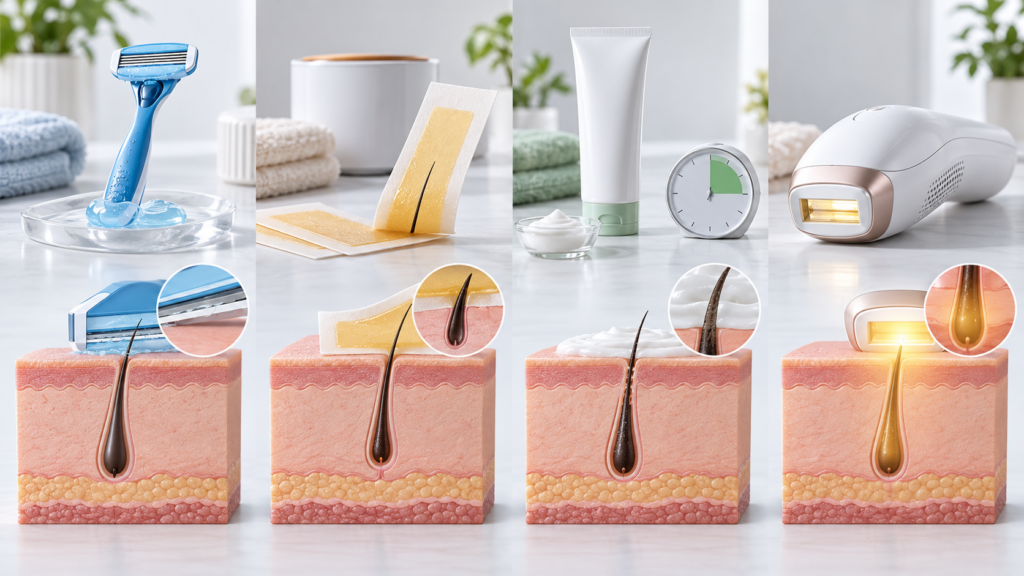
Explain protection as preserving the stratum corneum and controlling mechanical, chemical, thermal, and optical exposure before, during, and after shaving, waxing, depilatories, epilation, IPL, or laser—with method-specific stop signs and escalation.
Tip: Eligibility is the first protective layer.
These skin protection during hair removal concepts separate mechanism, application, limits, and purchasing consequences.
Outer stratum-corneum system that limits water loss and entry of irritants.
Combined friction, pressure, pulling, and repeat passes applied to skin.
Duration a reactive depilatory or wax remains in contact.
Melanin in skin that can absorb optical energy.
Covering that reduces evaporation and may increase heat or ingredient penetration.
Period after removal when skin may be more reactive to friction, heat, and actives.
Tip: Use these terms to test skin protection during hair removal instead of relying on a front-label promise.
Check the exact area, recent tanning, medicines, retinoids, prior reactions, infection, lesions, and method-specific contraindications. Patch or test as directed.
Eligibility is the first protective layer.
Soften hair for shaving, use lubrication, choose a clean sharp or maintained tool, follow growth when appropriate, and avoid repeatedly working raw skin.
More force does not separate hair from skin more intelligently.
Use depilatory only on labeled areas and intact skin, patch test, apply evenly, remove at the stated time, rinse completely, and never reapply immediately to missed hair.
Chemical exposure continues until it is removed.
Follow the exact skin-tone and hair-color chart, tanning restrictions, eye-safety directions, contact interlocks, grid, energy schedule, and cooling protocol.
Optical safety depends on the whole protocol.
Use gentle cleansing and a suitable moisturizer, reduce friction and heat, avoid picking, protect exposed skin from sun, and pause irritating actives according to directions.
Aftercare is a recovery plan, not a product haul.
Protection reduces avoidable injury; it cannot guarantee no bumps, allergy, burn, pigment change, or infection.
The skin is inspected for cuts, rash, sunburn, active lesions, or previous reaction before starting.
The method's temperature, contact time, blade pressure, or energy stays within instructions.
Aftercare is bland and proportional instead of stacking acids, scrubs, perfume, and occlusion.
Severe pain, blistering, pus, spreading redness, or persistent pigment change prompts professional assessment.
These claims flatten the variables that determine how skin protection during hair removal performs in a real routine.
Mild transient redness can occur, but severe or prolonged inflammation is injury, not a performance target.
Alcohol-heavy products can sting and worsen dryness; use only method-appropriate aftercare.
It reduces uncertainty for one product and site but cannot predict every area, dose, delayed response, or user error.
Eligibility depends on the exact device, wavelength or spectrum, settings, and expertise—not a blanket exclusion.
Aggressive exfoliation on freshly stressed skin can increase irritation; timing and method should be gentle and individualized.
Tip: Test the exact skin protection during hair removal tool, setting, and routine before generalizing from its category.
The remaining decisions about skin protection during hair removal concern technique, compatibility, safety, upkeep, and value.
No. Delay until skin has recovered and follow any additional light-treatment tanning restrictions.
Retinoid-treated skin may be more fragile or irritated, increasing surface injury risk; disclose all topical and oral treatments.
Remove it immediately as directed, rinse thoroughly, and seek advice for persistent pain, blistering, or significant injury.
Soften hair, lubricate, shave with growth, avoid pressure and taut skin, use a sound tool, and accept a less-close result when needed.
Follow product or provider guidance and wait until skin is calm; strong acids, retinoids, scrubs, and fragrance may compound irritation.
Breathing difficulty, eye exposure, rapidly spreading swelling, severe burns, or systemic illness require urgent evaluation.
Skin protection during hair removal means matching safeguards to the mechanism: control friction and pulling for mechanical methods, contact time for depilatories, temperature for wax, and pigment, energy, cooling, and eye safety for light systems.
Start with intact eligible skin, use the lowest effective stress, stop on unexpected pain or injury, and allow a calm recovery window. Persistent bumps, infection, burns, scars, or pigment change need professional assessment.
These Review Streets paths narrow the next skin protection during hair removal decision by format, goal, and routine fit.
Browse shaving, epilation, and light-based hair-removal categories.
Compare at-home beauty devices, including light-based hair-removal systems.
Choose a retailer
Prices checked regularly. We may earn a commission at no cost to you.