
Sleep window
The estimated time between falling asleep and waking.
- Anchors the nightly summary
- Depends on detection logic
- Useful for routine patterns
Sleep tracking matters because sleep is easy to describe vaguely and hard to remember precisely. A wearable can show when the sleep window started, how long it lasted, and whether the routine is steady.
The limits matter just as much. Consumer devices infer sleep from indirect signals, so the strongest use is tracking patterns and context, not diagnosing sleep problems.
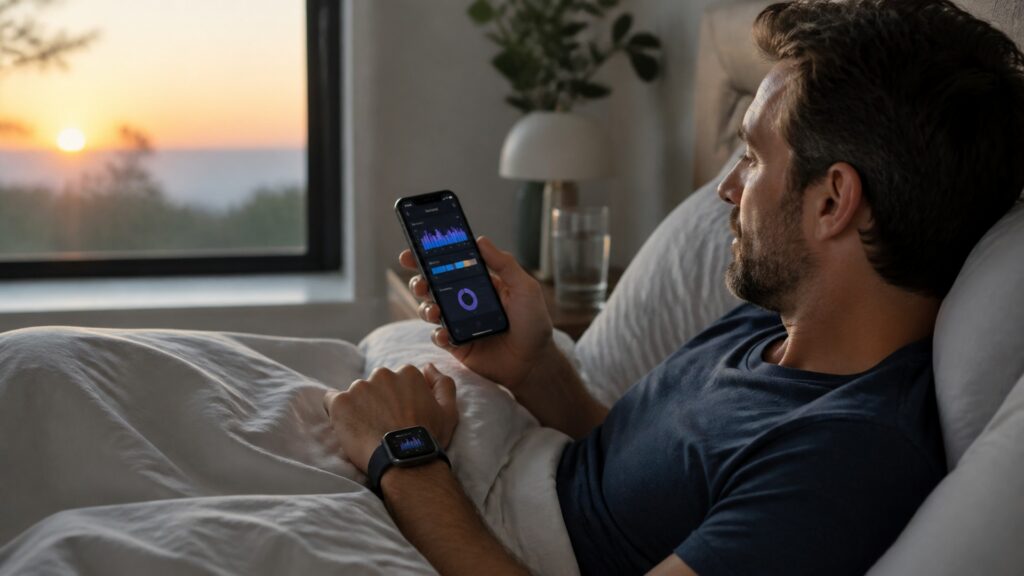
A focused explanation of the signals, movement constraints, tradeoffs, and limits behind Sleep Tracking.
Tip: For Sleep Tracking, compare the behavior first; the product or practice label comes second.
These definitions connect the main idea to the variables, limits, and practical signals readers need to compare options.
The estimated time between falling asleep and waking.
A consumer wearable's guess at light, deep, REM, or awake periods.
The device's attempt to identify awake time overnight.
A pattern built from repeated nights of wear.
How likely the device is to stay on through the night.
How sleep data feeds recovery or readiness-style scores.
Tip: If the explanation skips sleep duration and sleep window, it is probably too generic.
Sleep tracking matters most when it shows bedtime drift, wake timing, short nights, and consistency. Those patterns are hard to reconstruct from memory, especially across weeks.
The clearest value is seeing the pattern, not proving every stage.
Most consumer trackers infer sleep from stillness, timing, heart-rate patterns, and sometimes temperature-related signals. They are not reading brain activity the way a formal sleep study would.
Sleep tracking is a model built from clues.
A single sleep score can feel authoritative, but repeated timing and duration patterns often tell a clearer story. The useful question is whether nights are becoming more consistent or more disrupted.
The trend is usually more useful than the trophy number.
A tracker cannot summarize a night it was not worn. Rings, bands, and watches differ in comfort, battery life, charging habits, and whether the screen or strap becomes annoying overnight.
Sleep features start with the simple question of whether the device stays on.
Sleep tracking can help readers notice patterns, but persistent sleep problems, breathing concerns, or serious daytime symptoms need professional evaluation rather than app interpretation.
Sleep tracking matters as awareness, not as a clinical sleep verdict.
A useful explanation should clarify the decision without pretending one rule covers every product, body, app, surface, or practice.
It clarifies sleep timing, consistency, and how overnight patterns connect to wearable readiness features.
It gives readers a practical vocabulary for comparing claims without leaning on vague fitness language.
It cannot replace clinical sleep evaluation or make sleep-stage estimates perfectly accurate.
The right interpretation can change with fit, setup, instruction, surface, activity type, and the exact product.
Common shortcuts and misunderstandings can make the topic seem simpler than it is.
Consumer devices estimate stages from indirect signals. Stage charts can be interesting, but they should be read with more caution than bedtime and duration trends.
A score compresses timing, duration, movement, and heart-rate patterns. It can hide which part changed and why.
Tracking can improve awareness, but it can also create anxiety or overfocus if the user treats every variation as a problem.
Consumer wearables are not a substitute for clinical testing when symptoms or medical concerns are present.
Missing nights, charging gaps, and loose fit weaken baselines. Consistent wear is what makes trends easier to interpret.
Tip: Treat strong claims as starting points for comparison, not final answers.
Concise answers to common questions readers may have after the main explanation.
It measures signals such as motion, timing, and heart-rate patterns, then estimates sleep behavior from those clues.
For many readers, schedule consistency and sleep duration are easier to trust than detailed stage percentages.
Different sensors, fit, algorithms, and app definitions can produce different sleep windows and stage estimates.
One night is thin evidence. Repeated patterns plus how you feel create a better decision context.
No. A consumer tracker may prompt awareness, but diagnosis requires qualified medical evaluation.
Sleep tracking matters because it makes overnight timing and consistency easier to see.
Use it for patterns: when sleep starts, how regular it is, and how it relates to recovery-style summaries. Treat detailed stages as estimates.
Use these Review Streets paths to connect the explainer to related categories, comparisons, and next decisions.
Use this hub to compare watches, bands, rings, heart-rate devices, and the app features that shape tracker data.
Use this path when the next comparison depends on sensor placement, workout heart-rate signal, and device-specific tracking behavior.
Use this path when simple steps, movement reminders, daily wear, and lightweight tracking matter more than advanced watch features.
Choose a retailer
Prices checked regularly. We may earn a commission at no cost to you.