Why Smith Machines Safety Factors Matters

Safety factors matter in Smith machines because the guided bar can create a sense of control that still depends on correct setup. The rails guide the bar, but the user still has to choose the right load, set stops, understand the hooks, and position the body so the fixed path fits the exercise.

A good Smith machine safety setup includes smooth rails, secure hooks, properly placed stops, enough space around the machine, and movements that match the track. A poor setup can make re-racking awkward or put the user in a position where the guided bar works against them.

By: Review Streets Research Lab
Updated: September 25, 2026
Explainer · 8-12 min read
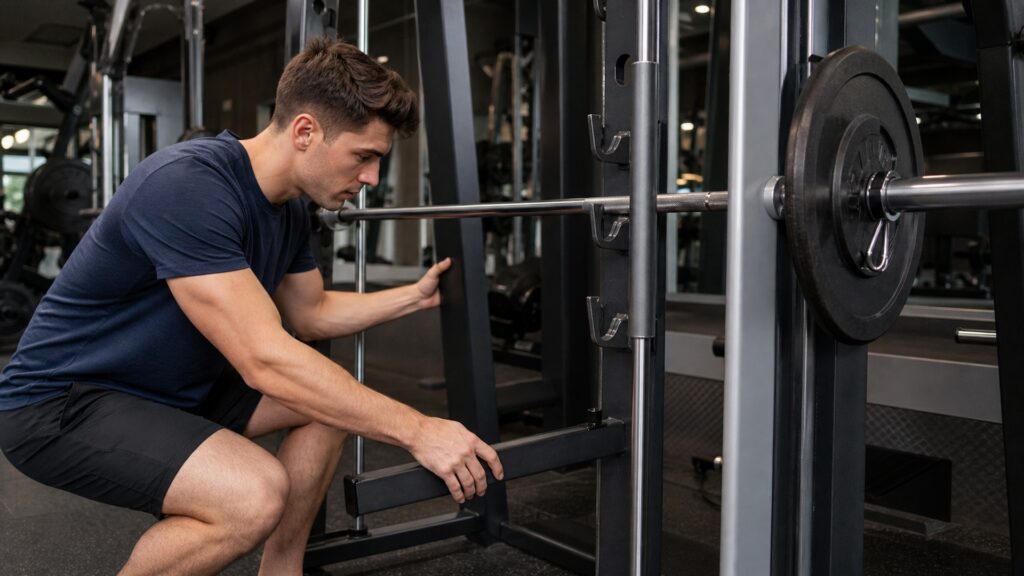
smith machines safety factors explainer hero image for Review Streets
What You'll Learn

How Safety Factors Affect Smith Machine Use

A practical look at hooks, stops, rails, body position, loading, and working space.

  • Why guided bars still need safety setup
  • How hooks and stops affect missed-rep planning
  • Where rail smoothness and maintenance matter
  • Why body position changes risk
  • What to check before loading a Smith machine

Tip: Judge a Smith machine by how its guided bar path fits the lifts a person will repeat, not by the fact that the bar is guided.

Definitions

Key Concepts Behind Smith Machines Safety Factors Matters

These concepts clarify how Smith machines fit home strength training and equipment comparisons.

Hook Security

Hook security is whether the bar catches and releases predictably on the machine's hooks.

  • Example: rotating the bar into place after a press
  • Check: practice the hook motion before heavy sets
  • Limit: awkward hooks can make fatigue more risky

Safety Stops

Safety stops limit how low the guided bar can travel.

  • Example: stops set below the bottom of a bench press
  • Check: set stops for the exercise and user
  • Limit: stops that are too low may not help

Rail Smoothness

Rail smoothness is how evenly the bar travels along the track.

  • Example: a bar that moves without sticking or grinding
  • Check: move the unloaded bar through the full range
  • Limit: sticky rails can disrupt control

Body Position

Body position is how the user's stance, bench, and joints align with the fixed track.

  • Example: placing the bench so the bar lowers to a safe pressing point
  • Check: adjust position before loading
  • Limit: poor alignment can make the track feel unsafe

Load Choice

Load choice is selecting resistance that matches the exercise and user's control.

  • Example: starting lighter when testing a new Smith squat variation
  • Check: increase gradually
  • Limit: guided movement does not justify reckless loading

Working Clearance

Working clearance is the space around the machine for plates, bench movement, entry, and exit.

  • Example: room to load plates without twisting around storage
  • Check: keep the area clear
  • Limit: crowded spaces can create setup mistakes

Tip: A Smith machine works best when the fixed path supports the exercise instead of forcing the lifter into an awkward line.

Setup

Guidance Does Not Replace Safety Setup

The guided bar can make movement feel controlled, but the machine still needs exercise-specific setup before load increases.

  • Set stops for the lift.
  • Practice racking and unracking.
  • Check body position with light weight.

The machine helps most when setup is deliberate.

Hooks

Racking Has To Be Predictable

Smith machines often require rotating the bar into hooks. The user should know how that action feels before fatigue makes it harder.

  • Practice the hook motion.
  • Use a height that fits the exercise.
  • Stop if re-racking feels uncertain.

Reliable racking is part of safe Smith machine use.

Stops

Safety Stops Need The Right Height

Stops can help manage missed reps, but only when set near the movement's actual lower limit. They should protect without blocking useful range.

  • Set stops before hard sets.
  • Test bottom position with the empty bar.
  • Change stop height for different exercises.

Stops are not automatic protection unless they are placed correctly.

Path

Body Position Must Match The Rails

Because the bar cannot move freely, stance and bench position matter. Poor alignment can turn a controlled path into an uncomfortable one.

  • Adjust feet or bench before loading.
  • Use exercises that fit the path.
  • Avoid forcing joints into the rail line.

Good alignment reduces avoidable strain.

Maintenance

Rails And Moving Parts Need Inspection

A sticky or damaged rail system can make the bar harder to control. Hooks, stops, collars, and plate sleeves should also be checked.

  • Move the bar unloaded before training.
  • Listen for grinding or catching.
  • Keep the machine maintained according to guidance.

Smooth travel is both a function and safety signal.

Quick Reality Check

Where Safety Checks Help And Where They Have Limits

Safety checks make the guided bar more predictable before hard sets.

Where They Help

They catch poor stop height, awkward racking, sticky rails, and bad body alignment.

They make the machine's fixed path easier to manage.

Where They Fall Short

They cannot make every exercise fit the track.

They cannot replace appropriate load selection or technique.

Common Myths

Misconceptions About Smith Machine Safety

A guided bar is not automatic protection.

Smith machines are always safer than free weights

They reduce some demands but add fixed-path and racking considerations.

Safety stops can stay in one position

Different exercises and users need different stop heights.

The rails guarantee good form

The rails control the bar path, not the user's body position.

Heavy loading is safer because the bar is guided

Load still has to match the user's control and setup.

Tip: A guided bar is a tool, not a guarantee. The path, setup, and exercise choice still matter.

FAQ

Frequently Asked Questions About Smith Machine Safety

Short answers for choosing and using Smith machines.

What should I check before using a Smith machine?

Check hooks, stops, rail smoothness, body position, load, and working clearance.

Do Smith machines need safety stops?

They are useful when set correctly for the exercise.

When should I stop using one?

Stop if the bar sticks, hooks do not catch reliably, stops cannot be set correctly, or the path feels forced.

Are Smith machines safer than racks?

They are different. Smith machines guide the bar, while racks support free-barbell lifting with safeties.

What is the practical takeaway?

Use Smith machines with deliberate setup, correctly placed stops, and exercises that fit the guided path.

Bottom Line

Safety factors matter because a Smith machine's guided bar still depends on correct hooks, stops, rail travel, body position, and load choice.

The safest use comes from matching the exercise to the fixed path and setting the machine before the set starts.

Next Steps

Go Deeper or Compare Your Options

Use these Review Streets paths to compare related categories and practical next decisions.

Smith Machines

Explore guided-bar strength equipment and setup tradeoffs.

Cable Machines

Review cable-focused equipment for accessory and angle-based work.