Why Sports Cars Safety Factors Matters

A sports car's acceleration, brakes, and handling describe what it can do under particular conditions. They do not establish how well it will protect occupants in a crash or how much grip is available on today's road. Safety depends on the actual vehicle, its tires and condition, its protective systems, and the driver's decisions.

The useful approach is to separate crash avoidance from crash protection. Suitable tires, visibility, and functioning controls help the driver avoid trouble; seat belts, airbags, and vehicle structure address different parts of occupant protection. Neither group makes excessive speed, poor conditions, or neglected maintenance harmless.

By: Review Streets Research Lab
Updated: October 1, 2026
Explainer · 8-12 min read
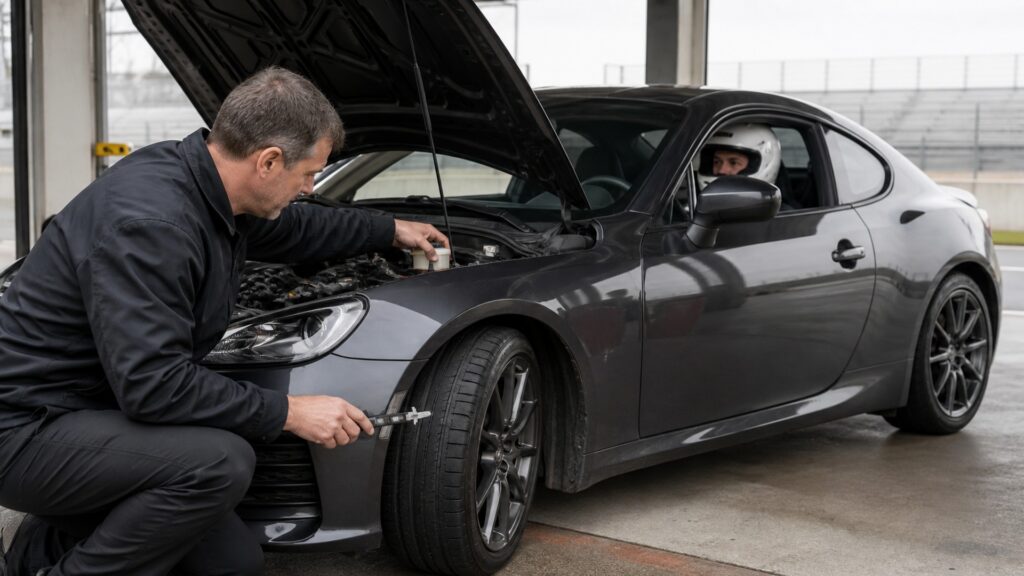
sports cars explainer hero image for Review Streets
What You'll Learn

Separate Performance Capability From Safety Evidence

Understand the different jobs of grip, driver assistance, occupant protection, and vehicle condition.

  • Assess tires for the conditions, not just their performance label.
  • Distinguish braking and handling from crash protection.
  • Check the assistance systems fitted to the exact car.
  • Review safety information with its comparison limits.
  • Treat modifications and warning signs as matters for proper assessment.

Tip: Compare the exact model year and equipment, then inspect the actual car. A reputation for performance is not a safety assessment.

Definitions

Six Safety Factors That Answer Different Questions

Each contributes something specific; none replaces all the others.

Available grip

The tire-to-road force available under the current surface, temperature, and tire conditions.

  • Example: a tire behaving differently in cold weather than on warm pavement
  • Check: check tire suitability, condition, and the specified pressure
  • Limit: a dry-road capability claim does not cover every surface

Crash avoidance

Features and actions that help prevent a collision.

  • Example: attentive observation supported by functioning brakes and appropriate assistance
  • Check: understand what the fitted systems actually do
  • Limit: assistance cannot guarantee that a collision will be avoided

Occupant protection

The coordinated vehicle systems intended to reduce injury in a crash.

  • Example: seat belts and airbags working within the vehicle's protective design
  • Check: review the correct safety information and restraint instructions
  • Limit: sporting equipment or a stiff ride does not establish crash protection

Driver-assistance limits

The conditions and boundaries within which a particular assistance feature operates.

  • Example: a warning system with limitations described in the owner's manual
  • Check: learn its alerts and operating restrictions before relying on it
  • Limit: similar feature names can conceal different behavior

Visibility and reach

The driver's ability to see the surroundings and operate controls from a suitable seating position.

  • Example: checking mirrors and pedal access after adjusting the seat
  • Check: assess the actual driver and cabin combination
  • Limit: a low seating position may require careful adjustment

Vehicle condition

The present state of tires, brakes, steering, suspension, and protective equipment.

  • Example: an inspection identifying worn tires or an unresolved warning light
  • Check: check history, recalls, and current faults
  • Limit: good condition must be maintained rather than assumed from appearance

Tip: Ask separately whether the car can help avoid a crash and how its occupants are protected if one occurs.

Road contact

Tires Must Suit the Conditions You Actually Face

The tires transmit braking, steering, and acceleration forces. Their suitability depends on more than width or a sporting name. Michelin distinguishes summer, winter, and all-season designs because their compounds and intended conditions differ. A sports car fitted with summer tires does not gain cold-weather capability simply because the road is dry or the car has all-wheel drive.

  • Check the fitted tire's temperature and surface limitations.
  • Use the appropriate pressure guidance for the vehicle and tire application.
  • Inspect damage, wear, and pressure loss.

For example, a car bought during warm weather may need a different tire plan before winter use. Its engine and braking hardware have not changed, but the tire conditions have.

Avoidance and protection

Good Brakes Do Not Answer the Crash-Protection Question

A sports car may have substantial braking capability and responsive steering. Those are different from the protection provided by structure, restraints, and airbags during a collision. NHTSA describes airbags as supplemental protection intended to work with seat belts. Assess these systems as designed, and do not replace road restraints or seats on the assumption that racing-style equipment is automatically safer for road use.

  • Use seat belts correctly on every journey.
  • Read the vehicle's seating and airbag instructions.
  • Have safety-related modifications evaluated as a complete system.

A brake upgrade cannot tell you how a vehicle performed in a crash test. Likewise, a crash rating does not excuse unsuitable tires or poor braking condition.

Assistance

Know What the Car Will Warn About or Intervene In

Driver-assistance features differ by model, year, and option package. Some warn; others can intervene under defined conditions. Performance modes may also change the behavior of certain systems. Learn the controls and limitations in the owner's manual while stationary, and use the settings intended for public-road driving. The driver remains responsible for observing the road and controlling the car.

  • Identify which features are actually installed.
  • Understand warning symbols and fault messages.
  • Do not assume a sport setting adds protection.

Two similar-looking cars may have different assistance equipment. A used-car advertisement listing a broad technology package is a reason to verify the specification, not an explanation of every function.

Evidence

Read Ratings Within Their Stated Scope

Use safety results for the correct model and year where available. Check what the test measures and how comparisons are permitted. NHTSA places restrictions on comparisons of frontal and overall ratings between vehicles of different classes and weights. An absent rating is also not proof that a car is either safe or unsafe; it means that particular evidence is unavailable.

  • Confirm the test program and model applicability.
  • Read the program's comparison rules.
  • Check outstanding recalls separately from ratings.

A buyer comparing a small sports car with a larger vehicle should not reduce the decision to matching star symbols without reading how the results are meant to be used.

Ownership

Condition and Driving Choices Still Determine the Margin

Inspect the actual car, especially when its history includes modifications, repairs, or hard use. Investigate warnings, abnormal braking, steering changes, and tire damage before continuing normal use. Keep speed appropriate to conditions and leave room to respond. Circuit driving, if desired, belongs in a suitable organized setting with its own preparation and instruction requirements.

  • Arrange a qualified inspection before buying an uncertain car.
  • Resolve faults rather than treating them as sporting character.
  • Keep visibility, attention, and following distance central to road driving.

A capable sports car with an unresolved fault is not made ready by its reputation. Restoring the intended condition comes before testing the limits of performance.

Quick Reality Check

What Safety Features Can and Cannot Do

Their value depends on correct use and the conditions they were designed to address.

They can contribute to

Collision avoidance and occupant protection through different, complementary functions.

Better information and assistance when the installed systems are functioning as intended.

They cannot guarantee

Adequate grip on every surface or recovery from every driving error.

Protection equivalent to another car solely because both have similar performance figures.

Common Myths

Safety Assumptions to Avoid With Sports Cars

Capability, appearance, and protection are not interchangeable.

Powerful brakes make speed irrelevant

Stopping still depends on conditions, tires, vehicle state, and the time available to respond.

All-wheel drive solves every traction problem

It can help deliver drive, but it does not make unsuitable tires appropriate or remove braking and cornering limits.

Airbags replace seat belts

Airbags are supplemental protection designed to work with seat belts.

A racing-style seat or harness is automatically safer on the road

Seats and restraints must work with the vehicle's protective design and intended use. An isolated substitution needs proper evaluation.

Tip: Treat a feature as one part of protection, not permission to reduce care.

FAQ

Questions Before Assessing a Sports Car's Safety

Look for evidence about the exact vehicle and its current condition.

Are sports cars inherently safe or unsafe?

The category alone cannot answer that. Assess the particular design, safety evidence, equipment, condition, and intended use.

What should I inspect first on a used example?

Start with tire condition and suitability, service and repair history, warning lights, recalls, and a qualified inspection of the vehicle.

Can I compare any two five-star ratings directly?

Not necessarily. Follow the test program's rules and confirm the model year and test type.

Should I disable assistance for ordinary road driving?

Use the manufacturer's recommended road settings. Do not turn off protective functions simply to make the car feel more sporting.

What if the car has been modified?

Identify all relevant changes and have their compatibility with brakes, steering, restraints, and other systems assessed by qualified specialists.

Bottom Line

Sports-car safety depends on evidence, suitable tires, functioning protective systems, sound condition, and responsible driving.

Performance specifications describe only part of the vehicle. Assess avoidance and occupant protection separately, then keep the complete car appropriate for the conditions.

Next Steps

Go Deeper or Compare Your Options

Use these Review Streets paths to compare related categories and practical next decisions.

Vehicles

Explore vehicle choices and their intended roles.

Sports Cars

Review sports-car features alongside ownership responsibilities.

Further reading: NHTSA tire selection and maintenance; Michelin summer, winter, and all-season tire differences; NHTSA on airbags and seat belts; NHTSA driver-assistance technology guidance; NHTSA crash-rating comparison guidance.