
Movement Pattern
Movement pattern is the path and timing the body repeats during stair climbing.
- Example: stepping upward while maintaining posture
- Check: watch whether motion stays controlled
- Limit: fatigue can change form
Movement pattern matters because a stair climber machine asks the user to repeat a climbing motion under fatigue. Step height, cadence, posture, handrail use, and foot placement all shape whether that motion feels controlled or awkward.
A good stair climber should let the user step with a repeatable rhythm, maintain posture, and use support for balance without turning the workout into hanging on the rails.
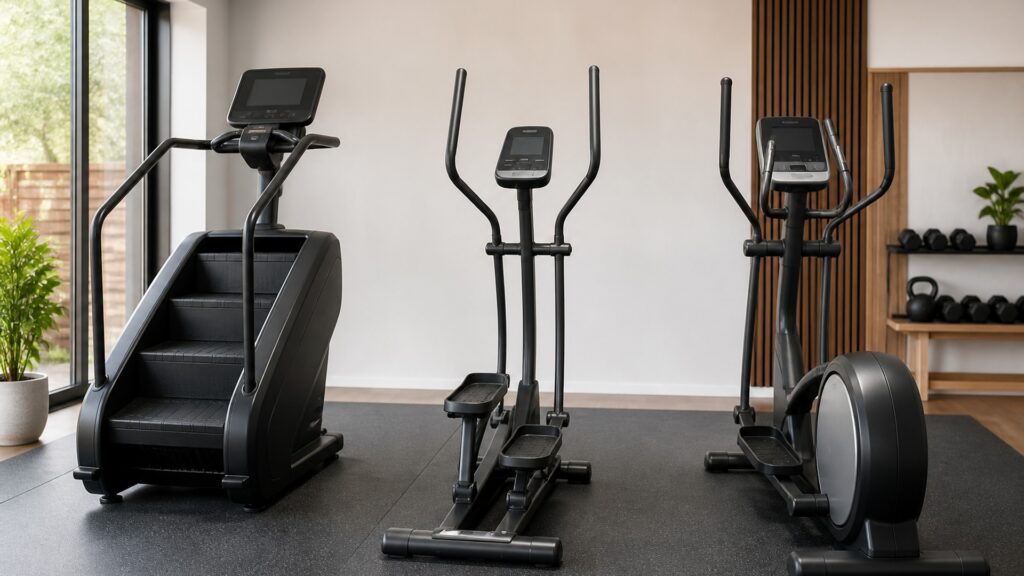
A practical look at step path, posture, foot placement, handrail use, and climbing rhythm.
Tip: A stair climber should feel controlled before it feels hard.
These concepts explain how the body moves on a stair climber.
Movement pattern is the path and timing the body repeats during stair climbing.
Step height is the vertical distance the user climbs each step.
Cadence is the pace of stepping.
Handrail use is how the user uses support for balance and control.
Foot placement is where the foot lands on each step or pedal.
Posture control is the ability to stay upright and aligned while climbing.
Tip: Movement quality matters because the same pattern repeats for the entire session.
A stair climber asks the user to lift through repeated steps. That vertical demand makes posture, cadence, and support use more important than on smoother stride machines.
The climbing pattern is what makes the machine distinct.
Higher or deeper steps can raise leg demand quickly. That can be useful, but only if the user can keep the motion controlled.
A useful step height is challenging without being disruptive.
Rails are there for confidence and control. When the user leans heavily, the movement pattern changes and the legs do less of the work.
Better support habits make the workout more honest and controlled.
A stair climber can become messy when pace rises too fast. The user should be able to repeat steps without bouncing, twisting, or losing foot placement.
A repeatable rhythm matters more than peak speed.
Console programs and resistance levels matter less if the stepping pattern does not fit the user. The first test should be whether the motion feels sustainable.
Movement pattern decides whether the climber is useful.
A stair climber works best when the user can repeat the climbing motion with control.
Step height, cadence, and support allow upright controlled climbing.
The user can repeat the pattern without overusing the rails.
The step feels too high, too fast, or too unstable.
Fatigue causes hunching, slipping, or heavy rail leaning.
Climbing quality matters as much as difficulty.
Speed helps only when the user keeps control.
Heavy rail use changes posture and workload.
It also affects comfort and joint range.
Movement fit should be checked over several minutes.
Tip: Test movement under realistic fatigue, not just at the start.
Short answers about step height, cadence, rails, and posture.
Because stair climbers repeat the same climbing motion for the whole workout.
Test step height, cadence, foot placement, rail support, and posture.
Use them for balance, but avoid leaning heavily.
Yes. Too much step height can strain comfort or shorten sessions.
Choose a stair climber only if the climbing pattern feels controlled and repeatable.
Movement pattern matters because stair climbers depend on repeated climbing under fatigue.
Check step height, cadence, handrail use, foot placement, and posture before judging programs or resistance settings.
Use these Review Streets paths to compare related categories and practical next decisions.
Compare stair-climbing cardio categories.
Review smaller stair-machine options.
Compare more home cardio equipment.
Choose a retailer
Prices checked regularly. We may earn a commission at no cost to you.