Why Subscription Billing Platforms Data Flow Matters

Subscription billing data flow determines whether the right customer is charged the right amount for the right period—and whether the product and accounting systems understand the result. A billing engine can calculate correctly from the information it receives yet still issue a wrong invoice if usage is duplicated, a seat change arrives late, or a customer identifier points to the wrong account.

The important work is preserving meaning as information moves. Customer identity, effective dates, quantities, units, and record references need to survive the trip from the product or sales system into billing, then through payment collection, service access, and finance. Reliable delivery alone is not enough: the receiving system must apply the information correctly and make failures visible.

By: Review Streets Research Lab
Updated: September 25, 2026
Explainer · 8-12 min read
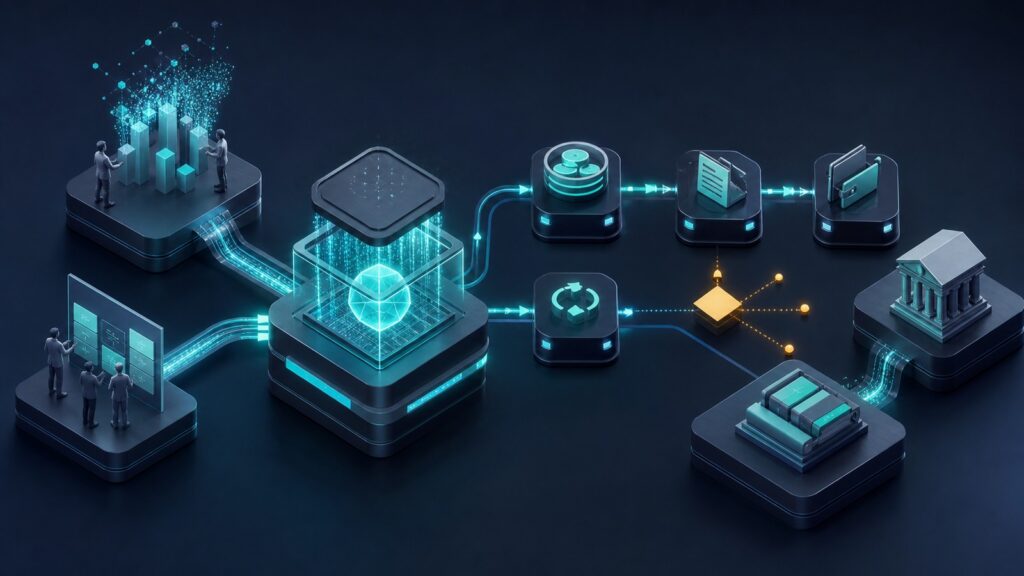
Editorial business scene illustrating subscription billing platforms data flow
What You'll Learn

Trace Subscription Information from Source to Invoice and Access

Follow the records that turn customer activity into recurring charges and the checks that reveal an incomplete handoff.

  • Connect customer, subscription, invoice, and payment identifiers.
  • Separate when an event occurred from when billing received it.
  • Keep usage units and duplicate controls consistent.
  • Distinguish invoice, payment, subscription, and access states.
  • Recover missed or repeated notifications without repeating business actions.
  • Reconcile the records and investigate differences that remain.

Tip:Trace one customer’s upgrade through the source request, effective date, invoice, payment result, and product access. A missing reference at any step makes later investigation harder.

Definitions

Six Concepts Behind Subscription Billing Data Flow

These concepts explain how information can arrive successfully yet still produce an incorrect or incomplete business result.

Identifier Mapping

Identifier mapping connects references for the same customer or transaction across different systems.

  • Purpose: It lets a billing record be traced back to its source and forward to related records.
  • Example: A product account ID is linked to the billing customer and subscription IDs.
  • Limit: Names or email addresses alone can change or fail to distinguish separate accounts.

Effective Time

Effective time is when a business change is intended to begin applying.

  • Purpose: It determines which terms or quantities belong to a billing period.
  • Example: An approved seat increase takes effect on the 15th even if an integration processes it later.
  • Limit: The time a message arrives is not necessarily the time the change should apply.

Usage Event

A usage event records a measured activity that may contribute to a charge.

  • Purpose: It supplies the quantity and context needed for usage-based billing.
  • Example: A record identifies a customer, a count of billable messages, and when they were sent.
  • Limit: Units, duplication, and late-arrival rules must be defined before the event can be rated reliably.

Idempotent Processing

Idempotent processing prevents a repeated request or event from creating an additional effect for the same operation.

  • Purpose: It makes supported retries safer after a response is lost.
  • Example: Resending an already accepted usage event does not add its quantity a second time.
  • Limit: The mechanism and retention limits depend on the provider and integration design.

State Transition

A state transition is a change in the recorded condition of a subscription, invoice, payment, or related object.

  • Purpose: It tells receiving systems which business condition has changed.
  • Example: An invoice moves from open to paid after a successful collection result.
  • Limit: That change does not automatically prove a bank payout or product-access update completed.

Reconciliation

Reconciliation compares related records and explains differences between them.

  • Purpose: It detects missing, duplicated, delayed, or misinterpreted activity.
  • Example: A team compares billed usage with accepted source usage for the same customer and period.
  • Limit: Equal totals alone can hide offsetting errors, so useful comparisons retain record-level references.

Tip:Document the identity, unit, effective time, and intended result of each important transfer. These details are often more useful than simply knowing that a message was delivered.

Identity

Keep Customer and Subscription References Connected

A single customer may have several subscriptions, invoices, or organizational accounts. The product, customer-management system, billing service, and accounting application may each assign their own identifiers. Save the relationships explicitly so an update reaches the intended subscription.

  • Map the product account to the correct billing customer.
  • Retain the subscription reference when a customer changes plans.
  • Keep invoice and payment references linked to the billed arrangement.
  • Check relevant account, entity, and currency context before applying an update.

If a business customer has two subscriptions, matching only by its email address can send a seat change to the wrong one. A durable subscription reference makes the intended target clear even when contact details change.

Timing and Units

Bill the Activity in the Period Where It Belongs

Usage and amendments carry a time meaning as well as a quantity. A delayed integration can deliver yesterday’s usage after an invoice cutoff or send a plan change after its agreed start date. The business needs a supported rule for how these cases are handled.

  • Preserve the source event time separately from processing time.
  • Define the unit being measured, such as requests, seats, or storage.
  • Check timezone and period boundaries in representative examples.
  • Specify how late or corrected usage is handled under the platform’s rules.

For example, one system may report storage in bytes while a pricing rule expects a different unit. A message can arrive intact and still create a wrong charge if the conversion is absent. A late event also should not silently move to another period merely because that is when it arrived.

Calculation Boundary

Validate Inputs Before They Become Customer Charges

The billing engine applies rules to accepted inputs. Before a charge is finalized, the business should be able to explain where quantities, prices, and adjustments came from. A correct multiplication cannot compensate for duplicate usage or the wrong price attached to a customer.

  • Use supported unique event or request identifiers for retry protection.
  • Check that the correct price and quantity apply to the relevant period.
  • Compare a sample of invoice lines with their source records.
  • Use documented correction methods when inputs change after billing.

Suppose a customer sends 1,000 billable messages and an interrupted transfer resends the same batch. The intended result remains 1,000 messages, not 2,000. Both the sender and receiver need to know whether the retry represents the same activity or new activity.

Downstream Updates

Send the Right State to Product Access and Finance

Subscription systems produce several kinds of updates. The product may need to enable a feature, support may need to explain an unpaid invoice, and accounting may need a finalized invoice or credit. A single notification should not be interpreted as proof that all of those outcomes have occurred.

  • Verify the authenticity of provider notifications.
  • Handle repeated and out-of-order notifications using the provider’s documented behavior.
  • Retrieve current records when an update conflicts with local state.
  • Apply access and financial rules to the appropriate object and condition.

An invoice becoming paid may support an access decision under the business’s policy. It does not by itself confirm that the access service received the update or that the provider transferred money to the bank. Each receiving process needs its own result.

Recovery

Make Missing and Failed Transfers Recoverable

Notifications and integrations can fail. A dependable arrangement records what was received, what was applied, and what still needs work. Recovery should restore the intended state without duplicating invoices, usage charges, credits, or customer messages.

  • Keep a record of failed processing with the relevant identifiers.
  • Use supported replay or retrieval methods for missed activity.
  • Compare source and receiving records for important periods and customers.
  • Assign unresolved differences an owner and a next action.

A nightly comparison might find a paid invoice whose customer still lacks access. The repair is to verify the current billing state and complete the missing access action, not to charge the customer again. The same principle applies to an invoice missing from accounting.

Quick Reality Check

What Good Data Flow Can Establish

Traceable records make a recurring charge explainable, but delivery checks need to be paired with business checks.

What It Makes Possible

Staff can follow an invoice line back to the customer arrangement or measured usage that produced it.

The team can find a missing access or accounting update without reconstructing the entire billing history manually.

What It Does Not Guarantee

A successful transfer does not prove that the source price, quantity, or customer assignment was correct.

A delivered notification does not prove that a receiving system completed its intended action.

Common Myths

Misconceptions About Subscription Billing Integrations

Many billing errors come from valid-looking information being interpreted at the wrong time or in the wrong context.

If the API request succeeds, the business process is complete

The request may confirm acceptance of information while calculation, finalization, or downstream processing remains pending. Check the result that matters for the particular task.

Arrival order is the same as business-event order

Events can be delayed or retried. Use documented state rules and relevant timestamps instead of assuming that the last message received always describes the latest condition.

Matching totals proves every customer was billed correctly

An overcharge for one customer and an omission for another can cancel out in a total. Preserve references and inspect record-level differences as well as aggregate amounts.

Replaying failed events is always safe

Replay is safe only when processing recognizes repeated operations and checks current state. Otherwise, recovery can create duplicate charges, records, or messages.

Tip:Test a duplicate, a delayed event, and a missing event as different scenarios. Each exposes a different weakness in the transfer.

FAQ

Frequently Asked Questions About Subscription Billing Data Flow

Answers for tracing charges and keeping product, billing, and financial records aligned.

Which identifiers should be retained?

Keep the source customer or account reference, billing customer and subscription references, invoice and payment references, and relevant usage or adjustment IDs. The exact set depends on the systems, but it should support tracing each important record across the handoff.

How should late usage be handled?

Define the policy and confirm the platform’s supported time windows and correction behavior. Preserve the original event time, identify whether the intended invoice is still changeable, and use the documented adjustment route rather than silently assigning the activity to a different period.

Is a webhook enough to keep the product up to date?

It is an important notification mechanism, but the receiver must authenticate, process, and recover events correctly. Current-record lookups and reconciliation can help find missed or conflicting updates. The exact design should follow the provider’s documented behavior.

Should accounting receive every raw usage event?

Not necessarily. It needs the detail required for financial records and traceability, which may be billed lines and their source references rather than every measurement. Preserve access to supporting usage evidence where it is needed to explain or investigate a charge.

What is a useful end-to-end test?

Create a test subscription, submit usage, change its quantity, and simulate a repeated or delayed notification. Follow the resulting invoice, payment status, access, and accounting record. Confirm that retries do not duplicate business effects and that missing actions are discoverable.

Bottom Line

Reliable subscription billing data flow preserves who the customer is, what changed, when it applies, and which result each receiving system must produce.

Keep identifiers and units consistent, make retries safe, and reconcile important outcomes. A delivered message is only one step toward a correct bill and completed service.

Next Steps

Trace One Charge and Deliberately Interrupt a Handoff

Use a test subscription to follow source activity into an invoice, then simulate a duplicate or missing update. Confirm that the charge stays correct and the incomplete action can be recovered.