
Training Aid
A training aid is a swim tool used to isolate a skill, add feedback, or make a drill easier to repeat.
- Example: using a kickboard during kick sets
- Check: match the aid to the drill goal
- Limit: the aid should not hide poor body position
Workout role matters with swim accessories because a tool can support technique, comfort, resistance, breathing, warmup, recovery, or skill feedback. The same pool bag can contain tools for very different jobs, and each one should earn its place in the session.
A useful accessory matches the workout role without taking over the workout. The swimmer should know whether the tool is there to isolate a skill, reduce distraction, add load, improve visibility, or support a specific set.
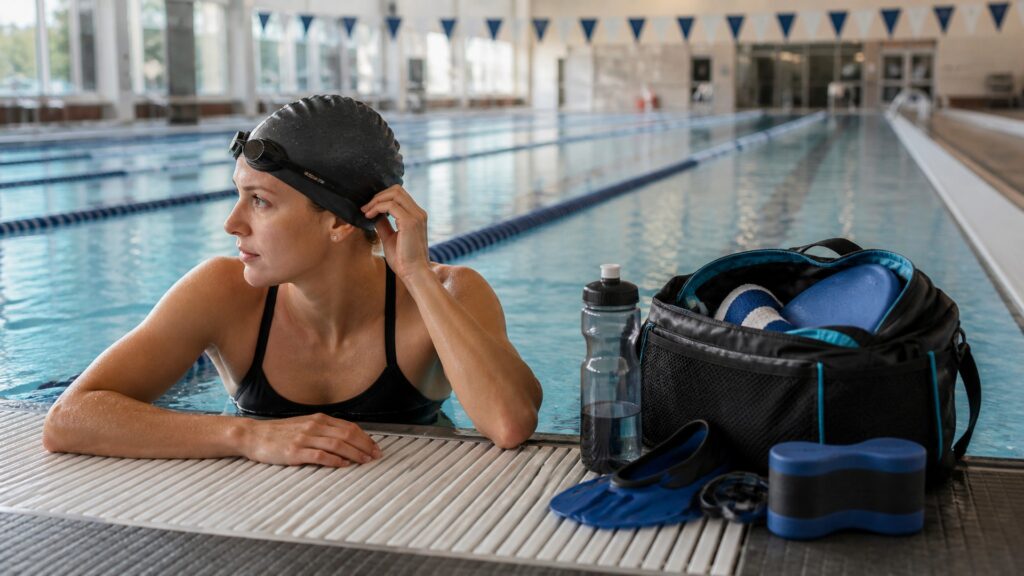
A practical guide to using pool tools for technique, comfort, resistance, breathing, recovery, and feedback.
Tip: Put the workout role first, then pack only the tools that serve it.
These terms explain how pool tools fit different parts of a swim session.
A training aid is a swim tool used to isolate a skill, add feedback, or make a drill easier to repeat.
Body position is how the swimmer floats, balances, and aligns in the water.
Propulsion is forward movement created by the arms, legs, or both.
Feedback is information a tool gives through feel, pace, drag, or resistance.
Pool fit is whether the accessory works with the lane space, pool rules, and workout plan.
Skill transfer is how well work with the accessory carries over to unaided swimming.
Tip: The right equipment choice depends on how resistance is created, adjusted, and repeated.
Kickboards, pull buoys, snorkels, fins, and paddles can help isolate a technique cue when the drill is specific.
Technique tools should support transfer.
Goggles, caps, ear plugs, and nose clips can reduce distractions and make the planned workout easier to finish.
Comfort has a real workout role.
Paddles and fins can add load, speed, or feedback. They fit best when the set calls for controlled resistance.
Load should serve the set.
Gentle accessory work can support relaxed technique practice, but hard resistance tools may not fit recovery days.
Recovery sets need restraint.
Too much gear can clutter the lane and distract from the workout. Pack the tools that match the session.
A simple pool bag often works better.
Role clarity keeps swim gear useful instead of distracting.
It matches each tool to technique, comfort, resistance, recovery, or feedback.
It prevents unnecessary gear from crowding the lane.
It still depends on pool access and rules.
A tool can be wrong if the swimmer cannot control it.
A bigger pool bag does not make a better session.
Many sessions need only goggles and a clear set.
Paddles and fins should fit the purpose and volume.
Comfort affects whether the swimmer can complete good work.
The skill must transfer without the tool.
Tip: Each accessory should have a job in the workout.
Short answers for practical equipment and training decisions.
It keeps each accessory tied to technique, comfort, resistance, recovery, or feedback.
Pack the tools required by the set, usually starting with well-fitting goggles.
Yes, too much gear can distract, crowd the lane, or hide technique issues.
Use them when the set calls for controlled load or feedback.
Choose accessories by workout role, not by how much gear fits in the bag.
Swim accessory workout role matters because each tool should serve a specific part of the session.
Useful gear supports technique, comfort, resistance, recovery, or feedback without crowding the workout.
Use these Review Streets paths to compare related categories and practical next decisions.
Explore swim training tools and pool accessories.
Compare related swimming gear categories.
Browse fitness equipment and training gear.
Choose a retailer
Prices checked regularly. We may earn a commission at no cost to you.