
Seal
The seal is the soft edge that sits against the face to keep water out.
- Example: a gasket forming light suction around the eye socket
- Check: press goggles gently to test short suction
- Limit: a seal that is too tight can leave pressure marks
Movement pattern matters with swim goggles because poor visibility or uncomfortable fit can change how a swimmer holds the head, breathes, rotates, and approaches the wall. Goggles should support natural swimming instead of causing head lifting, squinting, or repeated adjustments.
The right pair lets the swimmer keep the face relaxed and the head aligned. The wrong pair can leak, fog, press into the face, or make the swimmer break rhythm during turns and breathing.
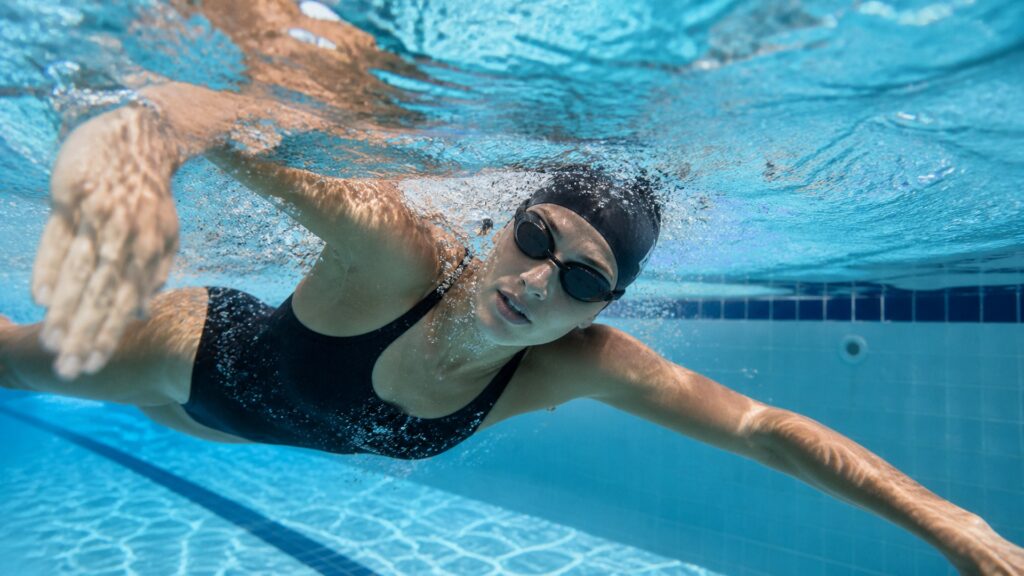
A practical look at head position, breathing rhythm, sighting, turns, visibility, and fit.
Tip: Goggles should support the swim pattern without making the swimmer adjust the head around the gear.
These terms explain how goggles affect alignment, breathing, and movement flow.
The seal is the soft edge that sits against the face to keep water out.
Lens fit is how the lens shape lines up with the eyes, brow, and cheekbones.
The bridge is the nose connection that sets lens spacing.
Strap tension is how firmly the strap holds the goggles in place.
Anti-fog treatment helps reduce lens fogging during swims.
Tint is lens shading used for brightness, glare, or visibility conditions.
Tip: The right equipment choice depends on how resistance is created, adjusted, and repeated.
When swimmers can see comfortably, they are less likely to lift the head or squint through turns and lane traffic.
Vision supports alignment.
Leaking or painful goggles can make swimmers interrupt breathing rhythm to adjust the strap or clear water.
Stable fit supports rhythm.
Good goggles help swimmers judge the wall, lane line, and push-off position without hesitation.
Turns improve when the swimmer trusts visibility.
Open-water swimming often needs wider vision, glare control, and reliable sealing in changing conditions.
Open-water movement depends on confident vision.
A pair that feels fine standing still may leak during push-offs, breathing, or turns. Testing should include real swimming.
Movement testing reveals fit.
Goggles help movement when they stay clear and stable.
They support head alignment, breathing rhythm, turns, and sighting.
They reduce interruptions from leaks, fog, and discomfort.
They cannot fix stroke mechanics by themselves.
Poor fit can disrupt movement even if the lenses are good.
Small fit issues can change how a swimmer moves.
Leaks and fog can change head position and rhythm.
Lens shape, tint, and peripheral vision can matter.
Too much tension can distort the seal and distract the swimmer.
Open water often needs more sighting and glare control.
Tip: Goggles should let the swimmer move naturally.
Short answers for practical equipment and training decisions.
Because leaks, fog, pressure, and poor vision can change head position and breathing rhythm.
They can support technique by reducing distractions and improving visibility.
Test them during laps, turns, breathing, and push-offs.
Often yes. Wider vision and glare control can help.
Choose goggles that stay clear and stable during real swimming.
Swim goggle movement pattern matters because vision and fit can affect head position, breathing, turns, and sighting.
The right goggles stay clear and stable so the swimmer can move naturally.
Use these Review Streets paths to compare related categories and practical next decisions.
Explore swim goggles for pool and open-water use.
Compare related pool tools and accessories.
Browse swimming gear categories.
Choose a retailer
Prices checked regularly. We may earn a commission at no cost to you.