
Seal
The seal is the soft edge that sits against the face to keep water out.
- Example: a gasket forming light suction around the eye socket
- Check: press goggles gently to test short suction
- Limit: a seal that is too tight can leave pressure marks
Training function matters with swim goggles because goggles affect more than comfort. They influence visibility, head position, confidence, pacing, and whether the swimmer can complete technique work without stopping to clear water or adjust fit.
The right goggles help the swimmer see clearly, relax the face, and keep attention on the set. The wrong pair can leak, fog, press too hard, or distract from breathing and body position.
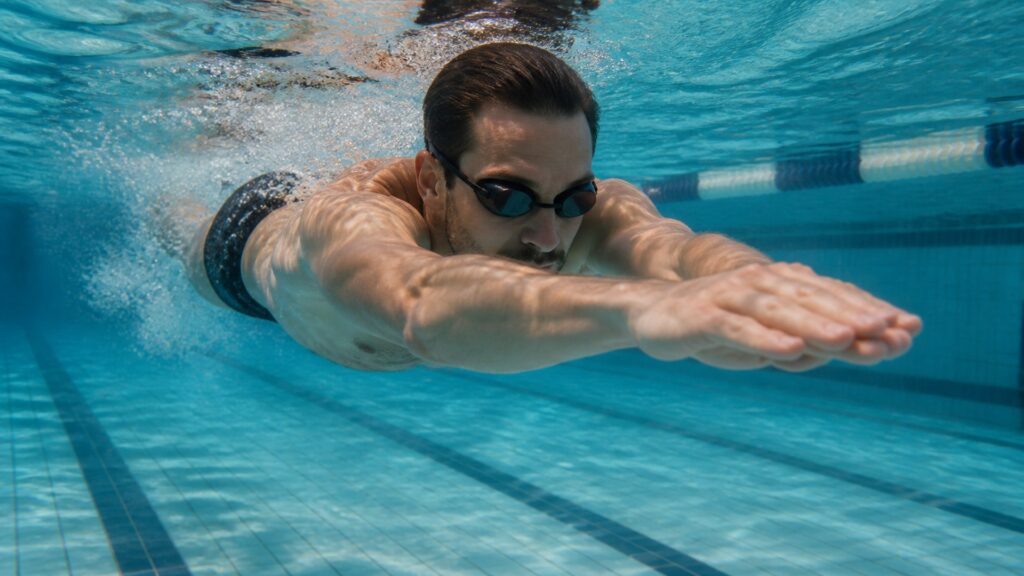
A practical guide to visibility, fit, confidence, pacing, anti-fog care, and technique focus.
Tip: Good goggles should disappear during the set so the swimmer can focus on the water.
These terms explain how goggles support clear vision, comfort, and repeatable swim sets.
The seal is the soft edge that sits against the face to keep water out.
Lens fit is how the lens shape lines up with the eyes, brow, and cheekbones.
The bridge is the nose connection that sets lens spacing.
Strap tension is how firmly the strap holds the goggles in place.
Anti-fog treatment helps reduce lens fogging during swims.
Tint is lens shading used for brightness, glare, or visibility conditions.
Tip: The right equipment choice depends on how resistance is created, adjusted, and repeated.
Goggles let swimmers see lane lines, walls, other swimmers, and open-water cues. That supports pacing, turns, and confidence.
Training is easier when vision is reliable.
A good seal keeps water out without painful strap tension. Fewer leaks mean fewer stops during drills and intervals.
Fit is part of training quality.
When goggles stay comfortable, the swimmer can pay attention to body position, breathing, kick, and pacing instead of equipment.
Comfort keeps attention on the set.
Fogged lenses make it harder to see walls, clocks, and lane traffic. Gentle care helps preserve visibility.
Clear lenses support better pacing.
Indoor pools, bright outdoor pools, and open water call for different lens choices and visibility priorities.
The setting should shape the goggle choice.
Goggles support training when they fit the face and setting.
They improve vision, comfort, pacing, and confidence during swim sets.
They reduce interruptions from water in the eyes.
They cannot fix poor breathing or body position by themselves.
A poor fit can leak no matter how tight the strap is.
Goggles are training equipment, not just comfort gear.
Fit, lens, and setting can change the whole session.
Fit and bridge shape usually matter more than strap force.
Care and anti-fog treatment can reduce it.
Tint affects visibility in different light.
Tip: The training function is clear vision with minimal distraction.
Short answers for practical equipment and training decisions.
It affects visibility, comfort, confidence, and how often the swimmer has to stop.
A reliable seal, comfortable fit, suitable lens tint, and manageable fog control.
Not always. Some are low-profile but less comfortable for long sessions.
They should seal gently before heavy strap tension.
Choose goggles that fit the face, match the setting, and stay out of the way during training.
Swim goggle training function matters because clear, comfortable vision helps swimmers stay focused and consistent.
The best goggles seal gently, match the light, and reduce interruptions during the set.
Use these Review Streets paths to compare related categories and practical next decisions.
Explore swim goggles for pool and open-water use.
Compare related pool tools and accessories.
Browse swimming gear categories.
Choose a retailer
Prices checked regularly. We may earn a commission at no cost to you.